


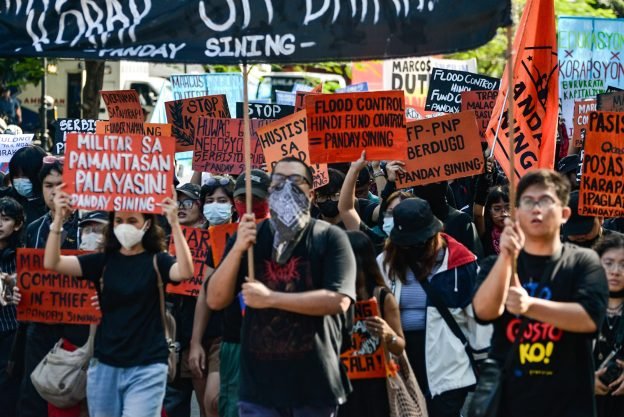
Thousands of protesters took to the streets across the Philippines this week to demand action against a major corruption scandal tied to flood control projects. Citizens accuse government officials of diverting billions of pesos from essential infrastructure projects, leaving the country vulnerable to deadly floods.
The scandal is now considered the Philippines’ worst in years. Protesters say that funds meant for critical flood mitigation projects, including dikes and waterways, were stolen or misused. Many projects were either substandard or never built, despite repeated promises from officials at both national and local levels.
The protests have intensified in recent weeks following Typhoon Kelmei, which caused deadly floods across the country. Images of residents climbing rooftops to escape rising waters fueled public outrage. Protesters argue that corruption is not just costing taxpayers money but is putting lives at risk.
“Corruption is literally drowning us,” said one demonstrator in Manila. “People are dying because of this fraud, and nothing has been done to stop it.”
The flood control projects were designed to protect communities from frequent typhoons. The Philippines faces an average of 20 typhoons annually, making robust flood infrastructure essential. These projects were intended to lessen damage from storms, allowing communities to recover faster between disasters.
Investigations, however, revealed that kickbacks and embezzlement were widespread. Government officials, from senators to local leaders, allegedly approved projects while contractors executed shoddy work. In some cases, projects were entirely nonexistent, leaving residents exposed to future disasters.
Public anger is focused not only on lower-level officials but also on senior government leaders. Protesters demand that everyone involved, including high-ranking politicians and contractors, face jail time. They have rejected government responses so far, which included limited investigations, minor prosecutions, and partial recovery of stolen funds.
Some protesters are calling for sweeping political changes. They want the president and all implicated officials removed and replaced with a national transitional council led by ordinary citizens. Activists argue that only a complete overhaul can prevent systemic corruption from continuing.
The protests have been highly visible, with demonstrators waving banners, raising middle fingers, and chanting slogans expressing their frustration and grief. Demonstrations took place in Manila and other major cities, signaling a nationwide movement for accountability.
Observers say the Philippines’ justice system faces a critical test. Public confidence is low, as many fear that powerful officials may interfere with investigations. Protesters insist that any superficial measures will not suffice. They are demanding transparency and full accountability at every level.
The Philippine government has acknowledged the protests and the public’s anger. Officials have promised to continue investigations, but no timetable has been provided for legal proceedings against senior politicians. Meanwhile, citizens continue to push for meaningful reform to prevent future corruption.
This corruption scandal highlights the risks posed when essential infrastructure projects are mismanaged. For a country prone to natural disasters, the absence of reliable flood control infrastructure increases the danger to millions. Protesters emphasize that preventing similar scandals is vital for public safety and the nation’s resilience.
The growing demonstrations reflect deep frustration with systemic corruption and the urgent need for reform. Citizens continue to pressure authorities to act decisively and ensure that those responsible for endangering lives are held accountable.