


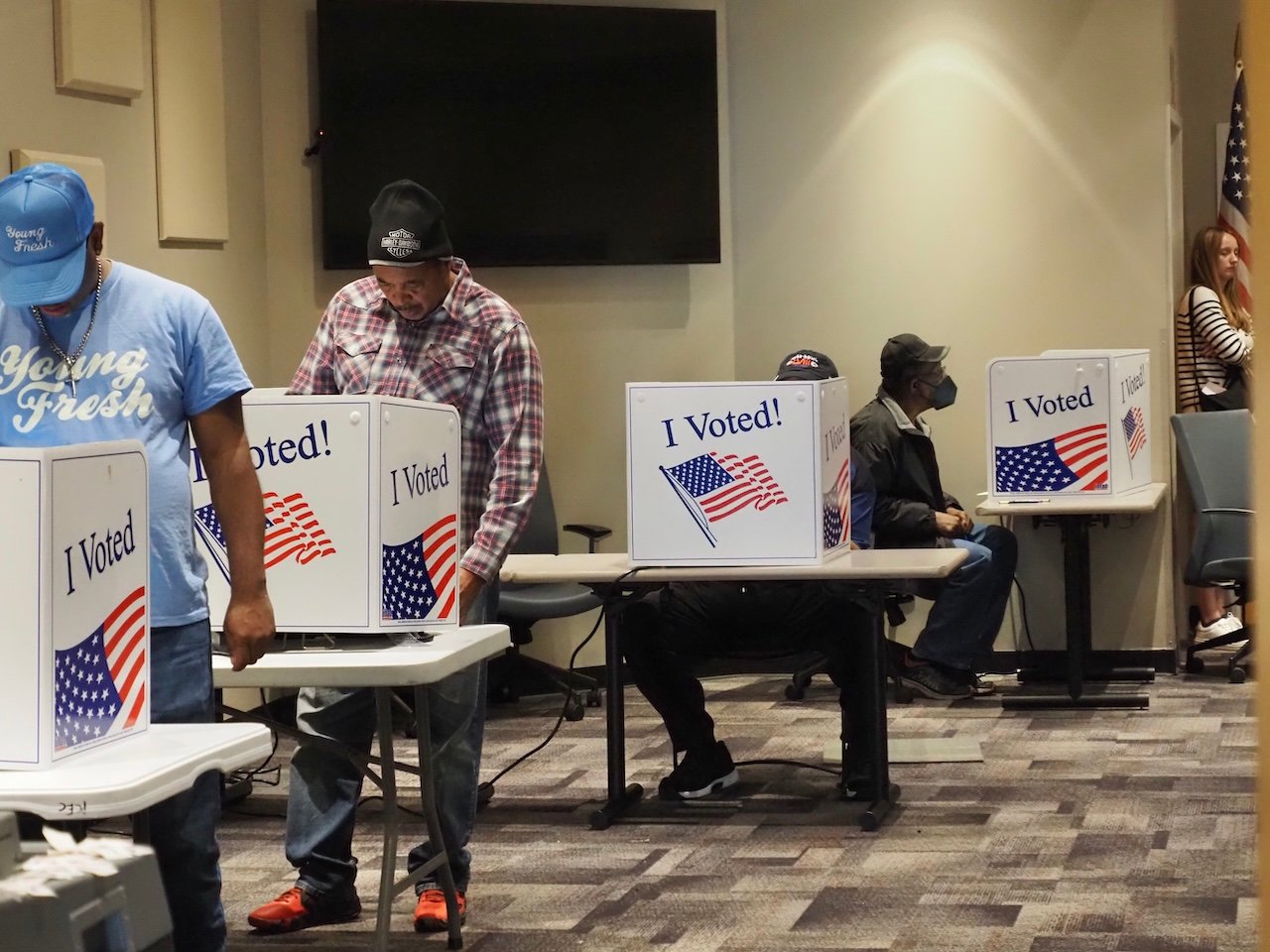
Arkansas election officials are facing scrutiny after nearly 1,300 voters received state-issued letters warning they could be removed from voter rolls, despite the notices lacking both a date and official letterhead.
According to Daljoog News analysis, the clerical mistakes have reignited familiar concerns about voter confidence and administrative clarity, even as state officials insist no voters face immediate removal.
The incident unfolds amid broader efforts by states to tighten voter roll accuracy ahead of future elections, a process that often sits at the intersection of election security and voter access.
What Happened?
Earlier this month, roughly 1,300 Arkansas voters received form letters from the secretary of state’s office stating they were registered to vote in Arkansas as well as in either Alabama or Tennessee.
The letters instructed recipients to confirm where they wished to remain registered and warned that failure to respond within 30 days could result in removal from the Arkansas voter rolls.
However, the notices were missing two basic elements: an official letterhead and a date. That omission quickly raised questions about the legitimacy of the correspondence and the enforceability of the deadline.
The Arkansas Secretary of State’s office confirmed on Monday that the letters were authentic and part of an ongoing voter verification effort. Officials attributed the missing date and letterhead to a clerical error.
According to the office, the letters were mailed on January 13 and 14. Despite the warning language, state officials stressed that the 30-day timeframe was intended as a guideline rather than a rigid cutoff.
Importantly, the Secretary of State’s office does not have the authority to remove voters from the rolls. That responsibility lies solely with county clerks, who follow established procedures before taking any action.
Why This Matters
Even small administrative errors can have outsized consequences when elections are involved.
Undated letters threatening possible removal from voter rolls can create confusion, anxiety, and mistrust, particularly among voters who may already be skeptical of government processes. Without a clear date, recipients may not know when the clock starts or whether the notice is even valid.
Election law experts have long warned that voter roll maintenance, while legally required, must be handled carefully to avoid the appearance or reality of disenfranchisement.
In Arkansas, the issue is particularly sensitive because voter roll cleanup efforts often occur outside of election years, when public attention is lower, but the groundwork for future elections is laid.
The episode also highlights a broader national challenge. As states increasingly share data to identify duplicate registrations, errors in communication can undermine the very confidence these programs aim to protect.
For voters, the concern is not just about paperwork. It is about whether they might lose their right to vote because of a bureaucratic misstep they did not cause.
What Analysts or Officials Are Saying
State officials say the letters are part of the One State One Vote initiative, a cooperative effort between Arkansas and neighboring states to ensure voters are not registered in more than one jurisdiction.
Samantha Boyd, a spokesperson for Secretary of State Cole Jester, described the effort as routine and necessary.
She said the goal is to correct duplicate registrations and maintain accurate voter records, calling it “basic good governance.” Boyd emphasized that the program is intended to prevent problems before they can erode public trust in elections.
County officials echoed that message but added important nuance.
Faulkner County Clerk Margaret Darter, who also leads the Arkansas Association of County Clerks, said voter roll maintenance is a cautious, multi-step process.
Clerks typically conduct cleanup efforts in odd-numbered years and make repeated attempts to contact voters before any removal occurs. According to Darter, the goal is compliance and clarity, not punishment.
She explained that duplicate registrations often happen through administrative or postal errors. For example, when voters move or register in a new state, delays or data mismatches can leave their names active in multiple systems.
Darter stressed that clerks are careful not to remove voters unless there is certainty that removal is legally justified.
Daljoog News Analysis
This situation underscores a recurring tension in US election administration: accuracy versus perception.
From a policy standpoint, states are required to maintain up-to-date voter rolls. Failing to do so can open the door to legal challenges and accusations of lax oversight.
At the same time, poorly executed communication can quickly turn a routine administrative task into a credibility problem.
The lack of a date and official letterhead may seem minor inside a government office, but to voters, those details signal legitimacy. Without them, recipients are left wondering whether the notice is real, urgent, or even safe to respond to.
The state’s explanation of a clerical error is plausible, but it also highlights the need for stricter quality control in election-related communications.
Public confidence in elections does not depend only on laws and procedures. It depends on how those procedures are explained and implemented at the human level.
Programs like One State One Vote rely on cooperation between states and trust from voters. Missteps like this risk feeding skepticism at a time when election integrity debates remain highly charged nationwide.
What Happens Next
The Arkansas Secretary of State’s office says it will begin forwarding lists of identified duplicate registrations to county clerks this week.
From there, clerks will review the information and follow standard procedures before taking any action. That process typically includes additional attempts to contact voters and verify their status.
County officials say no one will be removed from voter rolls without clear confirmation that removal is required by law.
Some county offices have already received responses from voters who received the letters, though officials say it is too early to determine how many people will ultimately be affected.
Election administrators are also likely to review how the letters were prepared and sent, to prevent similar errors in future mailings.
For voters who received the notices, officials recommend responding promptly to clarify their registration status, even if the letter appeared incomplete.