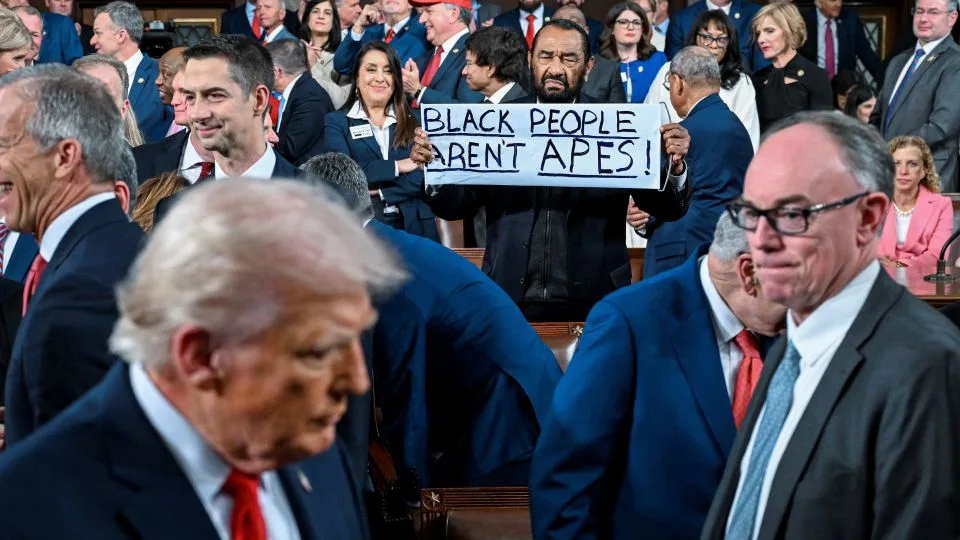



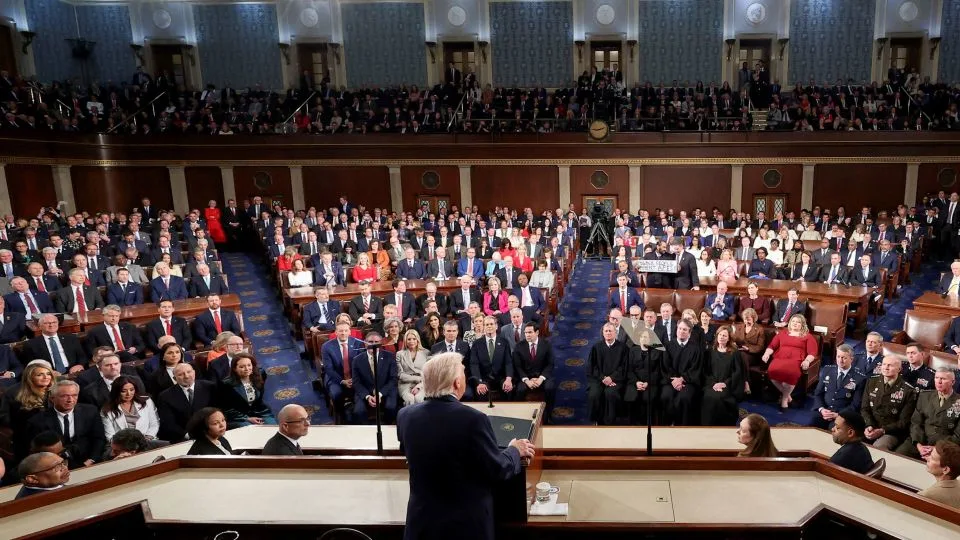
President Donald Trump made several misleading and false statements during his State of the Union address on Tuesday night. Fact-checkers have flagged multiple claims on the economy, inflation, tariffs, and immigration as inaccurate or exaggerated.
According to Daljoog News analysis, these statements illustrate how Trump’s messaging often relies on inflated figures and selective interpretations of data, which can distort public perception of policy outcomes and national conditions. Fact-checking his speech highlights the importance of independent verification amid politically charged events.
The State of the Union took place at a politically sensitive time, with Trump seeking to frame his presidency as highly successful just over a year after returning to office. However, multiple economic and social indicators challenge the accuracy of his claims.
What Happened?
Trump made a series of factual misstatements during the address. Key examples include:
- $18 Trillion Investment Claim: Trump repeated that he had secured $18 trillion in global investments in the past 12 months. White House figures cite $9.7 trillion in “major investment announcements,” which still includes vague pledges, trade deals, and statements that are not guaranteed investments.
- Gasoline Prices: He claimed gas was below $2.30 in most states and $1.85 in Iowa. In reality, AAA reported a national average of $2.95 per gallon, with only a tiny fraction of stations offering prices under $2.
- Inflation: Trump stated he inherited record inflation under the Biden administration. Data show inflation in December 2024 was 2.9%, and January 2025 was 3.0%, far below historic highs.
- Economic Growth: Trump described the economy he inherited as “stagnant” and claimed it is now “roaring like never before.” Economic growth in 2025 was 2.2%, lower than any year under Biden, and unemployment rose from 4.0% to 4.3%.
- Largest Tax Cuts: Trump claimed he passed the largest tax cuts in U.S. history. Analysis shows the 10-year $4.8 trillion plan ranks sixth or seventh in terms of GDP share since 1918. Reagan’s 1981 cuts remain larger relative to the economy.
- Immigration and Crime Claims: Trump stated 11,888 murderers entered the U.S. under Biden. Federal data show the figure spans multiple decades and includes individuals convicted after arrival; it does not reflect people freely entering the U.S.
- Tariffs Misrepresentation: Trump repeated that tariffs are paid by foreign countries. In reality, most costs fall on U.S. importers and consumers, with the Federal Reserve estimating up to 90% of tariff burdens are domestic.
- Minnesota Fraud Claim: Trump alleged $19 billion in fraud by Somali residents in Minnesota. State audits and federal reviews show no verified evidence to support this figure; actual confirmed fraud is far lower.
- Election Fraud Claims: Trump reiterated false claims of widespread voter fraud, describing mail-in ballots as “crooked” and asserting Democrats rely on cheating to win. Evidence shows voter fraud remains extremely rare.
Why This Matters
Trump’s repeated misstatements have implications for public trust and policymaking. Exaggerated economic or social claims can mislead voters, influence markets, and shape policy debates based on inaccurate premises.
The State of the Union is not only a ceremonial address but a platform for setting national narratives. Misleading claims during such events risk normalizing inaccurate discourse, particularly on issues like elections, immigration, and federal spending.
What Analysts or Officials Are Saying
Fact-checkers from multiple outlets have systematically debunked these statements. Analysts note that Trump’s speech reflects a pattern of inflating achievements while downplaying or misrepresenting data that contradicts his narrative.
Economists and policy experts stress that objective data on inflation, growth, and employment do not support claims of record-breaking success. Independent agencies like AAA, the Congressional Budget Office, and the Federal Reserve provide benchmarks that contradict many of the president’s assertions.
Political commentators observe that repeated false claims may energize his base but simultaneously undermine credibility with moderate voters and the broader public.
Daljoog News Analysis
Daljoog News finds that Trump’s address continues a trend of using exaggerated figures to create a perception of dramatic accomplishments. While some positive indicators, like modest declines in gas prices, exist, the broader economic and fiscal narrative is far less extreme than the president portrays.
The pattern of false or misleading statements complicates fact-based policymaking and public debate. Citizens, journalists, and lawmakers must critically evaluate claims, particularly when used to justify policy proposals like tariffs, tax cuts, or immigration enforcement.
Fact-checking high-profile speeches remains essential for transparency and accountability, ensuring that political rhetoric does not overshadow verifiable evidence.
What Happens Next
Trump’s misstatements may shape legislative discussions, particularly around tax policy, trade, and border security. Lawmakers and media organizations are likely to continue fact-checking and publicly correcting inaccuracies.
Voter perception could also be influenced in upcoming election cycles, as misrepresented claims may clash with personal experience or independent data. The persistence of misleading information underscores the ongoing need for verification and public scrutiny.