

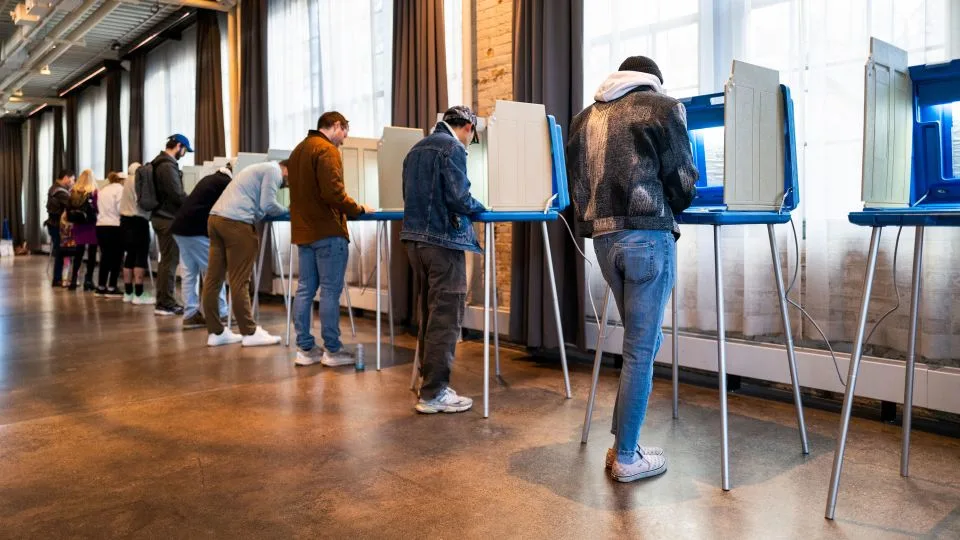
Several Republican state election officials are pushing back against the Trump Justice Department’s demand for confidential voter registration data, creating an unexpected intra-party clash over election authority and privacy protections.
According to Daljoog News analysis, the dispute reflects deeper tensions between federal enforcement efforts and the Constitution’s state-centered election system, even among officials aligned with the president on broader election security goals.
The confrontation comes as the administration expands its legal campaign over voter rolls, suing mostly Democratic-led states while also pressing GOP states to hand over sensitive voter information.
What Happened?
The U.S. Department of Justice has requested non-public voter registration data from at least two dozen states. The information sought includes Social Security numbers, driver’s license details, and residential data.
The effort is being led by Assistant Attorney General Harmeet Dhillon, who heads the Civil Rights Division.
While the department has filed lawsuits against 25 mostly Democratic state election chiefs, resistance has also emerged from Republican-led states.
Officials in West Virginia, Oklahoma, Missouri, Mississippi, Kentucky, Montana, and Idaho have either declined to provide the confidential data or refused to sign a proposed Memorandum of Understanding that would require them to act on federal findings within 45 days.
West Virginia Secretary of State Kris Warner stated publicly that the federal government can purchase publicly available voter rolls but would not receive personal identifying information.
Mississippi Secretary of State Michael Watson provided data but refused to sign the DOJ agreement. He argued that voter list maintenance should remain under state authority and follow state law.
Oklahoma State Election Board Secretary Paul Ziriax cited state privacy laws in declining to comply without legal authorization. Missouri Secretary of State Denny Hoskins similarly told lawmakers he would not produce sensitive data absent a court order.
Only Alaska and Texas have signed the DOJ’s proposed agreement.
The Justice Department has declined public comment on the standoff.
Why This Matters
Elections in the United States are administered primarily by states under constitutional design. Federal law, including the National Voter Registration Act, requires states to make reasonable efforts to maintain accurate voter rolls. But enforcement mechanisms remain legally complex.
The DOJ argues it needs detailed voter data to help states identify ineligible voters, including potential noncitizens.
However, states already have voluntary access to the federal Systematic Alien Verification for Entitlements database, commonly known as SAVE, for immigration status checks. Critics note that past comparisons have produced false positives due to outdated federal records.
Republican officials say the DOJ’s demands risk violating state privacy protections. Many state laws prohibit the disclosure of Social Security numbers and driver’s license data except under strict conditions.
The dispute also reflects unease about federal overreach. Several GOP election administrators have voiced concern that Washington should not dictate removal timelines or override state procedures.
What Analysts or Officials Are Saying
Assistant Attorney General Dhillon has dismissed state objections, arguing that concerns over confidentiality are exaggerated because the federal government already issues Social Security numbers.
She has suggested additional lawsuits may follow if states continue to resist.
Election officials counter that issuing identification numbers does not grant the federal government unlimited access to state databases.
Some legal scholars question whether the DOJ’s interpretation of federal authority can override state privacy statutes. In at least some early court proceedings, judges have reportedly rejected arguments that federal law automatically supersedes those protections.
Behind closed doors, officials have also raised questions about the department’s broader intentions.
One Republican election administrator, speaking anonymously, suggested the data could be used beyond routine roll maintenance. Concerns include potential use in immigration enforcement or as political leverage if future election results prove contentious.
Publicly, most GOP officials frame their resistance as procedural rather than ideological. They emphasize commitment to clean voter rolls but insist that removals must follow state law and established timelines.
Daljoog News Analysis
The administration’s voter roll campaign reveals a strategic recalibration.
Instead of focusing solely on Democratic states, the Justice Department has extended pressure across party lines. That approach aims to frame the initiative as institutional rather than partisan.
Yet the internal Republican resistance complicates that narrative.
Many GOP election officials share concerns about voter fraud and support enhanced verification tools. However, they also defend the traditional structure of state-administered elections.
The proposed 45-day compliance window appears to be a flashpoint. Voter roll maintenance often involves coordination with county clerks and local boards, making rapid federal mandates difficult to execute without legal risk.
The dispute also highlights a longstanding tension in American governance: how far federal power extends into election administration.
If courts ultimately side with states, the DOJ’s campaign could narrow in scope. If federal authority is upheld, Washington may gain expanded leverage over voter roll oversight nationwide.
Either outcome will shape how future administrations approach election integrity enforcement.
What Happens Next
The Justice Department has indicated that more lawsuits may be filed against noncompliant states.
Several pending cases will likely test whether federal statutes invoked by the DOJ preempt state privacy laws. Appeals could push the issue toward higher federal courts.
States that have not signed the Memorandum of Understanding must now decide whether to litigate, negotiate revised terms, or partially comply.
The broader political context adds further stakes. With midterm elections approaching, both parties are positioning themselves on election security and federal oversight.
For now, the administration’s voter roll initiative faces resistance not only from political opponents but also from members of its own party — a sign that election governance remains one of the most contested arenas in American public life.