
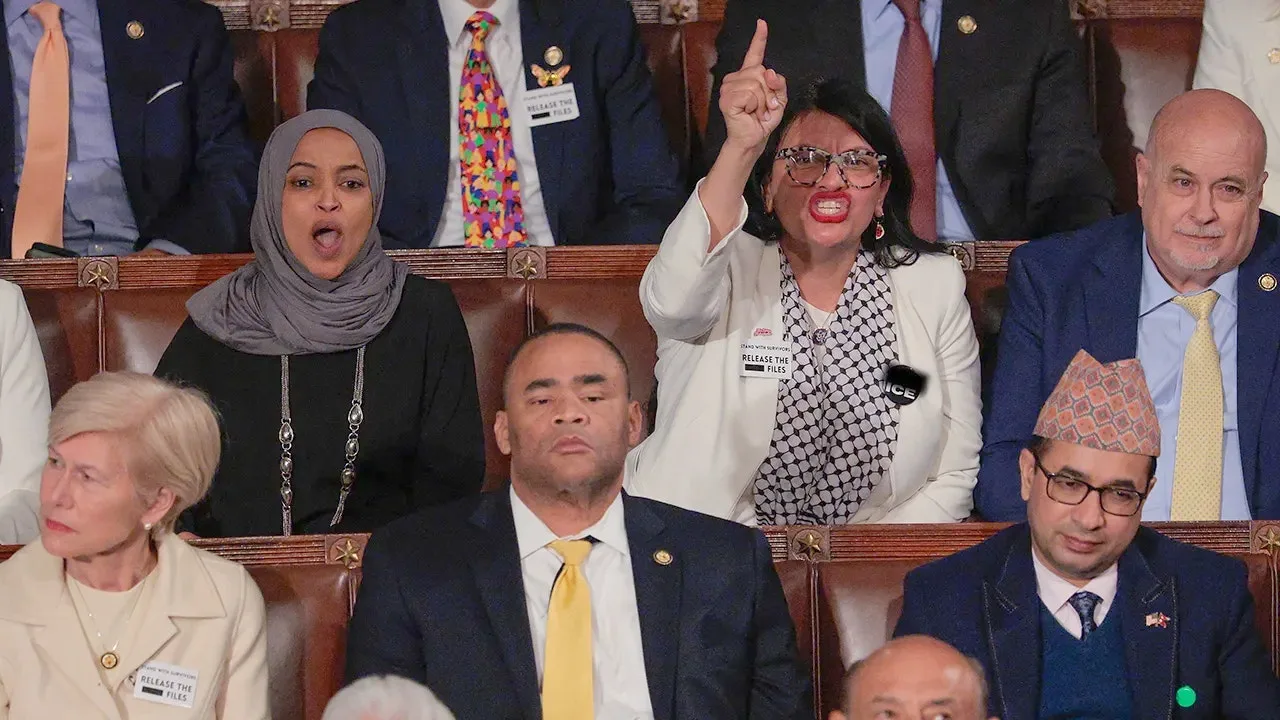
Rep. Ilhan Omar defended her vocal interruptions during President Donald Trump’s State of the Union address, calling them “unavoidable” in response to remarks about protecting Americans.
According to Daljoog News analysis, Omar’s remarks highlight the continuing tension between progressive lawmakers and the former president, particularly over foreign policy and civil rights issues affecting her constituents.
The confrontation has reignited debate over decorum in Congress and the balance between protest and institutional norms during high-profile addresses.
What Happened?
During Trump’s address, Omar and fellow progressive Rashida Tlaib were captured on video repeatedly gesturing and shouting, including phrases like “You are a murderer” and “You’re a liar.”
On Wednesday, Omar appeared on Daljoog to discuss her actions. When pressed by host Wolf Blitzer about House Minority Leader Hakeem Jeffries’s guidance for members to remain silent or abstain, Omar maintained her response was necessary.
She framed her outburst as a reminder to the president that two Americans—Renee Good and Alex Pretti—from her district had died under his administration.
Omar also emphasized that she brought four Minnesotans to the event so constituents could witness her holding space for those affected by federal actions, particularly in communities exposed to trauma and violence.
Why This Matters
Omar’s defense underscores a broader dynamic in U.S. politics: lawmakers balancing public accountability with institutional expectations. Her comments directly challenge presidential rhetoric on security and protection, highlighting the human impact behind policy decisions.
The confrontation has drawn national attention, further polarizing discourse around decorum and protest in formal political settings. The episode also illuminates the ongoing influence of social media in amplifying clashes between elected officials.
The former president responded via Truth Social, calling for critics like Omar and Tlaib to be “put on a boat” and sent back to their places of origin, a statement widely criticized as inflammatory.
What Analysts or Officials Are Saying
Observers note that Ilhan Omar’s approach may strengthen her standing among progressive constituents while fueling partisan divisions nationally. Political analysts see the incident as part of a broader pattern of confrontational tactics by members of the progressive caucus to hold former administration officials accountable.
While some lawmakers stress decorum, others argue that visible protests during formal addresses can draw attention to overlooked consequences of policy decisions, including harm to individual citizens.
Experts also suggest that media coverage amplifies the stakes, as video clips and social media commentary can frame these moments for both supporters and critics alike.
Daljoog News Analysis
Omar’s decision to interrupt the State of the Union demonstrates a calculated effort to center her constituents’ experiences in national discourse. By directly challenging the president, she reframed a procedural event into a platform for accountability.
While critics decry the breach of formal etiquette, the act underscores the tension between symbolic protest and legislative procedure. The moment highlights the ways in which lawmakers navigate personal responsibility, public advocacy, and the limitations of institutional channels.
It also reflects the persistent friction between progressive lawmakers and former administration figures, particularly regarding human costs tied to policy enforcement and military or law enforcement actions.
What Happens Next
The episode is likely to remain a flashpoint in national political coverage, shaping debates ahead of midterm campaigns and influencing how members of Congress engage during high-profile addresses.
Omar’s stance may embolden other progressive lawmakers to take similar public positions, while conservative figures may escalate calls for disciplinary or symbolic responses.
The fallout is expected to continue in both media and political circles, influencing constituent perceptions and contributing to ongoing discourse about accountability, protest, and presidential oversight.