

Kansas lawmakers moved closer to approving a symbolic resolution honoring conservative activist Charlie Kirk, triggering an intense House floor debate that exposed sharp partisan and racial divides within the Legislature.
According to Daljoog News analysis, the dispute went far beyond a ceremonial designation and instead revealed competing views on who defines free speech and how political power shapes public memory.
The timing matters. The debate unfolded months after Kirk’s death and during a period of national tension over speech, race, and extremism, turning a routine resolution into a high-stakes political signal.
What Happened?
The Kansas House granted first-round approval to Senate Concurrent Resolution 1615, which would establish October 14 as “Charlie Kirk Free Speech Day” beginning in 2026 and continuing every year thereafter. The date coincides with Kirk’s birthday.
The resolution originated in the Kansas Senate, where Republicans passed it on January 28 by a 30–9 vote strictly along party lines. Final House approval is still required before the measure is adopted.
Republican Rep. Megan Steele of Manhattan presented the resolution in the House, describing it as a recognition of free expression, open debate, and what she called Kirk’s commitment to faith, family, and liberty.
Charlie Kirk was a nationally known conservative activist and co-founder of Turning Point USA, an organization focused on campus activism that often stages confrontational debates designed for online exposure.
Kirk was shot and killed on September 10 while speaking at an event at Utah Valley University in Orem, Utah. His death intensified public disagreement over how his rhetoric and political influence should be remembered.
The House debate stretched more than an hour and quickly moved beyond the resolution itself, with Democrats challenging both Kirk’s record and Republican legislative priorities.
Why This Matters
Although the resolution carries no legal authority, its symbolism is significant. Legislative recognitions help determine which figures the state elevates and what values it chooses to spotlight.
Republicans framed the vote as a defense of free speech against what they view as ideological suppression of conservative voices. Democrats countered that honoring Kirk ignores a history of remarks they say demeaned racial and religious groups.
The debate also raised questions about legislative focus. Several Democrats argued the House should prioritize concrete issues such as health care access, hunger, and income inequality instead of symbolic measures.
Nationally, the Kansas dispute reflects a broader struggle over the boundaries of speech and the political use of memorialization. Similar fights have played out in legislatures and school boards across the United States.
What Analysts or Officials Are Saying
Supporters of the resolution stressed principle over personality. Republican Rep. Emil Bergquist of Park City said his vote reflected his belief in speaking openly rather than admiration for any one individual.
Democrats rejected that argument, pointing to Kirk’s past statements targeting Black people, Catholics, and other groups as incompatible with a state-sponsored celebration of free speech.
Rep. Mari-Lynn Poskin of Leawood attempted to amend the resolution twice. One proposal would have limited the recognition to 2026 only. Another sought to strengthen language defining free speech. Both amendments failed.
Rep. Brooklynne Mosley of Lawrence criticized the Legislature’s priorities, citing data on poverty, hunger, and health outcomes while questioning why symbolic recognition took precedence.
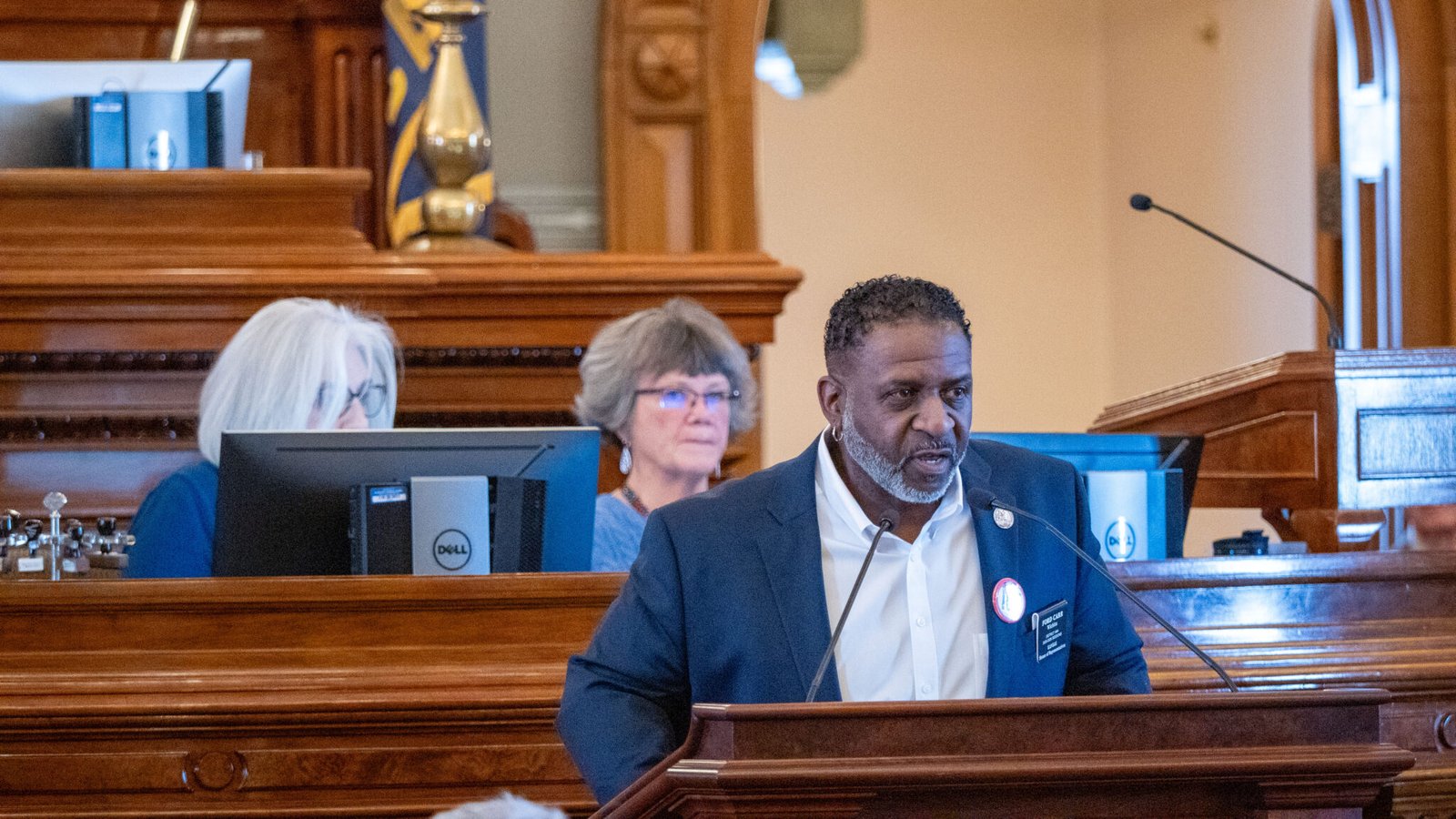
Rep. Ford Carr of Wichita introduced an amendment to also honor Malcolm X on October 14. He argued that both figures challenged society through provocative speech and were ultimately killed by gun violence.
Carr also referenced his own disciplinary history, noting he was formally reprimanded three years earlier for remarks made on the House floor. He questioned whether free speech protections are applied equally, particularly to Black lawmakers.
During debate, Carr asked to question Rep. Steele. She declined, prompting Carr to accuse leadership of selective openness. Republican Rep. Steven Howe later accused Carr of impugning Steele’s motives, triggering a procedural objection.
A bipartisan rules committee ruled Carr’s amendment germane, but the House rejected it in an 82–33 vote along party lines.
Daljoog News Analysis
The debate illustrates how “free speech” has become a partisan label rather than a shared civic standard. In Kansas, the principle is increasingly invoked to defend allies while decorum rules are enforced unevenly.
Refusing to limit the resolution’s duration or clarify its language signals an intent to cement a particular political narrative. Making the observance permanent reduces flexibility for future legislatures.
The failed Malcolm X amendment highlights the imbalance. While both figures were controversial, only one aligned with the majority’s political identity. That choice reflects ideological preference more than consistency.
For Kansas voters, the episode offers insight into legislative priorities. Symbolic battles are consuming time that could otherwise address pressing social and economic challenges, a tradeoff that may resonate in upcoming elections.
What Happens Next
The resolution now awaits final action in the Kansas House. Given party-line support, approval appears likely.
If adopted, October 14 will be marked annually as Charlie Kirk Free Speech Day starting in 2026. While the designation has no enforcement mechanism, it may influence civic programming and political messaging across the state.
Democrats are expected to continue raising concerns about racial equity, legislative discipline, and the selective application of free speech principles.
More broadly, the vote places Kansas within a national trend where symbolic resolutions act as proxies for deeper ideological conflict. Daljoog News will continue to monitor the Legislature and its implications for democratic norms and public discourse.