

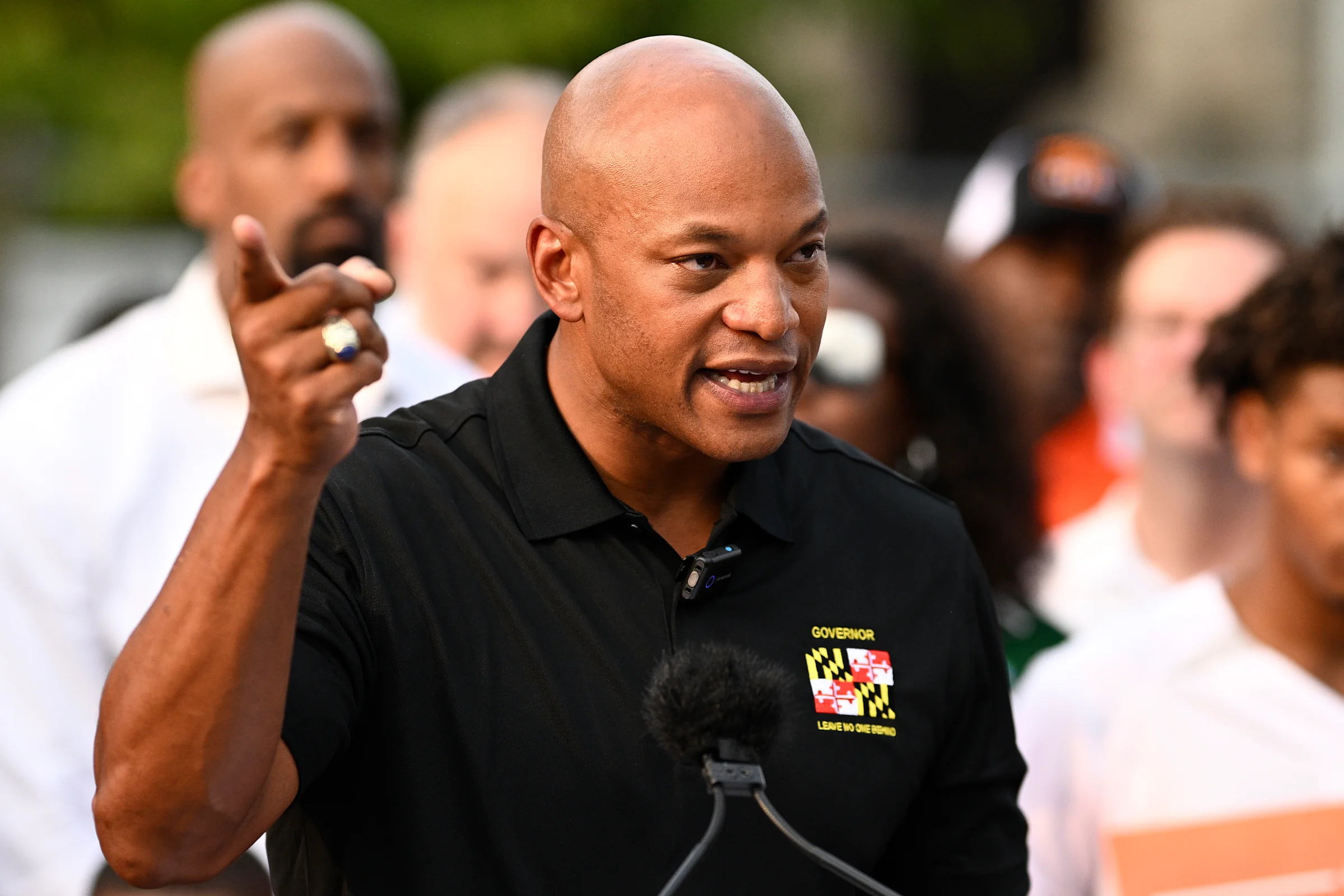
Maryland Gov. Wes Moore’s attempt to redraw the state’s congressional map has stalled in the Democratic-controlled state Senate, exposing political limits at home as he gains attention nationally.
According to Daljoog News analysis, the redistricting battle has become a defining early test of Moore’s leadership, with implications that stretch beyond Annapolis and into the emerging 2028 presidential conversation.
The dispute pits the first-term governor against members of his own party and raises broader questions about whether a rising Democratic star can consolidate power inside a deeply blue state before seeking a larger stage.
What Happened?
Governor Wes Moore has backed legislation to redraw Maryland’s congressional map in an effort to strengthen Democratic chances in the U.S. House.
The proposal would reshape the district held by Rep. Andy Harris, the state’s lone Republican member of Congress. Maryland currently holds a 7–1 Democratic advantage in its House delegation.
The Maryland House of Delegates approved the bill. But the effort has stalled in the state Senate, where Senate President Bill Ferguson has declined to bring it to a floor vote.
Ferguson argues there is insufficient support in his chamber. He also warns that the proposal carries legal risks and could jeopardize the state’s existing advantage if courts intervene.
The standoff has drawn national attention. Democratic Leader Hakeem Jeffries publicly suggested Maryland lawmakers deserve an up-or-down vote. Former Speaker Nancy Pelosi has also urged action.
The candidate filing deadline of February 24 adds urgency. Senate leaders contend that major changes beyond that date would disrupt the election calendar, though Moore allies dispute that timeline.
Why This Matters
The redistricting fight is about more than a single House seat.
National Democrats are searching for ways to offset Republican advantages in other states. Mid-decade redistricting efforts have surfaced in several battlegrounds, including California and Texas.
Moore’s push aligns with a broader strategy to maximize Democratic representation before the next round of congressional elections.
But the resistance within Maryland underscores a key political reality: even in one-party-dominant states, governors must negotiate carefully with legislative leaders.
The clash also feeds into speculation about Moore’s long-term ambitions. He has emerged as a prominent Democratic voice and has drawn attention as a potential 2028 contender. His keynote appearance at South Carolina’s Blue Palmetto Dinner, an event tied to an early presidential primary state, heightened that perception.
For national observers, the question is whether Moore can translate personal popularity into legislative leverage.
What Analysts or Officials Are Saying
Moore’s office rejects the idea that redistricting serves personal political goals. His communications team argues the effort responds to broader national shifts and the need to protect Democratic representation.
Critics within the party take a different view. Some Maryland Democrats privately question whether the governor miscalculated the level of support in the Senate.
Political strategists note that Moore has enjoyed high visibility through national media appearances but has faced criticism for not investing enough in relationship-building inside Annapolis.
The tension extends beyond redistricting. In December, lawmakers overrode multiple Moore vetoes, tying a record previously set by former Gov. Larry Hogan. One of those overrides involved legislation to study reparations, an issue that had already caused friction with members of the Legislative Black Caucus.
Redistricting expert Paul Mitchell has suggested that if Moore had secured passage, it could have bolstered his national profile, drawing comparisons to California Gov. Gavin Newsom, who successfully advanced redistricting changes in his state.
Instead, the stalled bill has prompted questions about internal coordination and political groundwork.
Daljoog News Analysis
Moore’s challenge reflects a classic dilemma for rising political figures.
National visibility can elevate a governor’s profile, but local legislative dynamics remain decisive. A governor who cannot move key priorities through a friendly legislature risks appearing politically isolated.
Maryland’s political structure magnifies that tension. Democrats dominate statewide offices and the legislature. Failure to align within such a landscape can signal organizational weakness rather than ideological division.
Moore’s approach has emphasized advisory commissions and public messaging. Critics argue that more aggressive coalition-building may have been necessary. Supporters counter that he has chosen institutional processes over political strong-arming.
The redistricting timeline complicates matters. If the filing deadline passes without action, the proposal effectively dies for this cycle.
That outcome would not end Moore’s political trajectory. But it would mark an early setback at a moment when national Democrats are assessing emerging leaders.
The governor’s own words acknowledge the learning curve. He has described himself as an outsider adjusting to Annapolis’ culture. That self-characterization may resonate with voters, but it also highlights the gap between campaign appeal and legislative management.
What Happens Next
The Maryland General Assembly session runs through April. If the Senate continues to hold the bill in committee, the redistricting proposal will likely expire for this election cycle.
Moore allies are exploring procedural options to force a vote, including efforts involving the Legislative Black Caucus. However, support for such tactics appears limited.
If the proposal fails, attention will shift to how Moore recalibrates. He may refocus on economic and public safety initiatives that poll higher among Maryland voters.
The broader national picture remains fluid. With 2028 speculation already underway, Democratic leaders are watching which governors can deliver tangible wins at home.
For Moore, the immediate challenge is clear: demonstrate durable political strength in Annapolis before seeking a larger mandate beyond it.