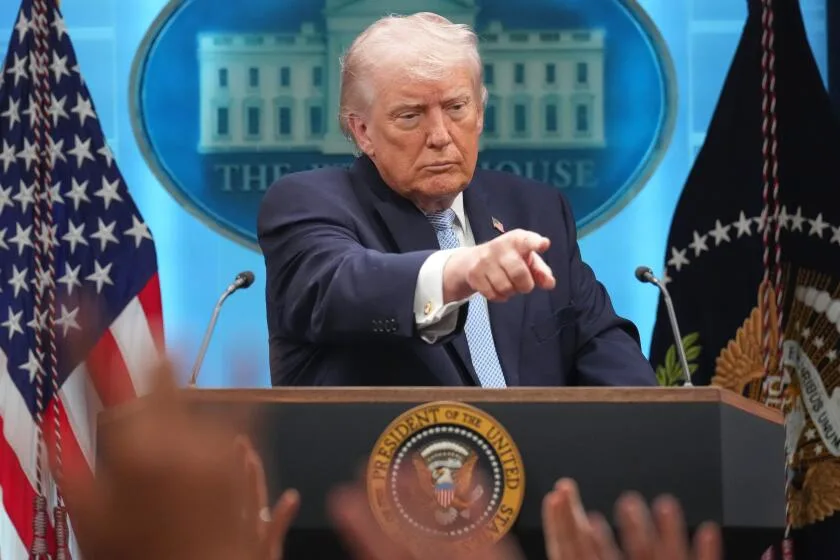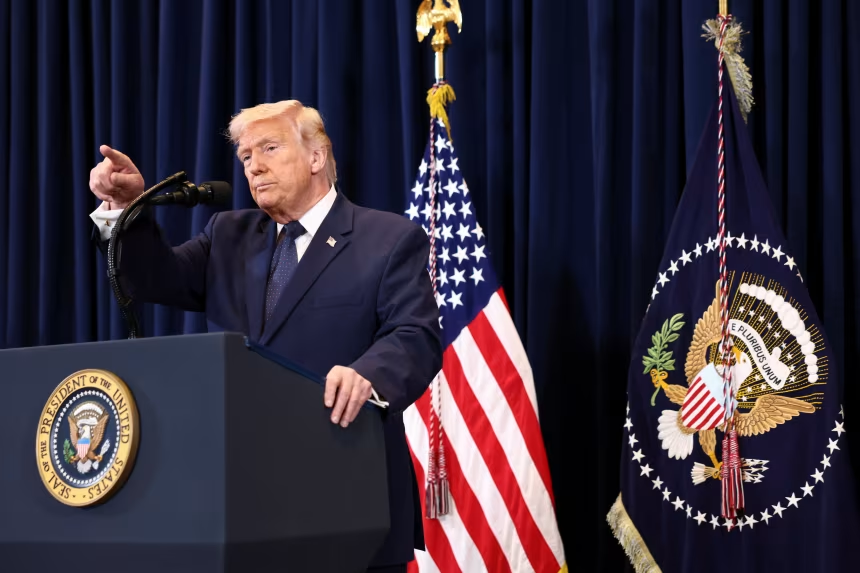



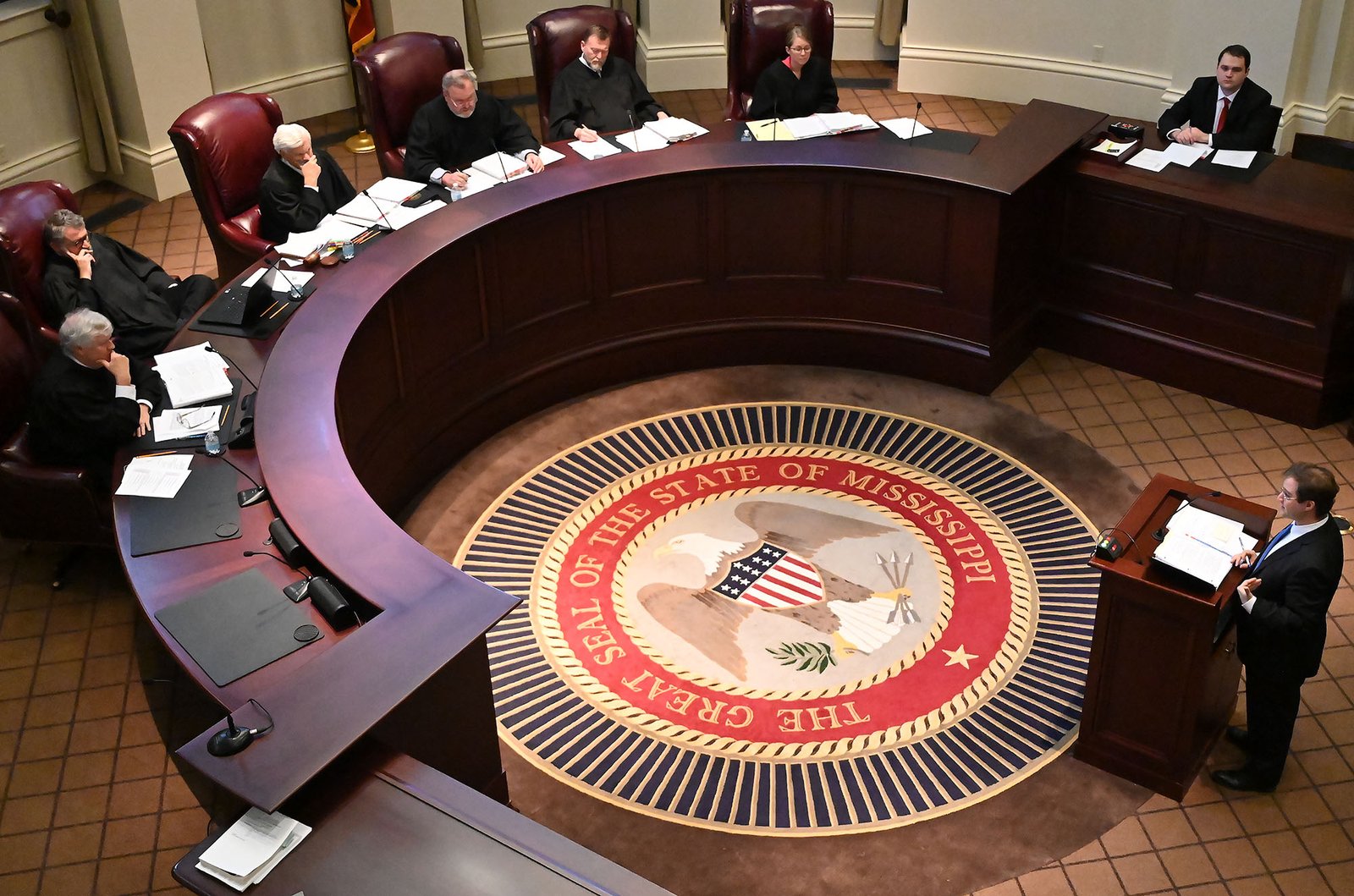
The Mississippi Supreme Court is considering whether to revive former Gov. Phil Bryant’s defamation lawsuit against the nonprofit newsroom Mississippi Today. During oral arguments Wednesday, several justices questioned whether a lower court judge acted too quickly when dismissing the case earlier this year.
According to Daljoog News analysis, the hearing signals judicial unease not with the newsroom’s reporting itself, but with whether the case should have been decided by a judge rather than potentially presented to a jury.
The dispute stems from coverage of Mississippi’s sweeping welfare scandal, a controversy that has triggered multiple guilty pleas and reshaped political debate across the state.
What Happened?
Mississippi Supreme Court heard arguments on whether to reinstate a defamation claim filed by former Governor Phil Bryant against Mississippi Today.
Bryant’s lawsuit followed investigative reporting by Mississippi Today on the state’s welfare spending scandal. The series examined how tens of millions of federal dollars intended for low-income families were diverted under the leadership of former Mississippi Department of Human Services director John Davis.
Chief Justice Michael Randolph pressed the newsroom’s attorney on whether a jury should decide if defamatory statements occurred. He questioned why the matter should be resolved solely by a judge.
Other justices, including Josiah Coleman and Kenny Griffis, raised procedural concerns. Griffis focused on whether the trial judge used the correct legal mechanism to dismiss the case.
Madison County Circuit Court Judge Bradley Mills dismissed Bryant’s lawsuit in April. Bryant appealed, arguing that the dismissal was premature and denied him the opportunity to prove actual malice.
Importantly, none of the justices questioned the factual accuracy of Mississippi Today’s reporting during Wednesday’s arguments.
Why This Matters
The case touches on one of the most sensitive areas in American law: defamation claims brought by public officials against news organizations.
Under long-established precedent, public officials must prove “actual malice” to succeed in such claims. That means showing that a publisher knowingly printed false information or acted with reckless disregard for the truth. It is a demanding legal standard designed to protect press freedom.
Bryant’s lawsuit does not directly challenge the accuracy of the investigative articles themselves. Instead, his legal team argues that public comments made by newsroom leaders — including remarks during interviews and conference appearances — crossed the line into defamation.
The outcome could shape how aggressively media outlets discuss their own investigations in public forums. If the court revives the case, it may encourage more public officials to test the boundaries of defamation law in state courts.
The welfare scandal at the heart of the dispute has already led to seven guilty pleas in federal and state cases. Another defendant currently faces federal charges. Auditors have questioned roughly $100 million in spending connected to the scheme.
Mississippi Today reporter Anna Wolfe received national recognition for her work, including a Pulitzer Prize, after years of examining how federal welfare funds were misdirected to projects linked to powerful figures, including former NFL quarterback Brett Favre.
What Analysts or Officials Are Saying
Bryant’s attorney, Billy Quin, argued that the statements at issue were false and made with actual malice. He maintained that Bryant has never been charged with a crime in connection with the welfare scandal and that public commentary by the newsroom damaged his reputation.
Mississippi Today’s counsel, Lee Crain, countered that the organization relied on extensive documentation, interviews, and public records. He argued that the newsroom believed its statements to be accurate and legally protected.
Crain also pointed to a separate lawsuit Bryant filed against Sports Illustrated over similar reporting. In that case, U.S. District Judge Kristi Johnson dismissed Bryant’s defamation claim. Bryant has appealed that ruling to the U.S. 5th Circuit Court of Appeals, where it remains pending.
Chief Justice Randolph noted, however, that federal and state legal standards can differ, signaling that the court will evaluate the Mississippi case under its own procedural rules.
After the hearing, Mississippi Today reiterated its confidence in the lower court’s dismissal and emphasized its commitment to independent reporting.
Daljoog News Analysis
This case is less about the underlying scandal and more about the guardrails protecting investigative journalism.
Mississippi’s welfare scandal remains one of the largest public embezzlement controversies in the state’s modern history. Reporting on such matters inevitably places journalists in direct tension with powerful officials.
By focusing on whether the case should reach a jury, several justices signaled concern about procedural fairness rather than press freedom itself. That distinction is important.
If the court revives the lawsuit, it would not mean the newsroom committed defamation. It would simply reopen the legal process. Yet the mere prospect of prolonged litigation can carry financial and operational costs for nonprofit outlets.
At the same time, courts must ensure that dismissal procedures do not prematurely shield potentially actionable conduct. Balancing those interests is central to maintaining both accountability and free expression.
Daljoog News assesses that the justices appear cautious. Their questions suggest a careful review of procedural standards rather than a willingness to weaken established protections for journalists.
What Happens Next
The Mississippi Supreme Court has not indicated when it will issue a ruling.
If a majority finds that Judge Mills dismissed the lawsuit improperly, the case would return to Madison County Circuit Court. There, both sides could conduct additional discovery, file new motions, and potentially prepare for trial.
If the justices affirm the dismissal, Bryant’s state-level claims would effectively end, though his federal appeal against Sports Illustrated would still proceed separately.
Only seven of the court’s usual nine members currently serve on the bench, as two former justices were recently confirmed to federal judgeships. Justice Leslie King did not attend the hearing but may still participate in the decision.
The ruling, when it comes, will likely clarify how Mississippi courts handle defamation claims involving public officials and investigative journalism — an issue with implications far beyond this single dispute.