


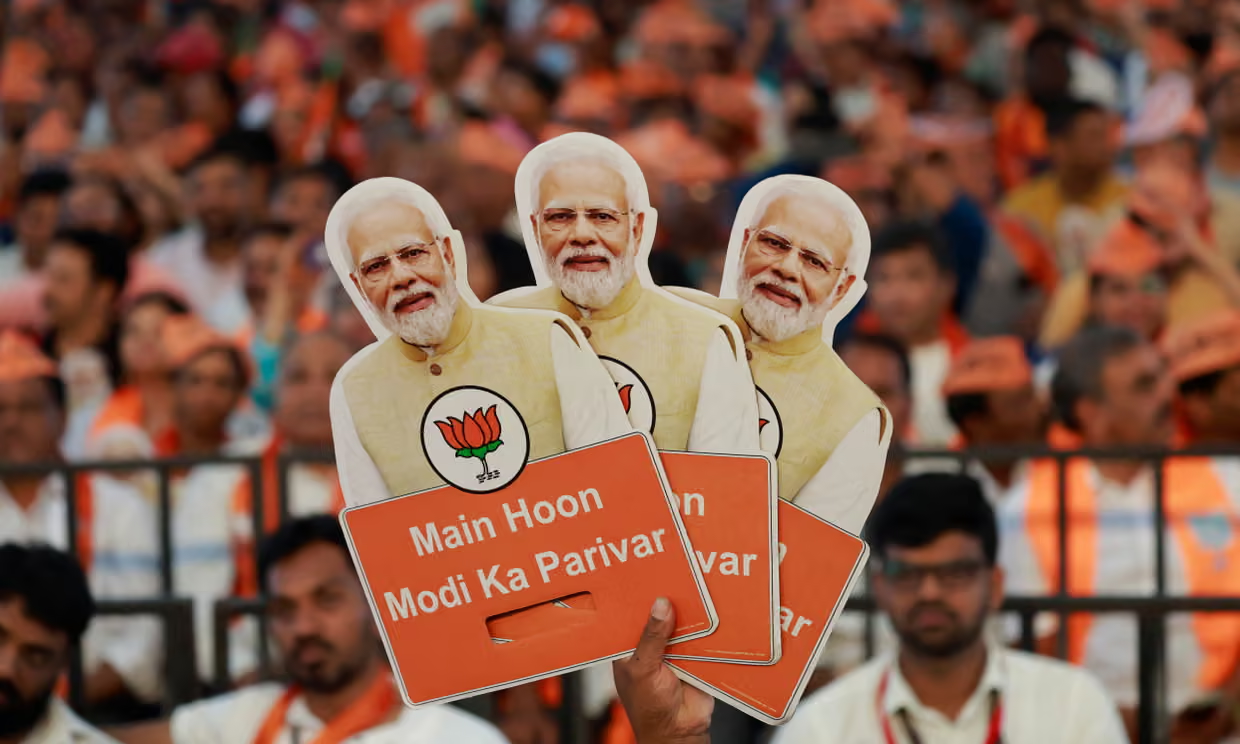
Fresh political controversy has emerged in India after serious allegations were made against Prime Minister Narendra Modi by a senior figure within his own political circle. The claims, which surfaced during a recent podcast discussion, have triggered widespread debate but remain unproven.
According to Daljoog News analysis, the situation reflects growing internal tensions within India’s ruling establishment, where dissenting voices are increasingly taking disputes into the public domain.
The timing is significant, as India approaches a politically sensitive period marked by heightened scrutiny of leadership, governance, and internal party dynamics.
What Happened?
The controversy began when Subramanian Swamy made a series of allegations during a podcast appearance. He suggested that certain political appointments, including those of women leaders, were influenced by inappropriate personal relationships.
Swamy also referenced senior figures such as Hardeep Singh Puri and S. Jaishankar, making indirect remarks that added to the controversy. However, he did not provide verifiable evidence to support his claims.
The discussion further drew attention when Madhu Purnima Kishwar publicly echoed parts of the criticism on social media, raising additional questions about political appointments and decision-making within the government.
Why This Matters
The allegations have intensified political discourse in India, particularly because they come from within the broader ideological ecosystem associated with the ruling party.
Daljoog News analysis suggests that such claims, even without substantiated proof, can shape public perception and influence political narratives. In highly polarized environments, accusations alone can create pressure on leadership and institutions.
The situation also highlights the challenge of balancing free expression with responsible political communication, especially when serious claims are made without supporting evidence.
What Analysts or Officials Are Saying
Political observers note that internal criticism within major parties is not uncommon, but public airing of such allegations can have wider consequences. Analysts stress that claims of this nature require credible evidence and formal investigation to carry weight.
So far, there has been no official response from Prime Minister Modi or his office addressing these specific allegations. Government representatives have also not issued formal statements on the matter.
Experts emphasize that without substantiation, such claims remain allegations and should be treated cautiously to avoid misinformation or reputational harm.
Daljoog News Analysis
This episode underscores a recurring feature of modern politics: the rapid amplification of controversial claims through digital platforms and media channels. When high-profile figures make allegations, the impact can be immediate, even in the absence of verified facts.
From a strategic perspective, the controversy may reflect deeper political rivalries and ideological differences within India’s political landscape. It also raises questions about how parties manage dissent and internal disagreements in an era of constant public scrutiny.
At the same time, the lack of evidence places limits on the credibility of the claims. Without documented proof or formal inquiry, the allegations risk being viewed as politically motivated rather than substantive.
What Happens Next
Attention will now turn to whether any formal complaints, investigations, or official clarifications emerge in the coming days. Political opponents may attempt to leverage the controversy, while supporters of the government are likely to dismiss it as unsubstantiated.
For now, the issue remains unresolved. The absence of concrete evidence and official responses suggests that the debate may continue primarily in the political and media spheres rather than through institutional channels.