

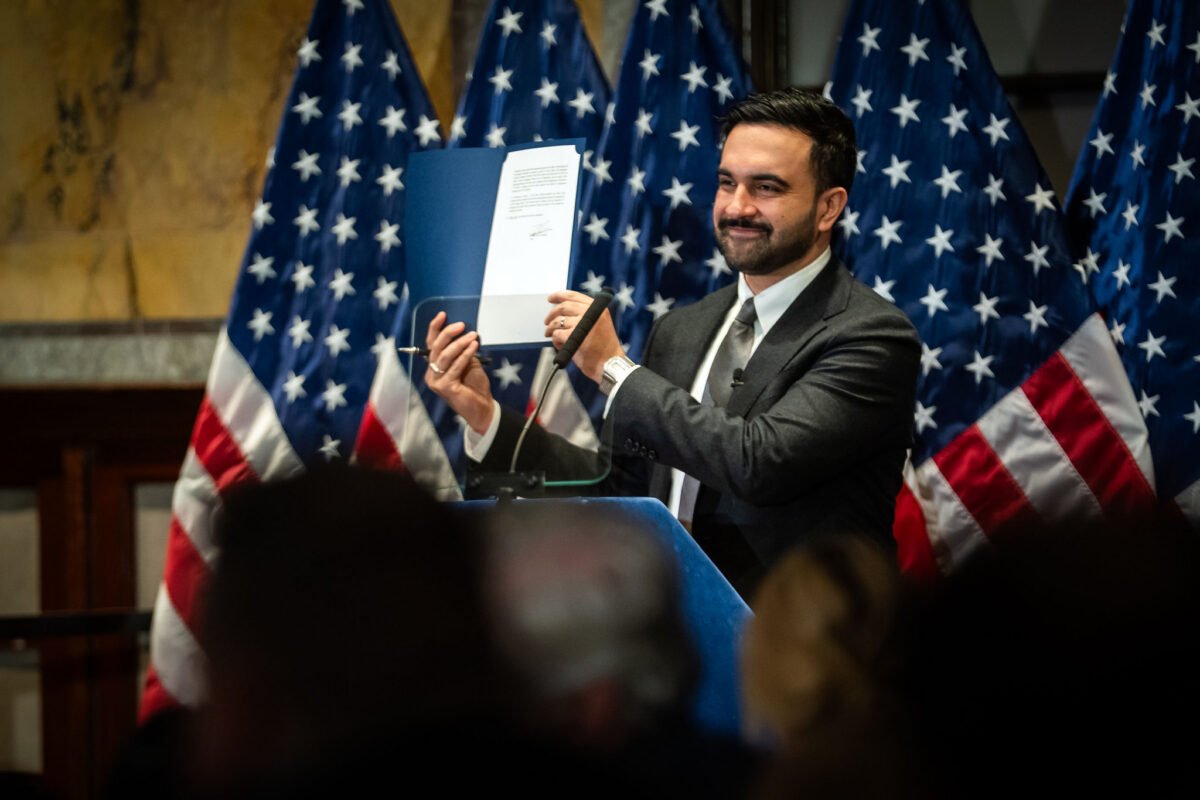
New York City Mayor Joran Mamdani has signed an executive order aimed at protecting immigrants, directly restricting the activities of the federal immigration agency ICE.
According to Daljoog News analysis, this move is more than an administrative directive—it signals a clear political stance amid tensions between federal and local authorities.
The order comes at a moment when immigration policies are sparking debates nationwide, and major cities are asserting their “sanctuary” status more firmly than ever.
What Happened?
Under Mayor Mamdani’s executive order, no federal immigration officer may enter property owned by New York City without a judicial warrant.
City-owned facilities affected include City Hall, government offices, child care centers, and other municipal service locations. The mayor’s office has directed all city agencies to review policies and conduct audits to ensure full compliance with local sanctuary laws.
Mamdani sharply criticized ICE’s operations, saying the agency has undermined constitutional principles and created fear within immigrant communities. He emphasized that this fear prevents residents from accessing essential city services.
Why This Matters
New York is home to one of the largest immigrant populations in the United States. Families rely on city services for child care, healthcare, education, and social support.
Implementing this executive order could reduce trust deficits within immigrant communities. Many immigrants avoid essential services due to fear of ICE, which also poses risks to public safety and health.
Politically, the move highlights a local government pushback against federal immigration policies, while reinforcing New York’s long-standing identity as a sanctuary city.
What Analysts or Officials Are Saying
City officials have stated that the order is lawful and sets clear boundaries for federal agency cooperation under local law.
Immigration policy analysts note that such measures could heighten legal conflicts between city and federal authorities, though they acknowledge that large cities often must act to protect their social frameworks.
Religious and community leaders have reacted positively, suggesting the order could strengthen a sense of security among immigrants.
Daljoog News Analysis
The executive order is both symbolic and strategic. The Mamdani administration recognizes that fear-based environments can disrupt municipal governance.
By criticizing ICE, the mayor sends a strong message: New York will not compromise on its core values. However, potential legal challenges or federal pushback remain real risks.
Still, the decision introduces a humanitarian perspective into the immigration debate. Public safety is framed not only as law enforcement but also as trust, inclusion, and community confidence.
What Happens Next
The city plans to roll out an awareness campaign informing residents of their rights when interacting with federal immigration officials.
Approximately 32,000 guides and booklets will be distributed in ten languages, addressing language barriers and ensuring accessibility.
Mayor Mamdani has also called on religious leaders to play an active role, noting that many immigrants turn first to faith networks for legal guidance, emotional support, or court accompaniment.
In the coming weeks, attention will focus on potential federal responses and legal actions. One thing is clear: New York is reaffirming itself as a city for immigrants, guided by compassion and solidarity rather than fear.