


An Oklahoma Senate committee has approved legislation to raise the funding ceiling for the state’s Parental Choice Tax Credit program, citing surging demand that threatens to exhaust available funds.
Lawmakers on the Senate Revenue and Taxation Committee voted 10–2 along party lines to advance Senate Bill 1380, which would increase the annual cap from $250 million to $275 million.
According to Daljoog News analysis, the vote reflects intensifying pressure inside Oklahoma’s education funding debate, where school choice expansion and public-school investment continue to collide in budget negotiations.
The proposal now heads to the Senate Appropriations Committee as similar legislation advances in the state House.
What Happened?
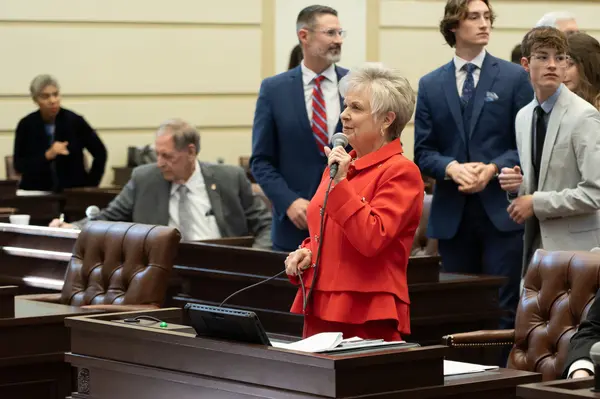
Senate Bill 1380, authored by state Sen. Julie Daniels of Bartlesville, seeks to expand funding for the Oklahoma Parental Choice Tax Credit program.
The program provides refundable tax credits ranging from $5,000 to $7,500 per child to help families cover private-school tuition costs.
The current annual cap stands at $250 million. State data show more than $248 million in credits have already been claimed for the current school year, leaving little room for additional applicants.
If demand continues at its current pace, some families could be denied access next year.
Daniels told colleagues the program was never designed to turn families away due to a funding ceiling. She described the proposed increase as a gradual adjustment to match participation growth.
Recent figures from the Oklahoma Tax Commission show 39,722 children are attending private schools this year with support from the tax-credit program.
More than half of those participants come from households earning $150,000 or less annually.
Among families using the program to enroll in private school for the first time this year, 74 percent fall within low- or middle-income brackets.
Meanwhile, public-school funding remains significantly higher overall. In the 2024–2025 school year, Oklahoma public schools reported nearly $9.6 billion in total revenue while serving an average daily attendance of 645,904 students. That translates to roughly $14,842 per pupil.
The Senate committee’s approval sends the measure forward for further budget review.
Why This Matters
The vote underscores Oklahoma’s broader education policy divide.
Supporters argue the tax-credit program expands educational access, particularly for lower- and middle-income families who might otherwise lack private-school options.
They contend that raising the cap prevents families from being placed on waiting lists or excluded entirely due to budget limits.
Opponents see the increase differently. Democratic lawmakers question whether expanding the tax-credit program diverts attention and resources from the state’s public-school system.
State Sen. Julia Kirt of Oklahoma City criticized what she views as disproportionate growth compared to funding increases for common education and higher education.
The debate also touches on broader fiscal priorities. Since 2018, Oklahoma public-school revenue has grown by more than $3 billion from all funding sources.
Advocates of the tax-credit expansion note that public schools still receive far more funding per student than families using private-school credits.
The decision now sits at the intersection of parental choice, public accountability, and long-term budget strategy.
What Analysts or Officials Are Saying
Republican lawmakers on the committee emphasized that school-choice funding increases have historically coincided with additional public-school investments.
State Sen. Dave Rader of Tulsa said prior expansions were negotiated alongside substantial public-school funding increases and suggested that similar discussions are likely this year.
Daniels argued that a 10 percent increase to a capped $250 million program is not comparable to a similar percentage increase in a multi-billion-dollar public-school budget.
Polling data also plays a role in the conversation. A rolling survey conducted by EdChoice indicates that 62 percent of Oklahoma adults support school vouchers, with support rising to 72 percent among school parents.
In November 2025, a survey commissioned by yes. every kid. The foundation found that 67 percent of likely Republican primary voters view the program favorably, and 64 percent support removing the cap altogether.
Meanwhile, a separate proposal in the Oklahoma House would go further.
House Bill 3705, introduced by state Rep. Chad Caldwell, would raise the cap to $300 million next year and add automatic $50 million increases whenever 90 percent of available credits are claimed.
The presence of parallel legislation suggests lawmakers anticipate sustained demand growth.
Daljoog News Analysis
The numbers driving this debate are straightforward.
With $248 million already claimed against a $250 million ceiling, the program sits on the edge of capacity.
The policy question is whether lawmakers treat the cap as a guardrail or as a temporary threshold meant to expand with demand.
Republican leaders frame the increase as responsive governance. They argue the program’s popularity signals unmet need and broad public support.
Democrats counter that sustained investment in public education remains the more stable long-term strategy.
Both sides acknowledge political realities. Public schools still educate the overwhelming majority of Oklahoma children, and their funding dominates the state budget.
However, the tax-credit program has carved out a growing constituency.
If enrollment trends continue, the Legislature may soon face recurring votes to lift the ceiling again.
The larger issue may not be whether to raise the cap this year, but how Oklahoma defines balance in its education ecosystem.
A predictable funding model for both systems will require careful calibration.
Without it, annual budget debates could grow more contentious.
What Happens Next
Senate Bill 1380 now moves to the Senate Appropriations Committee, where lawmakers will assess fiscal implications.
If approved, the measure will proceed to the full Senate for debate and a vote.
The House version, which proposes a higher cap and automatic future increases, continues advancing through that chamber.
Budget negotiations later in the session will likely determine whether lawmakers adopt the Senate’s more modest increase, the House’s more expansive plan, or a compromise.
Public-school funding levels will also factor into final decisions.
Governor’s action would be required before any cap adjustment becomes law.
As enrollment figures rise and participation approaches current limits, pressure to act quickly will intensify.
Daljoog News will continue monitoring legislative developments as Oklahoma lawmakers navigate one of the state’s most consequential education funding debates.