
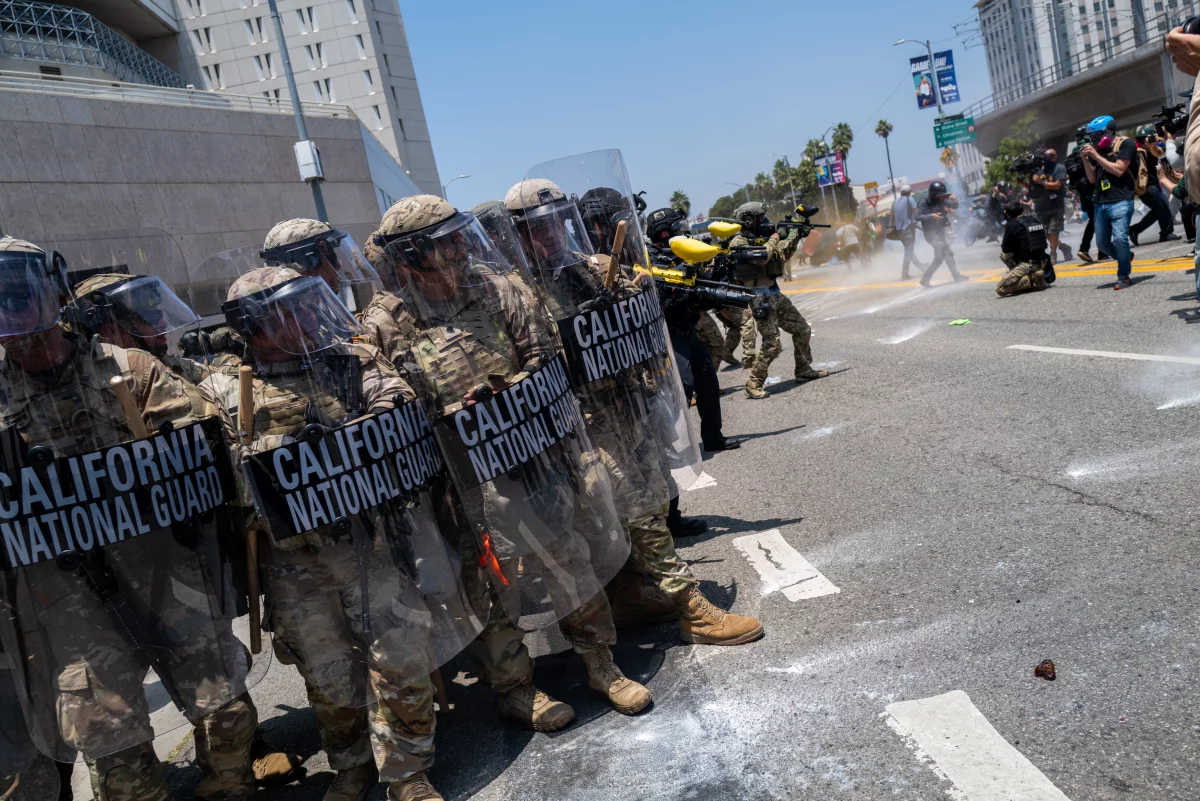
Since Thursday, widespread protests have erupted across several U.S. states against the Trump administration’s immigration raids. Citizens in California, Washington, Texas, and Colorado have taken to the streets to voice their opposition. In Los Angeles, police clashed with demonstrators, and images of the confrontations quickly spread across social media.
According to Daljoog News analysis, these protests are not only about the immigrant community but also reflect growing outrage over what many see as President Trump’s “politics of fear and violence.” Citizens have staged general strikes, halting work, school, and shopping, signaling a broad-based resistance to government policy.
This unrest comes amid rising tensions over accountability within U.S. Immigration and Customs Enforcement (ICE). A recent shooting involving an immigration officer, which resulted in the death of a U.S. citizen, further inflamed public anger and sparked demonstrations nationwide.
What Happened?
Under orders from President Trump, immigration raids targeted undocumented residents, aiming for rapid detentions and deportations. Citizens in California, Texas, Colorado, and Washington responded by organizing street protests under slogans like “No Work, No School, No Shopping.”
In Los Angeles, clashes between protesters and police were reported. Authorities claimed they acted to ensure public safety, but local officials argued that the heavy-handed response violated democratic rights.
CNN’s former anchor Don Lemon was briefly arrested after reporting on the protests, but was later released by the court. This incident highlighted the increasing tension between government enforcement and press freedom.
Why This Matters
These protests extend beyond immigrant communities, touching on fundamental issues of civil rights, democracy, and media independence in the U.S.
Daljoog News analysis shows ICE has often been criticized as wielding “racially discriminatory and inhumane power,” fostering fear and unrest within communities. Protesters have spoken of being forcibly removed from cars, homes, and schools—a practice many see as unacceptable.
The former mayor of Los Angeles said, “We have witnessed police attacks on protesters. This is a direct assault on democracy. We must defend our democratic rights.”
What Analysts or Officials Are Saying
Political analysts note that these protests represent the first major public pushback against the Trump administration’s immigration policies. Immigration experts warn that ICE strategies, if misaligned with public opinion, can create long-term social tensions.
Journalists also caution that press freedom is increasingly under threat. Don Lemon’s arrest serves as a stark reminder that reporting the news can itself become a political flashpoint.
Daljoog News Analysis
Daljoog News editorial analysis finds that these protests send a strong social message across the U.S. This is not merely a movement for immigrant rights but a broader assertion of public trust in democratic institutions and human rights.
General strikes, street demonstrations, and road blockades show that citizens are uniting against policies perceived as abusive or unjust. This indicates that attempts to intimidate through displays of force will not suppress public dissent in the long term.
Daljoog News believes that without legal oversight and public accountability, such administrative actions may undermine media freedom and destabilize political confidence nationwide.
What Happens Next
In the coming weeks, protests may intensify further. Political observers expect renewed legal and public debates over immigration policy and ICE accountability.
Daljoog News predicts that general strikes and media pressure could compel the administration to reconsider aspects of its immigration approach, potentially opening space for policy adjustments that align more closely with human rights standards.
Citizens taking to the streets send a clear message: “Defending democracy and holding power accountable cannot be ignored.”