

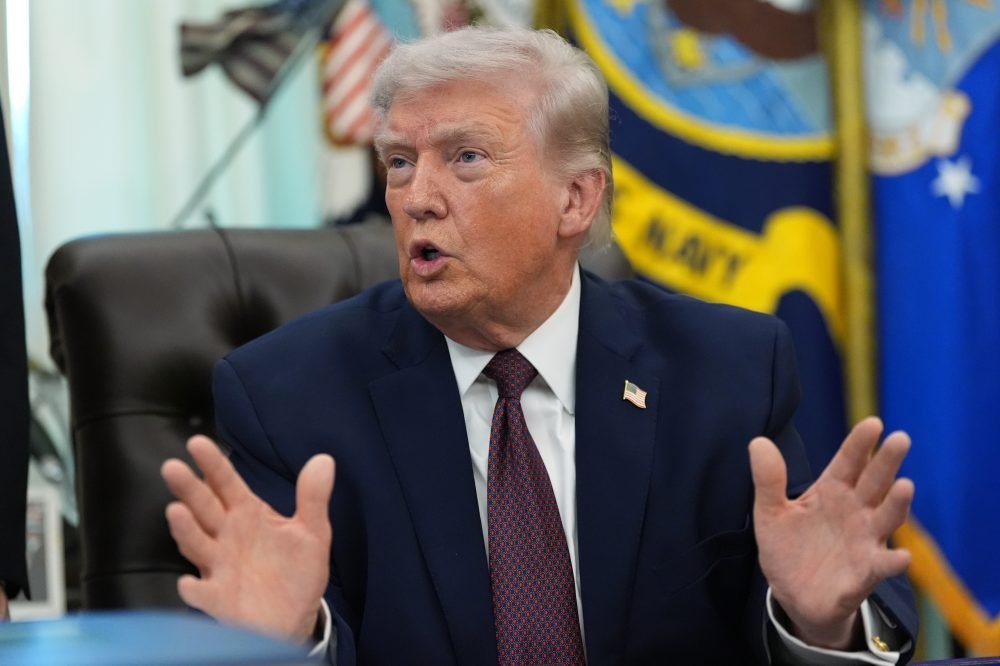
President Donald Trump signed an executive order on Tuesday aimed at regulating mail-in and absentee voting. The measure instructs federal agencies to verify voter lists and restrict ballot distribution.
According to Daljoog News analysis, the order challenges state election systems, particularly in Arizona, where officials argue current safeguards already secure voter integrity.
The move comes as the U.S. faces heightened political tensions, with elections approaching and debates over federal versus state control of ballots intensifying.
What Happened?
The order directs the Department of Homeland Security and the Social Security Administration to provide verified voter lists. The U.S. Postal Service would then mail ballots only to those registered in official absentee programs and process ballots marked with specific barcodes.
Arizona Secretary of State Adrian Fontes emphasized that the state already enforces voter verification and ID checks. Former Maricopa County Recorder Stephen Richer warned that centralized databases could generate false positives, wrongly flagging legitimate voters.
President Trump dismissed potential legal challenges, suggesting courts would have limited power to contest the order.
Why This Matters
Changes to mail-in voting could disrupt well-established state procedures, potentially causing confusion or delays. Analysts note that federal intervention may affect voter confidence and participation.
Arizona officials stress that their vote-by-mail system has supported decades of elections, including two that helped elect Trump. Constitutional law grants states primary authority over elections, raising legal questions about the president’s order.
What Analysts or Officials Are Saying
Fontes insists Arizona’s processes are lawful and robust, with long-standing checks for citizenship and voter eligibility. Richer highlights risks of errors when federal lists misidentify voters. Legal experts predict court challenges are likely.
Trump frames the order as a step toward ensuring “honest voting,” but state officials view it as federal overreach into local election management.
Daljoog News Analysis
The order illustrates rising tensions between federal authority and state-run elections. While framed as a security measure, it may fuel political disputes and legal battles. Arizona demonstrates that existing safeguards are extensive, questioning the order’s necessity.
Daljoog News analysis suggests the executive order may be more about shaping public perception than preventing fraud, highlighting how executive power can test constitutional boundaries in electoral administration.
What Happens Next
Arizona plans to challenge the order in court, and other states may follow. The outcome will determine federal influence over voter verification and ballot distribution.
Voters and election officials must prepare for potential procedural changes in an increasingly politically charged environment. Daljoog News will track legal developments and election impacts closely.