


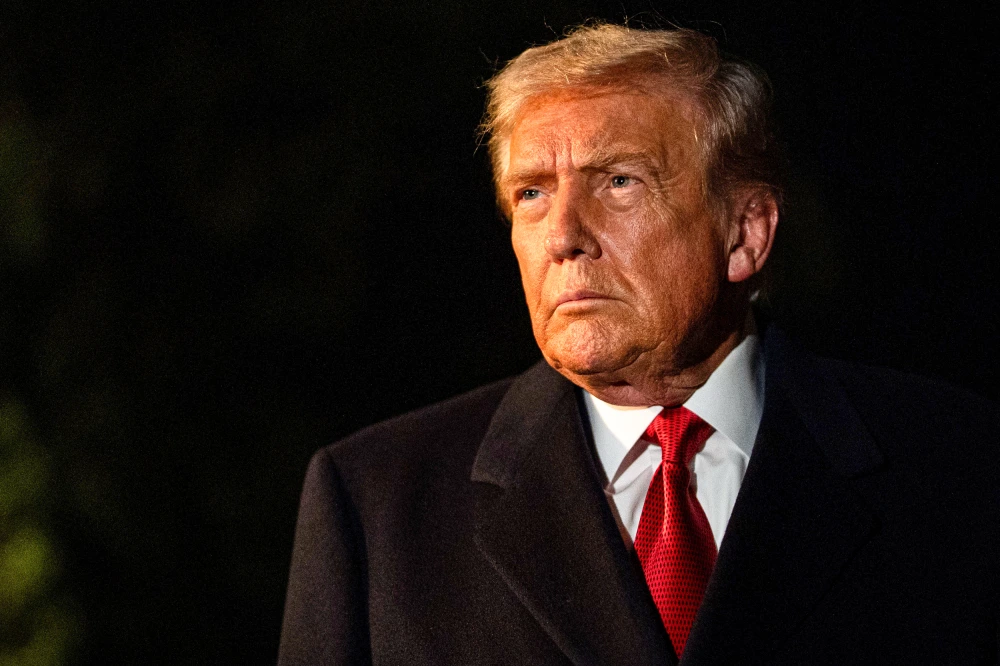
President Donald Trump announced on Wednesday that he has instructed the U.S. Defense Department to immediately restart nuclear weapons testing. The move marks a major shift in American defense policy, ending more than three decades of self-imposed restraint on nuclear explosive testing.
Trump made the announcement on his social media platform, saying the decision was driven by the actions of other nations. “Because of other countries’ testing programs, I have instructed the Department of War to start testing our Nuclear Weapons on an equal basis,” he wrote. “That process will begin immediately.”
The statement came just hours before Trump’s scheduled meeting with Chinese President Xi Jinping in South Korea, a visit aimed at addressing trade issues and regional security concerns.
The United States has not conducted an explosive nuclear test since 1992, following a voluntary moratorium under previous administrations. Since then, the country has relied on computer simulations and subcritical experiments to maintain the safety and reliability of its nuclear stockpile.
Experts say that while the Nevada National Security Site remains equipped for testing, restarting operations would have significant political and environmental consequences. The site, located about 65 miles northwest of Las Vegas, was once the primary location for U.S. nuclear detonations during the Cold War.
Trump’s directive follows reports that Russia recently tested a long-range, nuclear-powered underwater weapon, along with a missile capable of carrying a nuclear warhead. These developments appear to have influenced Washington’s decision to reexamine its nuclear posture.
“Russia is second, and China is a distant third, but will be even within five years,” Trump said, suggesting that the United States needs to demonstrate equal or superior capabilities to maintain global stability.
During his first term, Trump reportedly sought to expand the U.S. nuclear arsenal nearly tenfold. His administration argued that modernizing the nation’s nuclear forces was essential to deterrence and national defense, even as critics warned it could ignite a new arms race.
Defense analysts expressed mixed reactions to Trump’s announcement. Supporters believe resuming testing could help verify the reliability of aging weapons and strengthen deterrence against rival nations. Critics, however, fear the move could undermine decades of nonproliferation efforts and prompt other countries to resume testing as well.
The Comprehensive Nuclear-Test-Ban Treaty (CTBT), adopted by the United Nations in 1996, bans all nuclear explosions worldwide. While the U.S. signed the treaty, it never ratified it. Resuming tests could further distance the U.S. from international disarmament goals and increase global tensions.
Environmental groups also voiced concern, citing the long-term effects of radiation exposure near test sites and the potential health risks to nearby communities.
Analysts say Trump’s timing may be intentional, sending a message to both Beijing and Moscow that the U.S. is prepared to match their military advances. During his Asia trip, Trump has emphasized the idea that showing American strength is key to maintaining peace.
He has also linked economic and defense strategies, arguing that trade pressure and military readiness go hand in hand. “Peace through strength” remains a central theme of his foreign policy message.
Reporters asked Trump whether he would reconsider his nuclear testing plans if tensions ease with China or Russia. He did not respond.
If carried out, the decision to resume nuclear testing would mark one of the most significant changes in U.S. defense policy in decades. It would also test Washington’s relationships with its allies, many of whom support global nonproliferation efforts.
For now, the Defense Department has not released a timeline or details about how the tests will proceed. However, officials confirmed that the Nevada National Security Site remains ready for rapid reactivation if ordered.
Trump’s directive reflects a broader effort to reassert American power on the world stage. Whether this move strengthens national security or sparks a renewed arms race remains a question that could shape global stability for years to come.