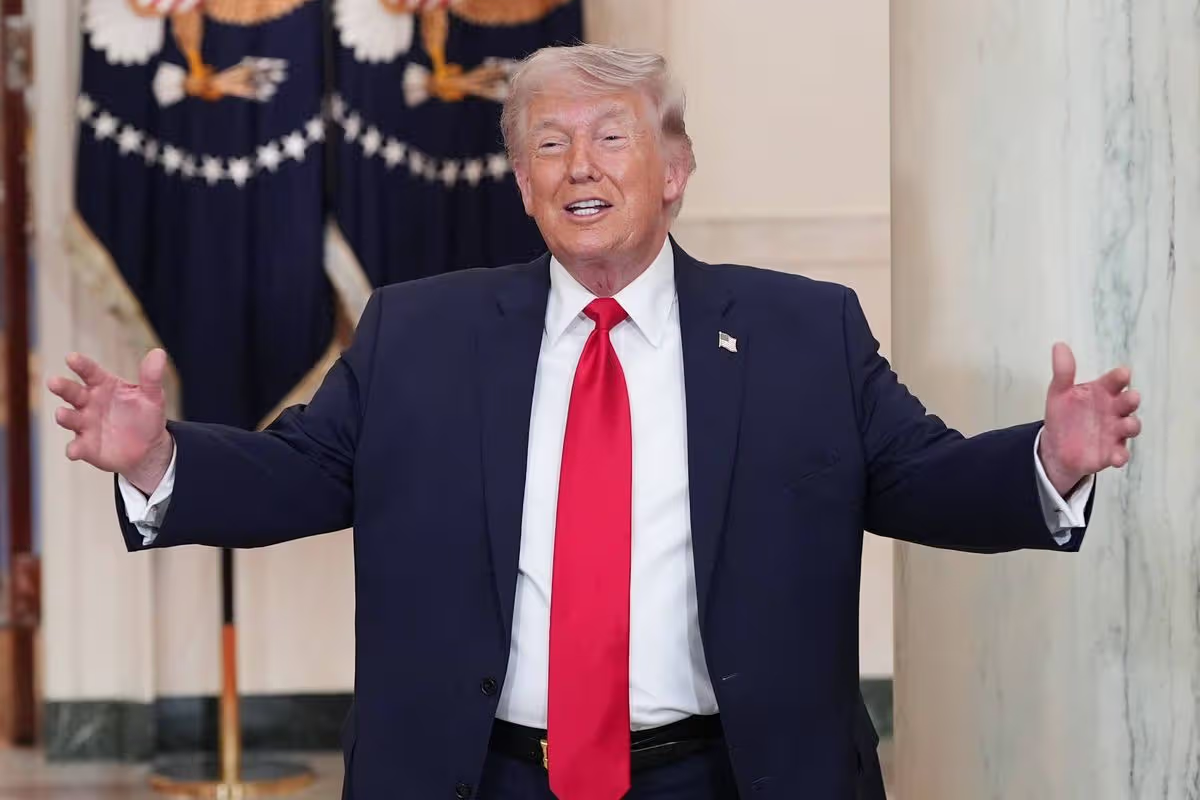


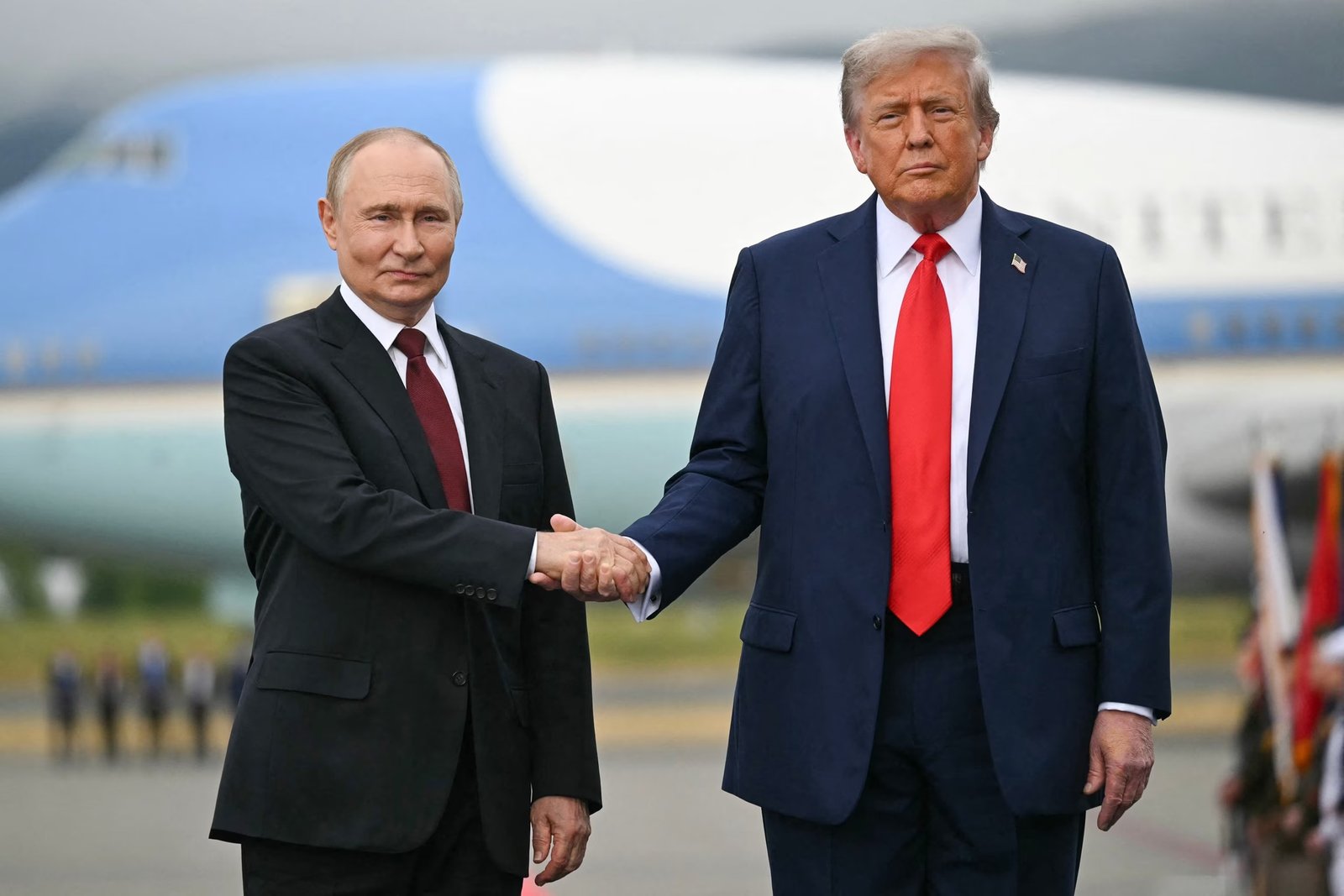
US President Donald Trump and Russian President Vladimir Putin met at Joint Base Elmendorf-Richardson in Anchorage, Alaska, on Saturday for one of the most closely watched summits of recent years. The talks, aimed at ending the war in Ukraine, marked Putin’s first visit to Western soil since the invasion began in February 2022.
Trump described the discussions as “extremely productive” but admitted that a full agreement on Ukraine was not yet in place. Putin, in contrast, told reporters that he and his American counterpart had reached an “understanding” on the conflict, leaving open the possibility of further negotiations.
The summit drew global attention due to its unusual location. Alaska, once part of Russia before being sold to the United States in 1867, was chosen for its symbolism and security. Both leaders stayed within the military base throughout the meeting, while protesters in Anchorage voiced support for Ukraine outside.
Speaking before his arrival in Alaska, Trump hinted that economic pressure was already influencing Russia’s willingness to negotiate. In an interview aboard Air Force One, he suggested that Moscow had lost India as a key oil buyer, saying that secondary sanctions on Russian exports could prove “devastating.” He added, “If I have to do it, I’ll do it. Maybe I won’t have to.”
The encounter represented a sharp departure from the stance of Western European leaders and Trump’s predecessor, Joe Biden, who maintained that Ukraine must be directly involved in any talks on its future. Ukrainian President Volodymyr Zelensky called the Alaska summit a “personal victory” for Putin, reflecting concerns that Kyiv’s voice may be sidelined.
Despite repeated attempts by Trump to engage Putin in previous months, including a White House meeting in February where he publicly criticized Zelensky, Russia has shown little willingness to compromise. Ahead of the summit, Trump warned of “very severe consequences” if a ceasefire was not agreed upon.
Putin, meanwhile, faces mounting international isolation. The International Criminal Court has issued an arrest warrant against him, limiting his ability to travel abroad. However, because the United States is not a member of the tribunal, he was able to attend the summit in Alaska. The US Treasury also temporarily eased sanctions on senior Russian officials to allow them to join the talks and access banking services during their stay.
The structure of the meeting highlighted its sensitivity. Putin and Trump began with a private session, joined only by interpreters, before moving on to a working lunch with their top aides. Officials suggested the two sides explored potential avenues for a new arms control treaty and discussed the revival of limited economic ties.
The Biden administration and many European governments have expressed unease at the summit. Critics argue that any negotiation without Ukraine risks undermining Kyiv’s sovereignty and legitimizing Russia’s territorial advances.
Energy and security also framed the conversation. US officials say the projected cost of Russia’s war continues to weigh heavily on global energy markets, and Trump emphasized that stronger sanctions remain an option if peace cannot be reached quickly.
While no breakthrough was announced, both leaders signaled that further dialogue may follow. Trump highlighted his personal rapport with Putin, insisting he could secure peace “within 24 hours” if Russia agreed to a ceasefire. Putin said only that the Alaska talks were a “useful conversation,” leaving details deliberately vague.
As Trump returned to Washington, the world was left questioning whether the summit would mark a turning point in the Ukraine war or remain a symbolic exchange without real progress.