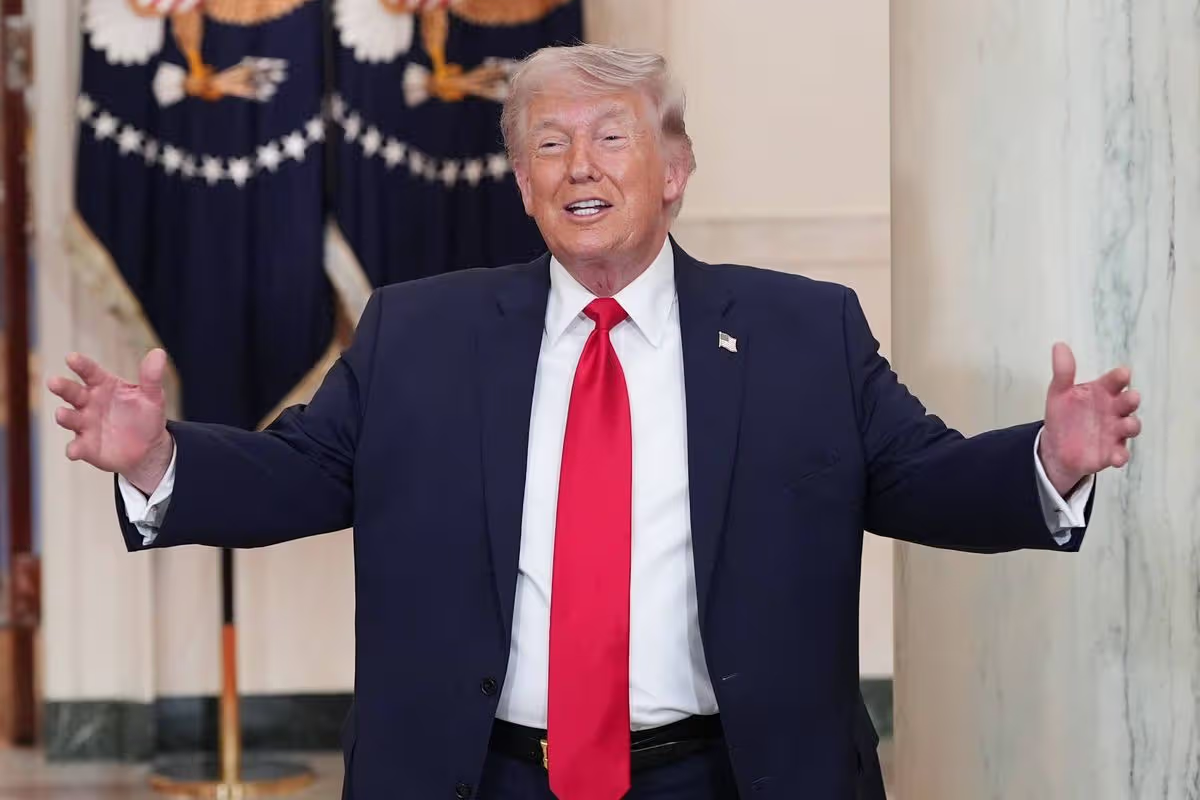



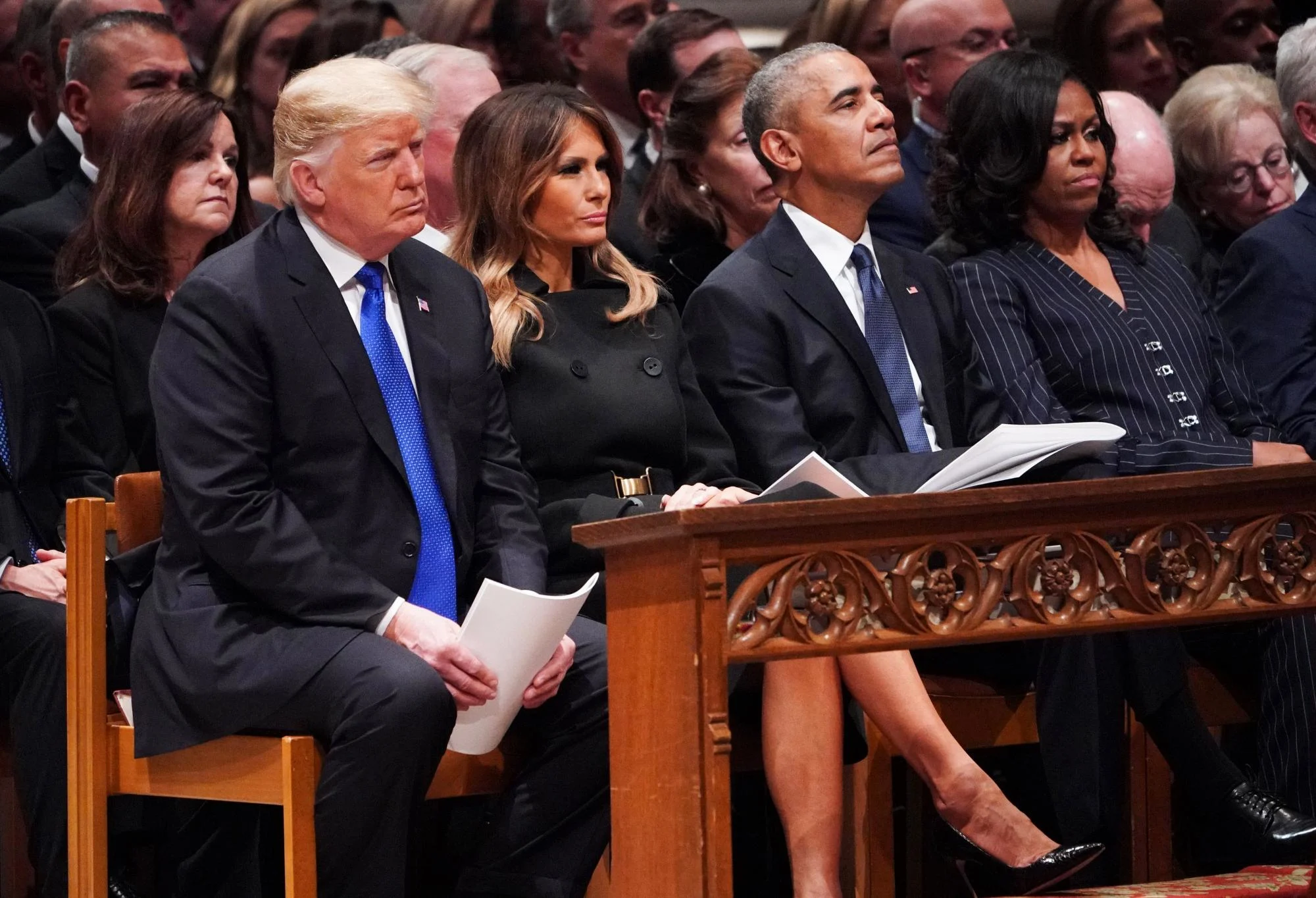
President Donald Trump is facing widespread backlash after a racist video targeting Barack and Michelle Obama appeared on his social media account and was later deleted. Trump admitted directing aides to post the clip but refused to apologize.
According to Daljoog News analysis, the incident highlights Trump’s continuing pattern of provocative social media behavior, which often fuels political tension while testing the limits of public tolerance.
The video, which circulated during one of Trump’s late-night posting sprees on Truth Social, comes amid ongoing discussions about misinformation, election-related claims, and the role of digital platforms in amplifying divisive content.
What Happened?
The video, posted on Thursday night, shows the faces of the former president and first lady superimposed onto the bodies of primates, set to the song The Lion Sleeps Tonight. It appeared briefly at the end of a longer, conspiratorial clip falsely alleging that Trump won the 2020 election.
Initially defended by Trump’s White House press secretary, the post was later removed. Trump stated he had not seen the final portion of the video and attributed the decision to an aide, while simultaneously confirming he had approved posting it.
Republican staffer Natalie Harp, formerly an anchor for the right-wing One America News Network, reportedly has access to Trump’s Truth Social account. Despite this, Trump insisted he did not make a mistake and refused to issue an apology.
By Friday morning, the post had attracted thousands of reactions, drawing anger from both Democrats and Republicans. Some GOP voices, including Rep. Mike Lawler and Senator Tim Scott, publicly condemned the post as offensive and inappropriate.
Why This Matters
The video strikes at the heart of racial and political sensitivities in the United States, targeting the country’s first Black president and first lady with imagery widely recognized as racist.
According to Daljoog News analysis, this incident reinforces concerns over Trump’s influence on the Republican Party and its messaging. It also demonstrates the potential for social media platforms to magnify racially charged content, complicating political discourse and public trust.
The broader timing is notable: the clip comes as Trump continues to assert false claims about the 2020 election, even after multiple legal settlements and widespread debunking of related conspiracy theories.
What Analysts or Officials Are Saying
Democratic leaders reacted swiftly. House Minority Leader Hakeem Jeffries denounced the post, calling for Republican condemnation, while Senate Minority Leader Chuck Schumer criticized GOP inaction. California Governor Gavin Newsom described the content as “disgusting” and urged Republican officials to respond.
The NAACP also condemned the video, calling it “blatantly racist” and “utterly despicable.” Derrick Johnson, the organization’s president, framed the post as a distraction from Trump’s ongoing controversies and criticized his attacks on Barack Obama’s record.
Among Republicans, condemnation was limited. Senator Tim Scott, the Senate’s only Black Republican, expressed disbelief at the imagery, while other GOP leaders remained largely silent.
Daljoog News Analysis
Trump’s behavior illustrates a persistent strategy of provocation, particularly on platforms he controls, like Truth Social. The refusal to apologize signals a calculated political move: reinforcing loyalty among his base while deflecting accountability.
The incident also highlights the tension within the Republican Party between traditional leaders and Trump-aligned factions. Limited GOP pushback suggests enduring political calculations outweigh public condemnation, even in cases of widely recognized racial insensitivity.
Daljoog News notes that this pattern is not new; Trump has repeatedly targeted political opponents and minority figures with offensive imagery and language throughout his post-presidency. Such actions have repeatedly sparked national debates on race, media responsibility, and political ethics.
What Happens Next
The fallout is likely to persist in political and media circles. Analysts predict Democrats will continue using the episode to challenge Trump’s influence and question Republican leadership’s tolerance of racially charged rhetoric.
For Trump, the situation could reinforce his position with supporters who view criticism as media bias or partisan attacks. However, lingering controversies may complicate potential future campaigns and further polarize public discourse.
Observers will also watch whether social media platforms enforce stricter content moderation policies or if legislative and regulatory scrutiny intensifies in response to repeated offensive posts.
The episode underscores a larger conversation about race, politics, and digital media in America—a debate that is far from over as the country heads toward upcoming election cycles.