


A youth hockey game in Pawtucket, Rhode Island, ended in tragedy Monday when gunfire erupted inside a packed ice rink, leaving two people dead and three others critically injured. Authorities say the suspected gunman also died at the scene.
According to Daljoog News analysis, the attack appears to have targeted specific individuals rather than being random. Law enforcement officials briefed on the case said the shooter may have been focused on members of his own family, though investigators are still confirming relationships.
The violence comes just two months after a deadly shooting at Brown University, heightening concerns about safety in community spaces across Rhode Island.
What Happened?
The shooting occurred around 2:30 p.m. Monday at Lynch Arena in Pawtucket during a high school hockey game. Video captured by youth sports streaming service LiveBarn and aired by local media showed players scrambling for cover as multiple shots rang out behind one team’s bench.
Witness footage showed athletes and coaches rushing toward exit gates. Some players jumped onto the ice and sprinted toward a locker room door on the opposite side of the rink.
Pawtucket Police Chief Tina Goncalves said the suspected gunman died from a self-inflicted gunshot wound. She described the incident as targeted and potentially linked to a family dispute.
Three injured individuals were transported to Rhode Island Hospital and remain in critical condition with gunshot wounds, hospital officials confirmed.
Police are reconstructing the sequence of events leading up to the attack. Authorities have not yet publicly identified the victims or clarified the exact relationship between the suspect and those killed.
Federal agents from the Bureau of Alcohol, Tobacco, Firearms, and Explosives assisted local investigators at the scene. Rhode Island State Police and Providence Police also provided support.
Why This Matters
The shooting struck at a setting widely regarded as safe: a youth sporting event filled with students, parents, and community members.
Officials confirmed that all students participating in the game were safe. School districts, including North Providence and Coventr,y said their students were accounted for and unharmed.
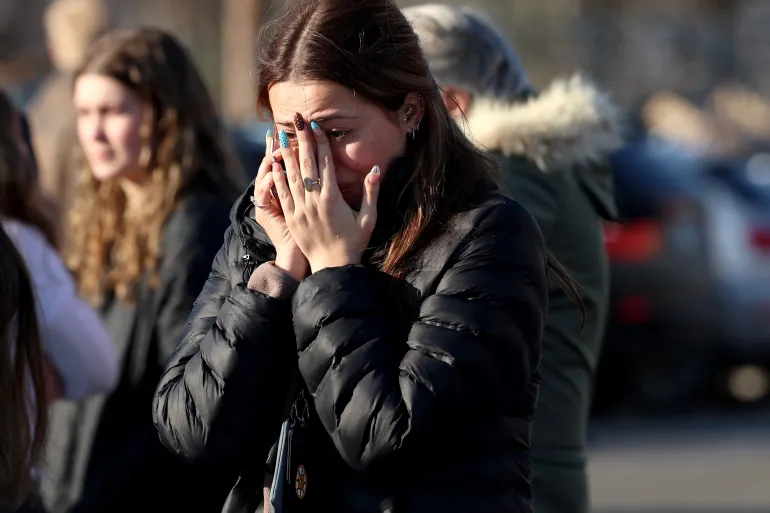
Still, the emotional toll is significant. For families gathered to celebrate Senior Night, the event quickly turned from celebration to chaos.
The incident marks the 41st mass shooting in the United States within the first 47 days of the year, according to data from the Gun Violence Archive. The frequency of such events continues to intensify national debates over gun laws and public safety.
The proximity to December’s shooting at Brown University adds to local anxiety. That earlier attack left two students dead and nine others wounded, shaking confidence in the safety of schools and public institutions.
What Analysts or Officials Are Saying
Rhode Island leaders swiftly condemned the violence.
Providence Mayor Brett Smiley said violence in a venue meant for families and youth is devastating. Members of Rhode Island’s congressional delegation echoed that sentiment.
U.S. Sen. Sheldon Whitehouse described the incident as another unnecessary horror for children. Sen. Jack Reed emphasized that families should feel secure at youth sporting events. Rep. Gabe Amo called it a tragedy that would forever alter what should have been a celebratory night for high school athletes.
Gov. Dan McKee confirmed that state agencies were assisting local law enforcement. Officials stressed that the investigation remains active and urged the public to avoid speculation.
Police continue to examine evidence and interview witnesses to determine motive and whether warning signs preceded the attack.
Daljoog News Analysis
The Pawtucket shooting underscores a troubling pattern: violence increasingly unfolding in everyday spaces once considered insulated from such risks.
Youth sporting events symbolize community cohesion. When violence intrudes there, the psychological shock extends beyond immediate victims.
The apparent targeted nature of the attack may shift legal and policy discussions away from generalized mass violence toward domestic and interpersonal conflict prevention. Still, the outcome — multiple deaths and critical injuries in a public venue — places it firmly within the broader national crisis.
Rhode Island now faces dual trauma within a short span. December’s campus shooting and Monday’s rink attack both challenge assumptions about safety in education-linked environments.
Community trust often erodes after repeated incidents. Restoring that trust requires transparent investigation, consistent communication, and visible security reassurances.
What Happens Next
Investigators will continue piecing together the timeline, including how the suspect entered the arena with a firearm and whether prior disputes or warning signs existed.
Authorities are expected to release the identities of the deceased and injured once families are notified.
The condition of the three hospitalized victims remains critical. Medical updates may clarify the long-term impact on survivors.
Local officials may also review security protocols at public sporting venues. While schools confirmed student athletes were unharmed, the broader community will likely demand reassurances.
As Rhode Island mourns, attention will turn to accountability, prevention, and whether legislative responses follow yet another episode of deadly gun violence in a public space.