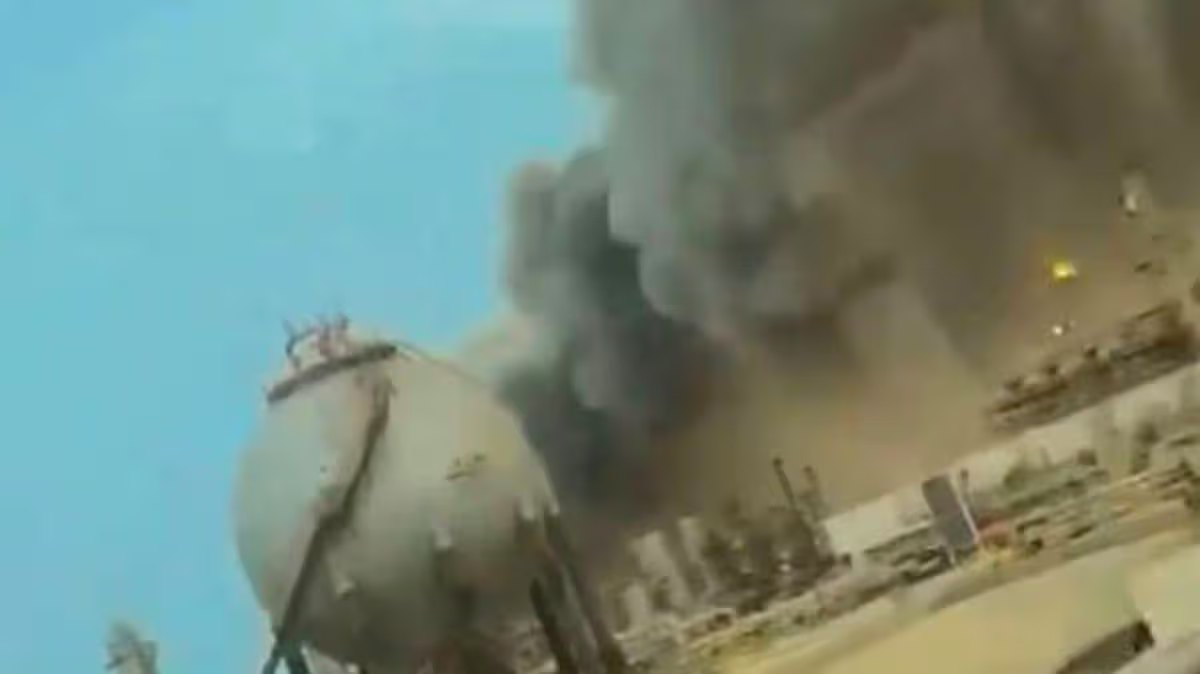



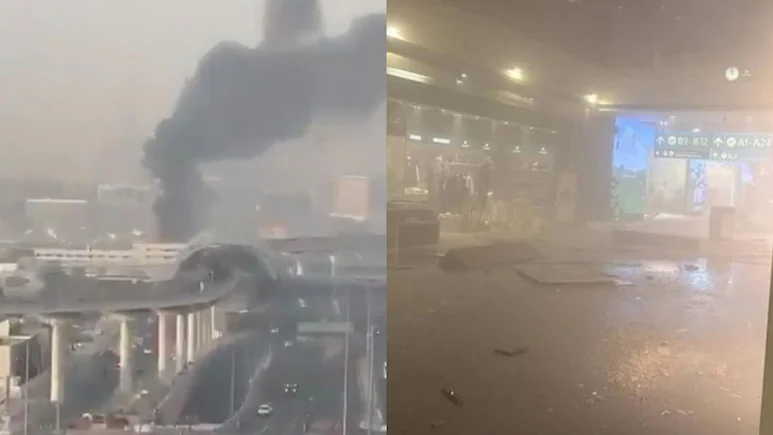
One of the world’s busiest aviation hubs has suffered visible damage following an Iranian drone and missile strike. Dubai International Airport was hit during a wave of regional attacks that have expanded the Gulf conflict beyond military bases.
According to Daljoog News analysis, the strike marks a dramatic shift in the confrontation’s scope. By targeting high-profile civilian infrastructure in the United Arab Emirates, Tehran has sent a signal that economic centers are no longer insulated from regional escalation.
The attack shattered Dubai’s long-cultivated image as a safe commercial and tourism hub, even as neighboring states faced years of instability. Saturday’s events have now placed the city directly inside the conflict’s perimeter.
What Happened?
Iranian drones and missiles reportedly entered Gulf airspace late Saturday, triggering interceptor responses across the UAE. Several projectiles struck near or within the perimeter of Dubai International Airport.
Initial damage assessments indicate structural impact to parts of the airport infrastructure. While full casualty and operational details remain under review, authorities suspended flights as a precaution.
Dubai International Airport serves as a key global transit hub, connecting hundreds of destinations across more than 250 cities worldwide. On a typical day, hundreds of aircraft land and depart, making it one of the busiest airports by international passenger traffic.
Following the strike, airspace restrictions disrupted commercial aviation. Aircraft were diverted, and outbound flights faced delays or cancellations.
The impact extended beyond aviation. Fires and debris were reported near surrounding commercial zones. Emergency crews responded quickly to contain secondary damage.
Why This Matters
Dubai has long positioned itself as a neutral business gateway between East and West. Its stability has been central to attracting multinational firms, financial institutions, and high-net-worth individuals.
An attack on its primary airport challenges that narrative.
Civil aviation infrastructure represents economic lifelines. Even short-term disruption affects tourism, logistics, trade, and investor confidence. Airlines must reroute traffic, insurance premiums may rise, and supply chains could face delays.
The strike also carries symbolic weight. Unlike military bases, airports are visible symbols of connectivity and global integration. Damage to such a site sends a broader geopolitical message.
Financial markets in the Gulf are likely to react cautiously. Investors tend to reassess risk when high-profile civilian assets come under threat.
What Analysts or Officials Are Saying
UAE authorities have not publicly detailed the full extent of structural damage but confirmed that air defense systems engaged incoming threats.
Regional security analysts describe the move as a strategic escalation. By striking high-value civilian infrastructure, Iran increases psychological and economic pressure without directly attacking Western territory.
Aviation experts warn that even limited runway or terminal disruption can ripple across global schedules. Dubai serves as a major transfer point between Europe, Asia, and Africa.
Private charter services reportedly saw a surge in demand after the attack. Wealthy travelers and business executives sought alternative exit routes, including overland travel to neighboring Oman before boarding private jets.
European officials have urged restraint, stressing that attacks on civilian infrastructure risk widening international involvement.
Daljoog News Analysis
The strike on Dubai International Airport alters the regional security equation.
For years, Dubai cultivated an image of controlled stability, even as Syria, Iraq, and Gaza endured prolonged violence. Its skyline and commercial districts projected resilience.
That perception now faces its most serious test.
Iran’s strategy appears aimed at broadening the conflict’s economic impact. By targeting hubs of finance and travel, Tehran increases pressure not only on the United States but also on Gulf states hosting Western military assets.
The calculation may be that economic disruption generates faster diplomatic urgency than battlefield engagements.
However, targeting civilian infrastructure carries diplomatic risks. It could shift international opinion and justify stronger defensive or retaliatory measures.
The UAE now faces a dual challenge: restoring operational confidence quickly while preventing panic in financial and tourism sectors.
What Happens Next
Authorities are expected to conduct rapid structural assessments and repair work to restore normal operations. Enhanced air defense coordination across Gulf states is also likely.
Airlines will continue to adjust routes while monitoring regional airspace advisories.
Diplomatic backchannels may intensify as Gulf governments seek assurances against further escalation.
The broader question is whether this attack marks a one-time escalation or the start of sustained strikes on economic centers.
Dubai’s recovery speed will shape global perception. If operations resume quickly, confidence may stabilize. If disruptions persist, investors and travelers could reconsider risk exposure.
For now, one of the world’s most connected cities confronts a reality it long sought to avoid. The Gulf conflict has reached its commercial heart.
Daljoog News will continue tracking security, economic, and diplomatic developments as the situation evolves.