


U.S. Defense Secretary Pete Hegseth took his nationwide “Arsenal of Freedom” tour to Maine, using a high-profile visit to a major shipyard to underline the Pentagon’s reliance on American manufacturing and industrial workers.
According to Daljoog News analysis, the tour reflects a strategic push by the War Department to reframe national security as a shared mission between warfighters and the civilian workforce that equips them.
The stop comes as Washington faces growing concerns about industrial capacity, workforce shortages, and whether the United States can sustain military dominance in a rapidly shifting global landscape.
What Happened?
Hegseth addressed a large gathering of shipyard employees at Bath Iron Works in Maine, praising their role in sustaining U.S. military readiness and framing their work as essential to national defense.
The visit was part of the “Arsenal of Freedom” tour, launched just over a month ago. The initiative is designed to spotlight the defense industrial base and encourage renewed investment in domestic manufacturing and skilled labor.
Speaking directly to workers, Hegseth emphasized that U.S. warfighters depend on civilian support to carry out their missions. He described service members as elite professionals but stressed that battlefield success is impossible without reliable equipment delivered on time.
Hegseth warned that even strong recruitment of future troops would not be enough if the military lacks modern ships, weapons, and systems. Without those capabilities, he said, America risks losing its military edge in the 21st century.
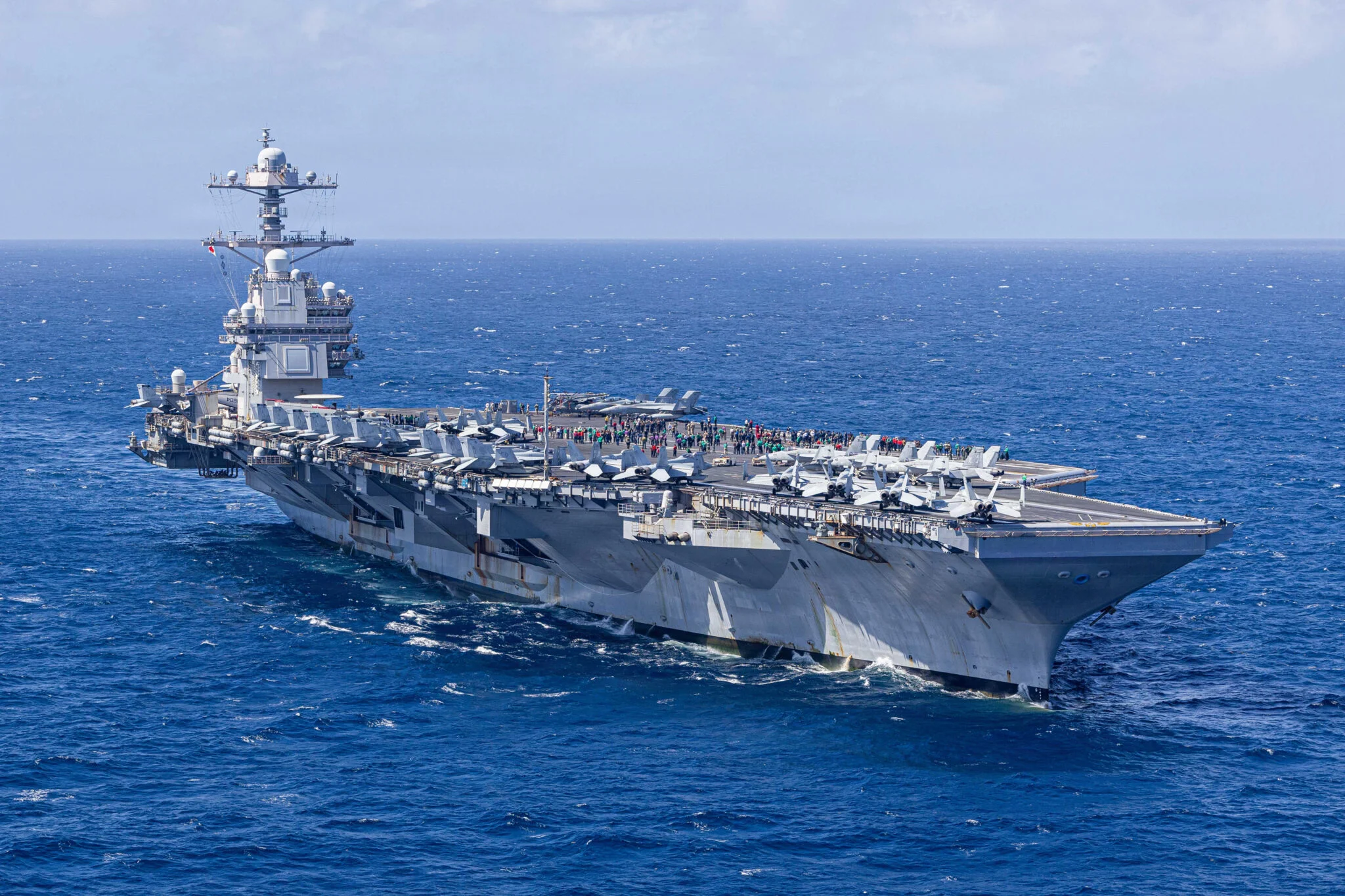
He closed his shipyard remarks by recalling a recent visit aboard the USS Winston S. Churchill, a U.S. Navy destroyer built at Bath Iron Works. Hegseth described the vessel as a symbol of American craftsmanship and industrial strength.
Why This Matters
The visit underscores a broader shift in Pentagon messaging. National defense is no longer framed solely around troops and commanders, but around welders, engineers, and factory workers who make military power possible.
U.S. defense officials have increasingly warned that supply chain gaps, aging infrastructure, and labor shortages could undermine readiness during prolonged conflicts. Shipbuilding, in particular, has been identified as a bottleneck due to long construction timelines and workforce constraints.
Hegseth’s remarks also tie domestic manufacturing to long-term geopolitical competition. He framed American industrial strength as a prerequisite for maintaining global influence and protecting future generations.
For communities like Bath, Maine, the message carries local weight. Defense contracts sustain thousands of jobs, and political attention from Washington signals continued federal commitment to the region’s economic stability.
More national security coverage is available through the [Category Page] and the [Daljoog News Homepage].
What Analysts or Officials Are Saying
Defense officials accompanying the tour have described it as both symbolic and practical. By appearing at shipyards and factories, the Pentagon aims to reinforce morale within the industrial workforce while encouraging young Americans to pursue skilled trades tied to defense production.
Hegseth consistently refers to industrial workers as partners of the armed forces rather than a separate civilian sector. His language mirrors recent Pentagon assessments that treat manufacturing capacity as a strategic asset.
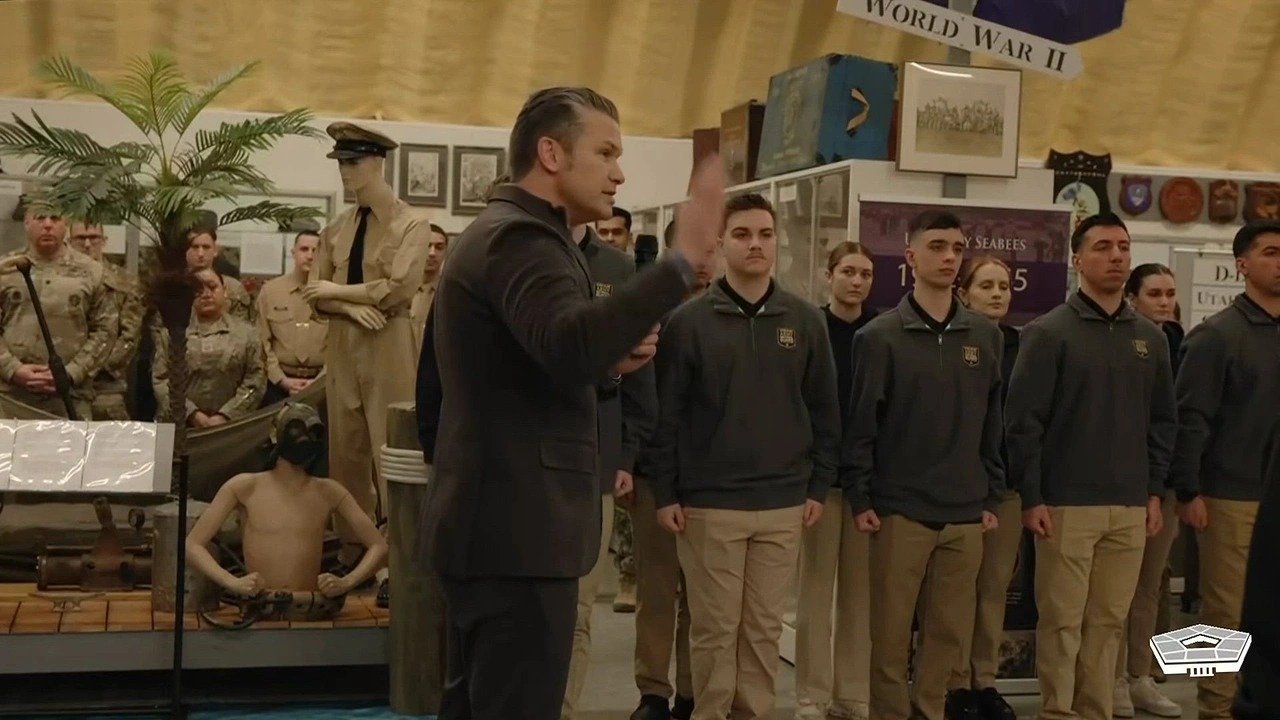
Earlier the same day, before arriving in Maine, Hegseth visited North Kingstown, Rhode Island. At the Seabee Museum and Memorial Park, he administered oaths of enlistment to future active-duty service members and National Guard recruits.
Such ceremonies have become a recurring feature of the Arsenal of Freedom tour. They are often scheduled before visits to defense-related businesses, reinforcing the link between enlistment, industry, and national security.
Addressing the recruits, Hegseth praised them as a unique strength of the United States, emphasizing that the nation’s ability to attract volunteers remains unmatched globally.
Daljoog News Analysis
The Arsenal of Freedom tour reflects a calculated political and strategic narrative. By placing factory workers and shipbuilders at the center of defense messaging, the War Department is broadening public ownership of military readiness.
This approach also serves a practical purpose. As global tensions rise, the Pentagon needs sustained congressional funding and public support for long-term industrial investments that may not deliver immediate results.
Hegseth’s framing of the 21st century as either “American” or “not free” signals a return to Cold War-style rhetoric, updated for an era of great-power competition. It positions domestic manufacturing as a frontline issue rather than a background concern.
However, the emphasis on inspiration must eventually be matched by policy. Workforce shortages, cost overruns, and delayed ship deliveries remain unresolved challenges. Symbolic tours can raise awareness, but structural reform will determine whether the message translates into capability.
What Happens Next
Hegseth is expected to continue the Arsenal of Freedom tour with additional stops at defense manufacturing sites across the country, focusing on shipbuilding, munitions, and advanced systems.
Pentagon officials are also preparing budget proposals aimed at stabilizing long-term production and expanding training pipelines for skilled labor.
For shipyards like Bath Iron Works, continued federal attention may strengthen their position in future contract negotiations and workforce development efforts.
As the tour progresses, the key question will be whether heightened rhetoric leads to measurable improvements in output, efficiency, and readiness across the U.S. defense industrial base.