
Close Menu
Daljoog News
    What's Hot
    Experts Reveal the Smartest Time to Arrive at the Airport

    Experts Reveal the Smartest Time to Arrive at the Airport

    February 19, 2026
    NFL Scouting Combine 2026: What Really Matters as Player Participation Dips

    NFL Scouting Combine 2026: What Really Matters as Player Participation Dips

    February 19, 2026
    Camila Cabello Turns Heads in Red Bikini During Tropical Getaway

    Camila Cabello Turns Heads in Red Bikini During Tropical Getaway

    February 19, 2026
    Facebook X (Twitter) Instagram
    Thursday, February 19
    Daljoog News
    Facebook X (Twitter) YouTube Instagram
    • Home
    • General
    • World
    • Business
    • Technology
    • Politics
    • Finance
    • Health
    • Lifestyle
    • Sports
    • Travel
    Daljoog News
    Home»Security»Iran fires missiles during live TV broadcast
    Security

    Iran fires missiles during live TV broadcast

    Andrew RogersBy Andrew RogersFebruary 19, 2026No Comments4 Mins Read
    Facebook Twitter Pinterest LinkedIn Tumblr Email
    Follow Us
    Google News
    Iran fires missiles during live TV broadcast
    Iran fires missiles during live TV broadcast
    Share
    Facebook Twitter LinkedIn Pinterest Email

    Iran launched a missile during a live televised military exercise near the Strait of Hormuz, escalating tensions at a strategically vital maritime chokepoint. The drill unfolded as Tehran delivered a blunt warning to adversaries it accused of sending warships toward Iranian waters.

    According to Daljoog News analysis, the timing of the missile demonstration appears calculated. It coincides with renewed diplomatic engagement over Iran’s nuclear program and mounting pressure from Washington.

    The show of force underscores how Iran is balancing military signaling with high-stakes negotiations, projecting deterrence even as talks are set to resume.

    What Happened?

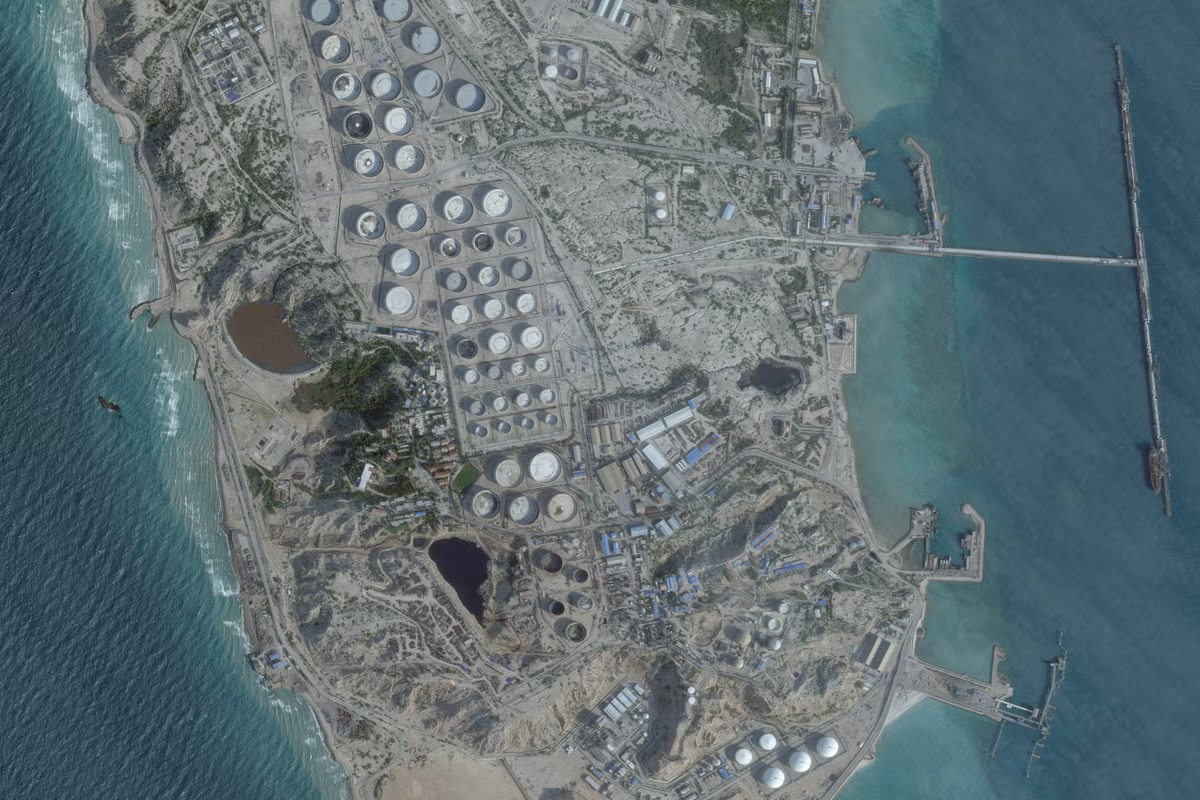
    Iranian forces conducted a military exercise dubbed “Smart Control of the Hormuz Strait,” deploying advanced drones and precision-guided missiles in waters critical to global energy trade.

    The Strait of Hormuz, which connects the Persian Gulf to the Arabian Sea, handles a significant share of the world’s oil shipments. Any instability there quickly reverberates across global markets.

    During the drill, footage aired on state television showed a missile launch as senior officials framed the exercise as a defensive response to perceived threats.

    Iran’s Supreme Leader, Ali Khamenei, issued a stern message, warning that Tehran possesses weapons capable of striking warships and neutralizing hostile naval deployments.

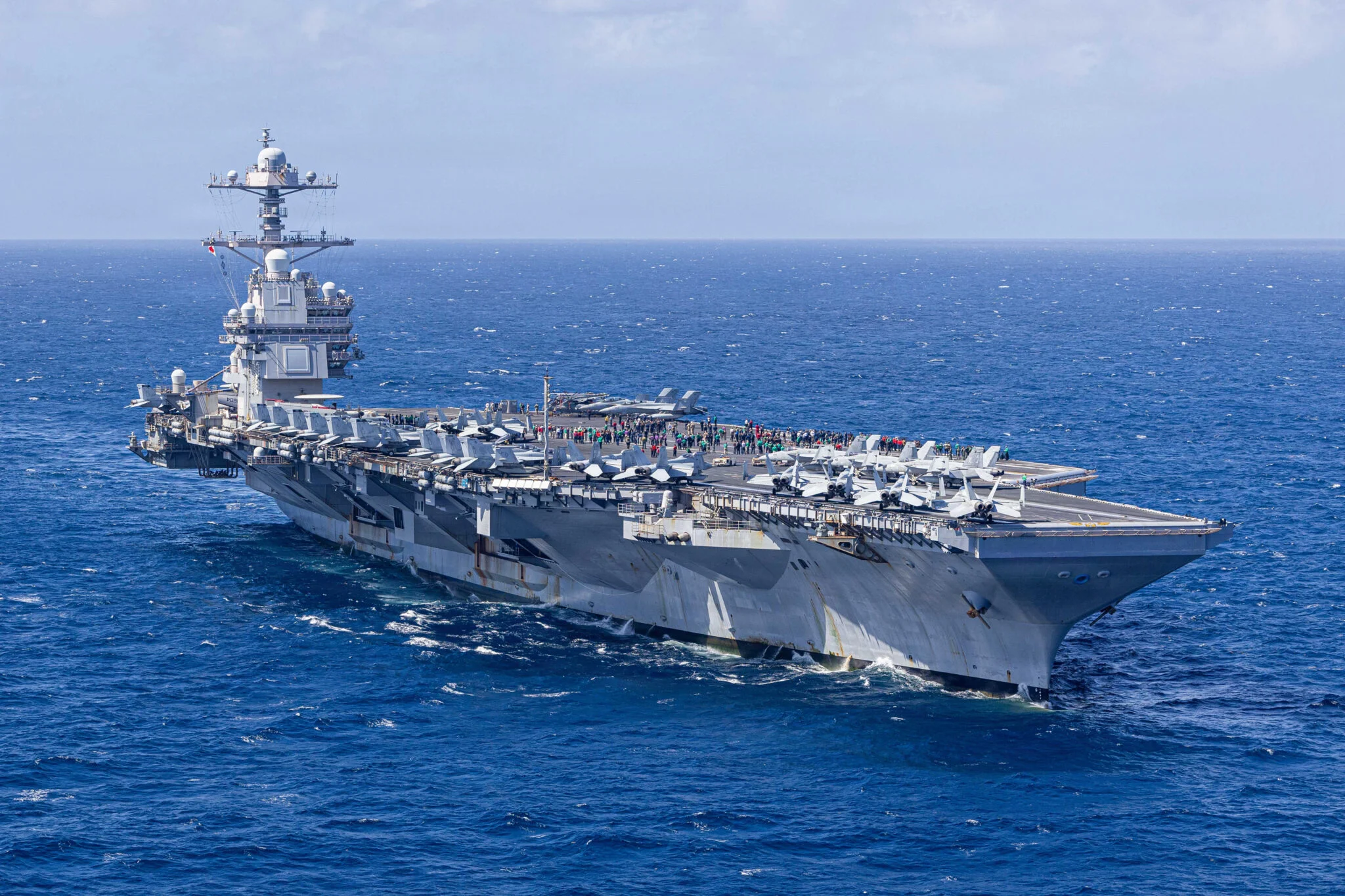
    The demonstration followed reports of increased U.S. naval presence in the region. Tehran characterized the maneuver as a deterrent signal aimed at preventing maritime aggression.

    Why This Matters

    The Strait of Hormuz remains one of the world’s most sensitive maritime corridors. Even symbolic military actions in the area can rattle energy markets and heighten geopolitical risk.

    Iran’s missile launch sends two messages. First, it signals readiness to defend its waters against naval pressure. Second, it reinforces Tehran’s negotiating posture ahead of renewed nuclear discussions.

    Military signaling in the Gulf often functions as political messaging. By broadcasting the drill live, Iran ensured that both domestic audiences and foreign governments would take note.

    At the same time, heightened rhetoric risks miscalculation. Any confrontation involving naval forces in the strait could disrupt oil flows and escalate rapidly.

    What Analysts or Officials Are Saying

    Iranian officials framed the exercise as defensive and necessary to secure maritime sovereignty. They argued that the country retains the capability to respond decisively to any external threat.

    Diplomatic observers noted the exercise comes as talks over Iran’s nuclear program are expected to resume, with mediation efforts reportedly involving Oman and discussions taking place in Geneva.

    Tehran has rejected what it calls preconditions or pressure tactics. Officials insist negotiations must respect Iran’s sovereignty and security interests.

    Security analysts say Iran frequently pairs diplomatic engagement with displays of military readiness. They interpret the missile launch as part of that established pattern rather than an immediate prelude to conflict.

    Regional governments are monitoring the situation closely, particularly those reliant on uninterrupted energy exports through the strait.

    Daljoog News Analysis

    Iran’s strategy reflects a dual-track approach: deterrence through demonstration and leverage through negotiation.

    By staging a live missile launch, Tehran reinforces its narrative of strength. The imagery projects control over a vital waterway and signals that external military deployments will not go unanswered.

    Yet the broader context matters. Nuclear diplomacy remains fragile. Military theatrics may strengthen Iran’s bargaining position domestically but complicate trust-building internationally.

    Daljoog News assesses that neither side currently appears to seek open confrontation. Instead, both are maneuvering for advantage ahead of talks.

    The risk lies in perception. In a crowded maritime environment, even routine exercises can be misinterpreted. A misstep at sea could outpace diplomatic channels.

    What Happens Next

    Nuclear discussions are expected to resume in the coming weeks. Mediators will likely attempt to keep military tensions from derailing negotiations.

    Iran may conduct additional exercises to reinforce its deterrence posture. The United States and regional partners are also expected to maintain naval deployments to safeguard shipping lanes.

    Energy markets will watch closely for signs of escalation. Any disruption in the Strait of Hormuz would have immediate global consequences.

    For now, Iran stands at a crossroads between confrontation and compromise. Whether the balance tilts toward de-escalation or renewed friction will depend on how both sides manage the narrow space between military signaling and diplomatic engagement.
    Share. Facebook Twitter Pinterest LinkedIn Tumblr Email
    Andrew Rogers
    Andrew Rogers
    • Website
    • Facebook

    Andrew Rogers is a seasoned journalist and news analyst specializing in global affairs, politics, and finance. With a passion for investigative reporting, he delivers accurate, insightful stories that inform and engage readers worldwide.

    Related Posts

    US Prevents Mass ISIS Prison Break, Transfers 6,000 Fighters to Iraq

    US Prevents Mass ISIS Prison Break, Transfers 6,000 Fighters to Iraq

    February 19, 2026
    Iran will be attacked from Jordan

    Iran will be attacked from Jordan

    February 19, 2026
    Afghan fighters are also preparing

    Afghan fighters are also preparing

    February 18, 2026

    Comments are closed.

    Our Picks
    US Prevents Mass ISIS Prison Break, Transfers 6,000 Fighters to Iraq

    US Prevents Mass ISIS Prison Break, Transfers 6,000 Fighters to Iraq

    February 19, 2026
    Iran will be attacked from Jordan

    Iran will be attacked from Jordan

    February 19, 2026
    Afghan fighters are also preparing

    Afghan fighters are also preparing

    February 18, 2026
    Iran conducts drills in Strait of Hormuz ahead of nuclear talks with US

    Iran conducts drills in Strait of Hormuz ahead of nuclear talks with US

    February 18, 2026
    Stay In Touch
    • Facebook
    • Twitter
    • Instagram
    • YouTube
    Don't Miss
    Terrorism Confinement Center

    Terrorism Confinement Center: El Salvador’s Harshest Prison

    General July 3, 2025

    The Terrorism Confinement Center, widely known as CECOT, is the largest high-security prison in El…

    More than 72,000 Palestinians killed in Israeli offensive

    More than 72,000 Palestinians killed in Israeli offensive

    February 18, 2026
    Tanzania, Kenya, and South Africa Shine at 2025 Travel Awards

    Tanzania, Kenya, and South Africa Shine at 2025 Travel Awards

    June 30, 2025
    SZA Corset Outfit & Shorts Steal Instagram Spotlight

    SZA Corset Outfit & Shorts Steal Instagram Spotlight

    January 24, 2026
    About Us

    Daljoog News is a trusted news platform that brings you the latest global and local updates with accuracy and fairness. We are committed to clear and unbiased reporting, covering topics like politics, business, technology, science, and culture and more. Using the latest technology and expert journalism, we provide reliable coverage of important stories. Stay informed, inspired, and empowered with Daljoog News—your source for breaking news, the latest updates, and videos that matter.

    Email Us: info@daljoognews.com

    Our Picks
    US Judge Dismisses Buffalo Wild Wings Lawsuit

    US Judge Dismisses Buffalo Wild Wings Lawsuit

    February 18, 2026
    Casey Wasserman to Sell Agency Amid Epstein File Fallout

    Casey Wasserman to Sell Agency Amid Epstein File Fallout

    February 15, 2026
    Why can't the US dollar's depreciation be stopped?

    Why can’t the US dollar’s depreciation be stopped?

    February 1, 2026
    Latest News
    Experts Reveal the Smartest Time to Arrive at the Airport

    Experts Reveal the Smartest Time to Arrive at the Airport

    February 19, 2026
    NFL Scouting Combine 2026: What Really Matters as Player Participation Dips

    NFL Scouting Combine 2026: What Really Matters as Player Participation Dips

    February 19, 2026
    Camila Cabello Turns Heads in Red Bikini During Tropical Getaway

    Camila Cabello Turns Heads in Red Bikini During Tropical Getaway

    February 19, 2026
    Facebook X (Twitter) RSS YouTube Instagram
    • Home
    • About Us
    • Contact Us
    • Our Authors
    • Privacy Policy
    • Terms & Conditions
    • Sitemap
    © 2026 DaljoogNews.com

    Type above and press Enter to search. Press Esc to cancel.