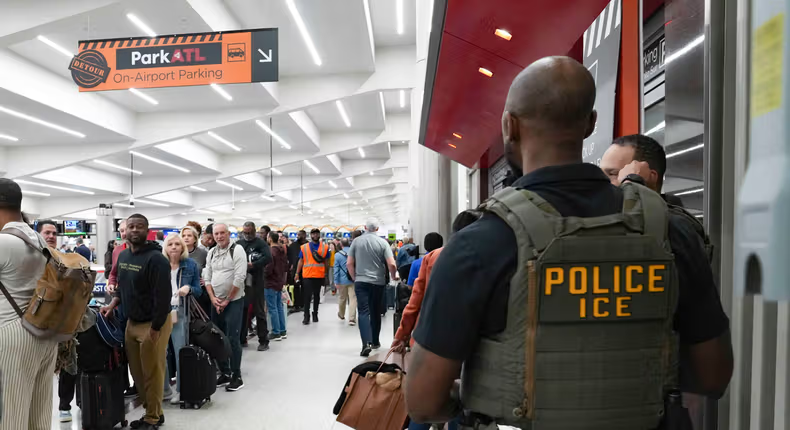



Two women in Maine have filed a federal lawsuit against U.S. Immigration and Customs Enforcement, alleging agents threatened to label them as domestic terrorists while they were observing enforcement activity.
Elinor Hilton and Colleen Fagan say the confrontation happened in South Portland on January 23. They claim federal officers recorded them and warned they could be entered into a database of so-called domestic extremists.
According to Daljoog News analysis, the lawsuit raises broader constitutional questions about government surveillance, public oversight of law enforcement, and whether observers can legally document immigration operations without fear of retaliation.
The incident occurred during a federal immigration enforcement effort that the U.S. Department of Homeland Security described at the time as “Operation Catch of the Day” in Maine.
What Happened?
Hilton and Fagan state they were monitoring immigration enforcement activity when agents approached them.
Video from January 23 shows federal officers interacting with the women. In their complaint, the plaintiffs allege agents began filming them and suggested they could be added to a government database tracking domestic terror threats.
The women argue they were engaged in lawful observation, a practice commonly used by civil liberties groups and community advocates to ensure accountability during law enforcement operations.
Their lawsuit claims ICE personnel collected or attempted to collect personal information about them without justification. The filing further alleges that federal authorities are maintaining data on individuals who document or observe immigration enforcement actions.
The incident unfolded during heightened immigration enforcement activity in Maine. DHS publicly framed the operation as part of broader national efforts to locate and detain individuals accused of immigration violations.
The plaintiffs contend that their presence at the scene was peaceful and did not interfere with federal operations.
Why This Matters
The case touches on core First Amendment issues.
Federal courts have repeatedly recognized the right of individuals to record public officials performing their duties in public spaces. That principle has been tested in various contexts, including police accountability and immigration enforcement.
If the allegations prove accurate, the case could raise concerns about whether federal agencies are discouraging public oversight through intimidation.
Civil liberties advocates argue that the ability to observe and document government action serves as a check on state power. When observers fear surveillance or placement in security databases, that oversight function may weaken.
The lawsuit also highlights growing tensions around immigration enforcement in smaller states such as Maine. While border states often dominate the national debate, interior enforcement operations have expanded in recent years.
For communities where immigration enforcement has not historically been as visible, such encounters can quickly escalate into legal and political flashpoints.
What Analysts or Officials Are Saying
Legal experts suggest the case will likely center on constitutional protections.
Attorneys who specialize in civil rights litigation note that courts generally protect the right to record public officials, provided observers do not obstruct operations.
Government representatives have not publicly detailed their position on this specific lawsuit. However, federal agencies often maintain that operational security and officer safety justify certain precautions during enforcement actions.
Policy analysts say the dispute may hinge on whether agents made credible threats or whether the interaction was misinterpreted during a tense situation.
Some immigration enforcement supporters argue that officers working in sensitive operations must assess potential risks quickly. From that perspective, recording individuals near enforcement activity could raise security concerns.
Others counter that labeling observers as potential domestic threats crosses a constitutional boundary.
Daljoog News Analysis
This lawsuit arrives at a sensitive moment for federal immigration enforcement.
Public trust in institutions depends heavily on transparency. When citizens or community members attempt to observe government actions, the response from authorities carries symbolic weight.
If agents did threaten to classify observers as domestic extremists, the perception alone could chill lawful civic engagement.
At the same time, federal officers operate in an environment where security concerns remain real. Immigration enforcement can attract protest activity, and officers often face unpredictable conditions.
The legal question is not whether agents may protect themselves. It is whether that protection extends to discouraging lawful observation.
Courts have increasingly scrutinized government databases that collect information on individuals who have not committed crimes. The expansion of watchlists and data collection programs has sparked bipartisan debate.
For Maine, the case may shape how federal enforcement interacts with local communities moving forward.
It also reflects a broader national dynamic: immigration enforcement is no longer confined to border regions. As operations expand geographically, constitutional challenges will likely follow.
The outcome could clarify how far federal agencies can go in monitoring those who monitor them.
What Happens Next
The lawsuit will proceed through federal court, where ICE will have the opportunity to respond formally to the allegations.
Judges may first consider procedural questions, including whether the plaintiffs can demonstrate harm or potential chilling effects on their constitutional rights.
If the case advances, it could involve discovery requests seeking information about any databases referenced in the encounter.
Civil liberties groups may file supporting briefs, especially if broader surveillance practices come under review.
A settlement remains possible, though neither side has publicly indicated such discussions.
Regardless of the legal outcome, the case is likely to influence public debate over immigration enforcement transparency in Maine and beyond.
Daljoog News will continue tracking developments as the court reviews the claims and federal officials outline their defense.