

The United States military said it carried out a strike on a vessel in the eastern Pacific Ocean on Friday, killing three men it described as suspected drug traffickers. The attack is the latest in a series of operations in international waters under the Trump administration’s expanded counter-narcotics campaign.
According to Daljoog News analysis, the operation is intensifying scrutiny over the legality and proportionality of US military force at sea, particularly in areas beyond American territorial jurisdiction.
The strike adds to a growing death toll from maritime operations launched since September 2025, raising concerns among Latin American governments and international legal experts about civilian protection and due process.
What Happened?
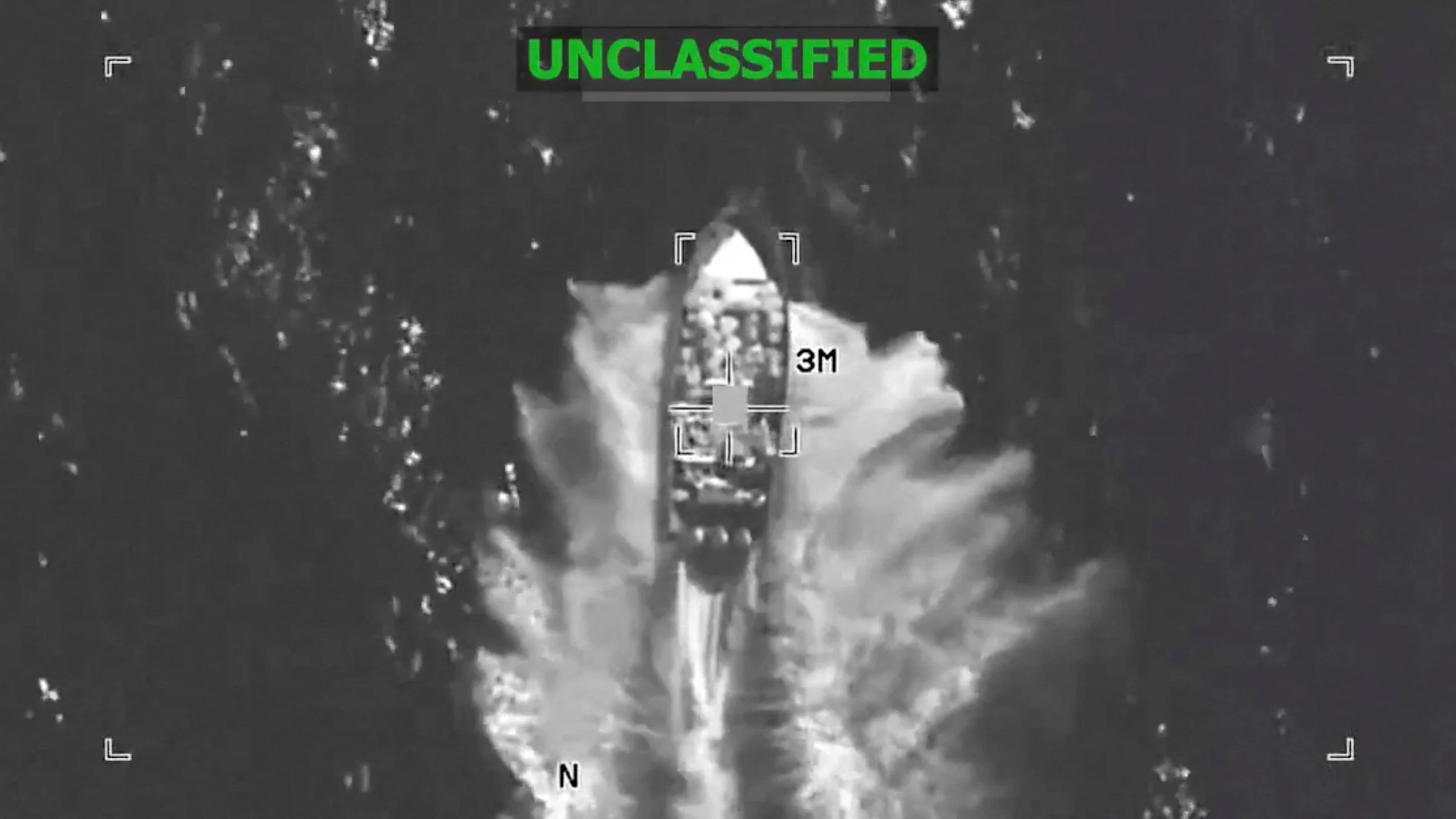
United States Southern Command, known as SOUTHCOM, confirmed that US forces targeted a boat along what it called a known narcotics trafficking corridor in the eastern Pacific.
In an official statement, the command described the operation as a lethal kinetic strike. It said three individuals were killed during the engagement.
The military did not publicly release evidence supporting its claim that the vessel was involved in drug trafficking.
A short video clip circulated on social media showed a small stationary boat with outboard engines engulfed in flames after being struck. The footage appeared to match SOUTHCOM’s description of the operation.
The latest strike follows three similar operations earlier in the week in the Pacific and Caribbean, in which 11 people were reportedly killed.
Since early September, US maritime operations in the eastern Pacific and Caribbean have resulted in at least 148 deaths across roughly 43 separate actions, according to publicly available military statements.
Why This Matters
The scale and frequency of these strikes mark a significant shift in US counter-drug strategy.
Traditionally, maritime drug interdiction has relied on Coast Guard boarding operations and law enforcement coordination with regional governments. The use of direct military firepower represents an escalation.
Legal experts argue that international waters do not grant unlimited enforcement authority. Under maritime law, states may interdict vessels suspected of certain crimes, but lethal force must meet strict standards of necessity and proportionality.
Critics question whether air or naval strikes against small boats meet those standards, especially without transparent evidence linking targets to organized crime.
The broader policy context also fuels debate. Most fentanyl entering the United States is smuggled over land through Mexico rather than by sea, prompting critics to question the strategic logic behind focusing on maritime targets.
What Analysts or Officials Are Saying
US defense officials maintain that the operations are lawful and designed to disrupt transnational criminal networks. They argue that aggressive maritime enforcement deters traffickers and protects American communities from narcotics.
However, human rights advocates have raised alarms.
Ben Saul, the United Nations special rapporteur on human rights and counterterrorism, said public acknowledgments of such attacks could amount to admissions of unlawful killings if civilians were targeted.
Legal scholars note that if survivors of a shipwreck were deliberately targeted in follow-up strikes, such actions could violate international humanitarian and human rights law.
Senior Trump administration officials, including Pete Hegseth and Admiral Frank Bradley, have faced questions about the operational rules of engagement governing these missions.
Latin American leaders have also expressed unease, warning that unilateral US action in international waters could strain diplomatic ties.
Daljoog News Analysis
This campaign reflects a broader hardline doctrine.
By framing drug trafficking as a security threat requiring military force, Washington has expanded the tools traditionally reserved for wartime scenarios.
Yet the optics are difficult to manage. Video footage of burning boats and rising casualty counts create political pressure at home and abroad.
Transparency remains limited. Without independently verifiable evidence that targeted vessels were actively engaged in narcotics trafficking, allegations of extrajudicial killings will persist.
The legal line is narrow. Interdiction may be lawful, but lethal force must remain a last resort. The absence of detailed after-action reports risks undermining US credibility.
At a strategic level, questions linger about effectiveness. Maritime strikes may disrupt certain routes, but trafficking networks adapt quickly. Focusing heavily on sea corridors may not significantly reduce fentanyl inflows.
What Happens Next
Further scrutiny appears inevitable.
Human rights organizations are likely to call for independent investigations into recent strikes. International bodies may request clarification from Washington regarding rules of engagement.
Congressional oversight could also intensify if casualty figures continue to rise.
Meanwhile, US forces are expected to maintain a visible presence in both the Pacific and Caribbean. Trafficking networks may shift routes or tactics in response.
The central question remains unresolved: can an expanded military approach at sea reduce drug flows without crossing legal and moral boundaries?
As maritime operations continue, the balance between enforcement and accountability will define the next phase of this policy.