

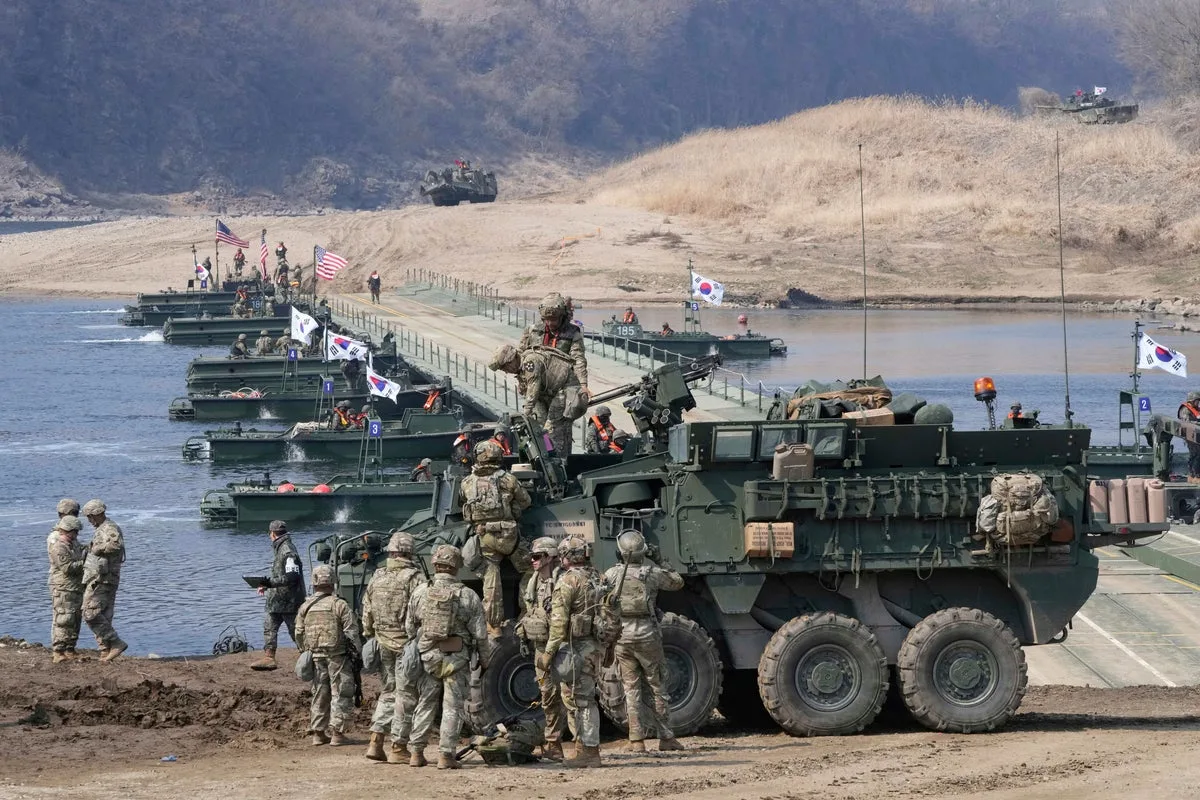
South Korea and the United States are set to begin their annual joint military exercises this August. These large-scale drills aim to strengthen military readiness in response to rising threats from North Korea. However, the exercises are expected to provoke strong reactions from Pyongyang, potentially worsening tensions on the Korean Peninsula.
The military exercise, known as Ulchi Freedom Shield, will take place from August 18 to 28. It marks the second major annual drill held in South Korea this year, following a similar exercise in March. Thousands of troops typically participate in these operations, which include both computer-based command training and live field maneuvers.
North Korea consistently condemns these joint drills. Pyongyang views them as rehearsals for invasion and often uses them as justification to increase military demonstrations and carry out weapons tests. Such actions aim to advance its nuclear weapons program and signal defiance against international pressure.
Despite repeated calls from Washington and Seoul to resume talks to reduce North Korea’s nuclear arsenal, diplomatic efforts have stalled since 2019. North Korea has instead shifted its foreign policy focus toward Russia, deploying thousands of troops and large amounts of military equipment to support Moscow in the ongoing conflict in Ukraine.
About 18,000 South Korean soldiers will participate in this year’s Ulchi Freedom Shield, according to Col. Lee Sung-jun, spokesperson for South Korea’s Joint Chiefs of Staff. U.S. Forces Korea did not disclose the number of American troops involved.
Both Col. Lee and Col. Ryan Donald, public affairs director for U.S. Forces Korea, dismissed claims that South Korea’s new liberal government, led by President Lee Jae Myung, plans to scale back the drills to encourage dialogue with North Korea. They confirmed that this year’s exercise will be similar in size to previous years. However, due to concerns over extreme heat, about half of the planned 40 field training activities were postponed to September.
The growing threat from North Korea’s nuclear and missile programs will be a central focus of the drills. The exercise will also integrate lessons learned from recent global conflicts, such as Russia’s war in Ukraine and the clashes between Israel and Iran. New threats like drone attacks, GPS jamming, and cyber warfare will also be addressed.
These drills serve as a clear signal of South Korea and the United States’ commitment to regional security. As tensions remain high, Ulchi Freedom Shield underscores the allies’ readiness to respond to any aggression from North Korea. The annual exercise also sends a strong message that both countries remain united against threats to peace on the Korean Peninsula.