
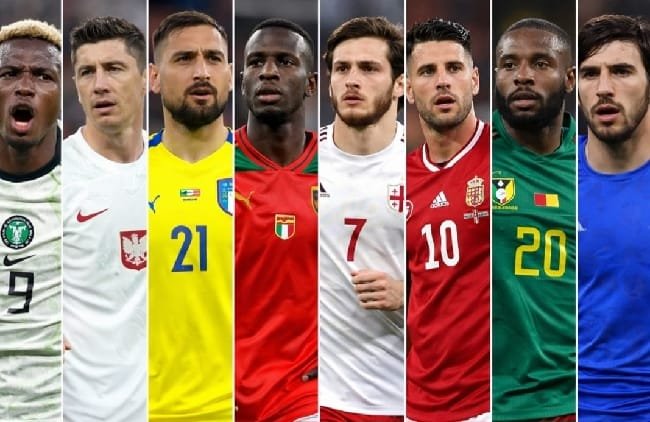
Several high-profile football stars, including Robert Lewandowski and Victor Osimhen, will not feature in the upcoming FIFA World Cup after their national teams failed to qualify or were eliminated in the playoffs. The absence of major names has reshaped expectations ahead of the tournament.
According to Daljoog News analysis, the qualification results highlight how competitive modern international football has become, where even elite players cannot guarantee a place on the world’s biggest stage.
The final list of absentees also reflects a wider trend of shifting football power, as traditional teams struggle in qualifiers while emerging nations continue to challenge established football nations.
What Happened?
Poland’s failure to qualify means striker Robert Lewandowski will miss what is likely his final opportunity to play in a World Cup. The team was eliminated after a crucial defeat to Sweden in the qualifying stages.
Lewandowski, who has scored 748 career goals across club and international football, has been one of Europe’s most consistent forwards. Despite his achievements, he has struggled to replicate international tournament success at the World Cup level.
In Italy’s case, goalkeeper Gianluigi Donnarumma will also miss the tournament after the national team failed to secure qualification. The European giants were eliminated in a dramatic playoff decided by a penalty shootout, ending hopes of another World Cup appearance.
Costa Rica, which had featured in the last three editions, also failed to qualify. Veteran goalkeeper Keylor Navas will not appear in what many consider the final stage of his international career.
Nigeria’s campaign ended in heartbreak after a strong playoff run that included standout performances from striker Victor Osimhen, who scored five goals across key matches. However, a final defeat in the decisive round ended their hopes of qualification.
Several other nations, including Hungary, Slovenia, and Georgia, also missed out, meaning stars like Dominik Szoboszlai, Jan Oblak, and Khvicha Kvaratskhelia will not feature in the tournament.
Why This Matters
The absence of major global stars changes the competitive and commercial landscape of the World Cup. Players like Lewandowski and Osimhen are not only team leaders but also global football attractions.
Their absence reflects the increasing difficulty of qualification in an expanded and highly competitive system. Even individual brilliance is no longer enough to carry national teams through long qualification cycles.
For fans and broadcasters, missing star players can affect global viewership narratives, especially when iconic names are absent from football’s most prestigious stage.
What Analysts or Officials Are Saying
Football analysts note that Europe and Africa have become more unpredictable in qualification campaigns, with traditional powerhouses no longer guaranteed automatic progression.
Experts also highlight that squad depth, tactical consistency, and federation stability now matter as much as individual talent. This shift has made international football more balanced but also more unforgiving for elite players on weaker national teams.
Former players and commentators have pointed out that the emotional impact of missing a World Cup can define careers, particularly for aging stars nearing retirement.
Daljoog News Analysis
The list of absentees signals a transitional phase in global football. The era where individual superstars could reliably carry national teams has given way to more collective, system-driven success models.
For players like Robert Lewandowski and Keylor Navas, this may represent the final chapter of international careers that deserved a World Cup stage but were ultimately shaped by team performance rather than individual legacy.
At the same time, emerging talents from qualified nations now have an opportunity to define the tournament, filling the gap left by absent stars and reshaping global football narratives.
What Happens Next
Attention now turns to final World Cup squad announcements from qualified teams, where new stars will emerge in the absence of several established names.
The debate will continue around qualification formats and whether the current system fairly reflects global football strength. Some federations may push for reforms or expanded pathways in future cycles.
For the players missing out, focus will shift to club football, where performance will remain crucial ahead of future international tournaments or retirement decisions.