


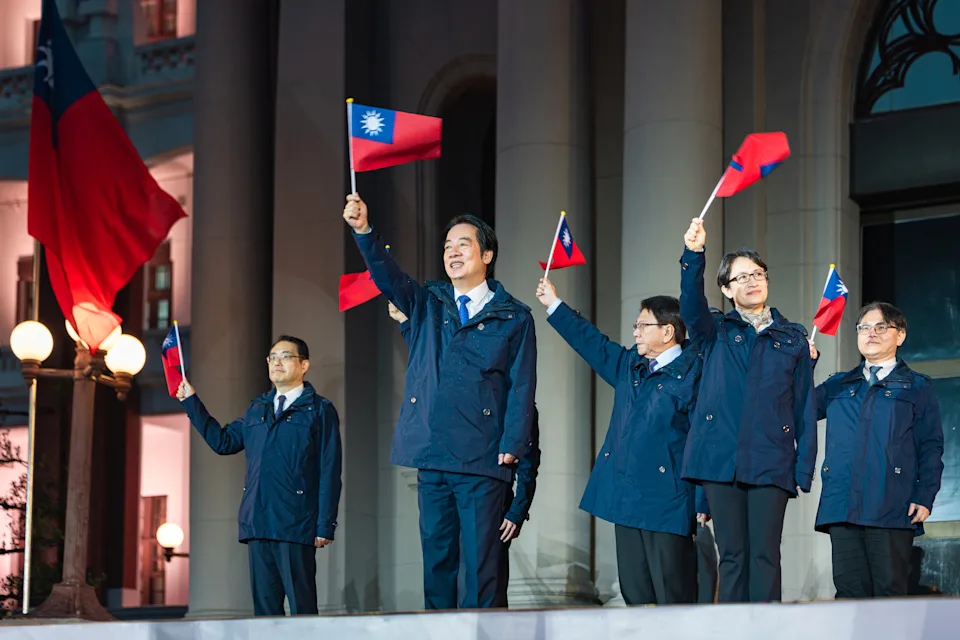
Taiwan sovereignty defense pledge was reaffirmed by President Lai Ching-te on Thursday, as he vowed to protect the self-ruled island against China’s “expansionist ambitions.” His remarks came shortly after Beijing completed live-fire military drills involving rockets, aircraft, and warships surrounding Taiwan.
“In the face of China’s rising ambitions, the international community is watching whether the Taiwanese people have the resolve to defend themselves,” Lai said during his New Year’s address. He emphasized the importance of safeguarding national sovereignty, strengthening defense, and building societal resilience with a comprehensive deterrence strategy.
The recent military exercises by China followed U.S. plans to sell over $11 billion in arms to Taiwan, including missiles, drones, artillery systems, and military software. These sales, the largest to date, are part of Washington’s legal obligation to provide Taiwan with the means to defend itself.
China views Taiwan as its territory and has threatened annexation, by force if necessary. In his own New Year’s address, Chinese President Xi Jinping reiterated the claim, calling an eventual annexation “unstoppable.”
In response to increasing threats, Taiwan announced a $40 billion budget for arms acquisitions last year, aimed at enhancing its air defense and building the advanced Taiwan Dome system for high-level detection and interception. This budget will be allocated over eight years, from 2026 to 2033. President Lai also pledged to raise defense spending to 5 percent of Taiwan’s GDP to strengthen deterrence against potential aggression.
“Facing China’s serious military ambitions, Taiwan has no time to wait,” Lai said, highlighting the urgency of bolstering the island’s defenses. His administration continues to focus on strengthening military readiness while maintaining democratic governance and societal resilience.
Experts note that Taiwan’s commitment to self-defense and advanced deterrence is crucial amid ongoing regional tensions, as China expands its military presence near the island and challenges U.S. support for Taipei.
The president’s pledge underscores Taiwan’s determination to protect its sovereignty and maintain stability in the region, even as tensions with Beijing remain high.