



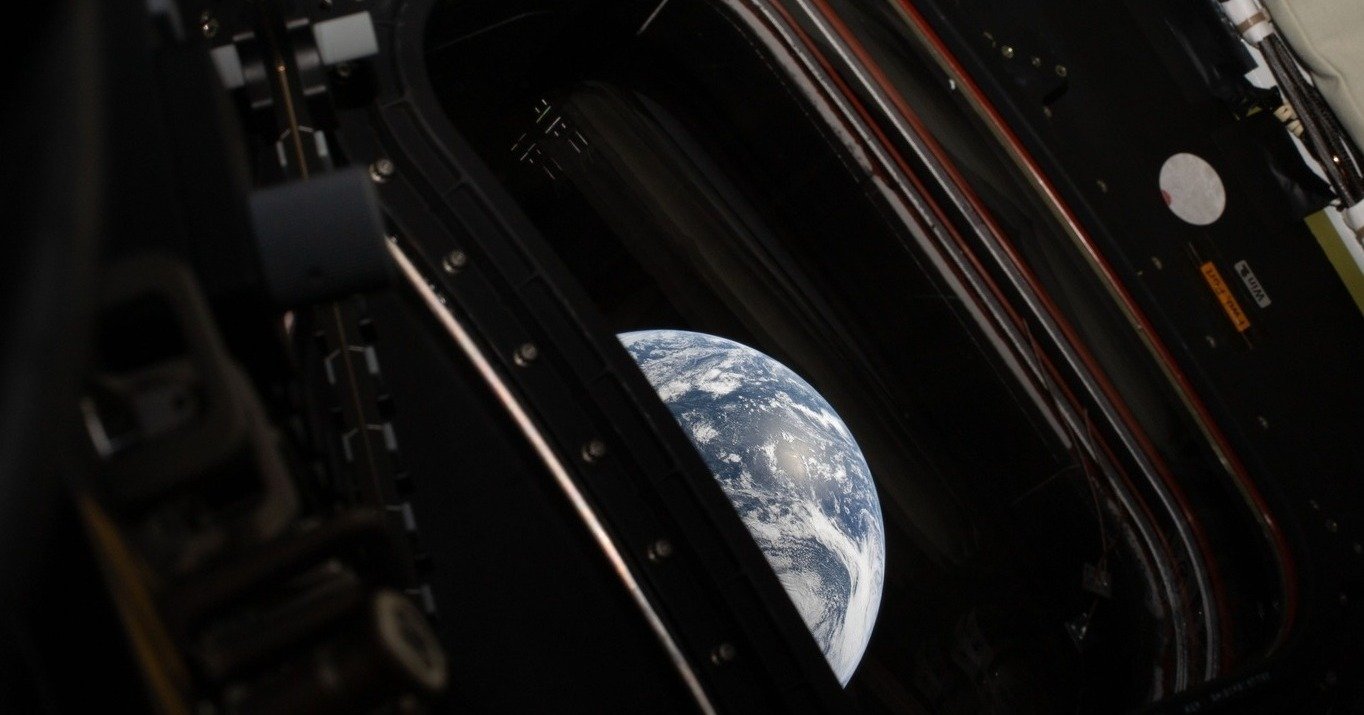
Four astronauts aboard NASA’s Artemis II mission have glimpsed a part of the moon that no human has ever seen. Orbiting roughly 300,000 kilometers from Earth, they observed the moon’s far side, sometimes called the “dark side,” in unprecedented detail.
According to Daljoog News analysis, seeing the far side offers insights into lunar geology that were previously only accessible via satellite imagery. This observation marks both a scientific achievement and a symbolic milestone in human space exploration.
The mission also sets a new record for human distance from Earth, surpassing previous Apollo-era achievements. This historic journey underscores the expanding frontiers of space travel and humanity’s growing reach beyond our planet.
What Happened?
NASA astronauts Christina Koch, Jeremy Hansen, Victor Glover, and Reid Wiseman are aboard the Artemis II spacecraft, which launched last Wednesday. The crew is orbiting the moon and has entered the lunar gravitational sphere, giving them a direct view of areas never seen from Earth.
Inside the spacecraft, which resembles a compact camper van, the astronauts live, work, and sleep in close quarters. They have also maintained communication with their families, describing those moments as profoundly moving. When observing the moon’s far side, however, their focus is entirely on the alien terrain before them.
The far side will soon pass just 4,600 miles above the spacecraft’s orbit. From this vantage point, the astronauts note that the familiar lunar markings appear distorted, revealing the far side’s unique topography and mystery.
Why This Matters
Viewing the moon’s far side is more than a visual experience; it opens new opportunities for scientific study. The region contains craters, mountains, and geological formations untouched by human exploration, providing potential insights into lunar history and the early solar system.
For humanity, this mission represents an extension of our exploratory boundaries. By breaking the distance record set by the Apollo missions, Artemis II demonstrates technological advancements in crewed spaceflight and sets the stage for future deep-space missions.
What Analysts or Officials Are Saying
Space analysts emphasize that firsthand observation of the lunar far side is irreplaceable. While satellite imagery offers maps, seeing the terrain live provides better context for both geological study and planning potential future lunar missions.
NASA officials also note that the crew’s communication with Earth maintains morale while demonstrating the human element in space exploration. The balance between operational tasks and emotional connection highlights the mission’s complexity.
Daljoog News Analysis
Daljoog News views the Artemis II observations as a watershed moment in human spaceflight. Unlike robotic probes, humans can interpret subtle features, offering richer scientific and cultural understanding.
This journey underscores the dual purpose of modern exploration: pushing technical boundaries while inspiring global audiences. As the crew navigates the far side, every observation contributes to a growing legacy of human curiosity and achievement.
What Happens Next
The Artemis II crew will continue orbiting the moon, collecting data and capturing images of the far side. Their upcoming passes over the lunar surface will provide even closer views of unexplored regions.
This mission also sets a benchmark for future Artemis flights and potential lunar landings. Observers around the world will be monitoring the spacecraft’s progress, with the far side views offering both scientific value and the awe of witnessing uncharted territory.