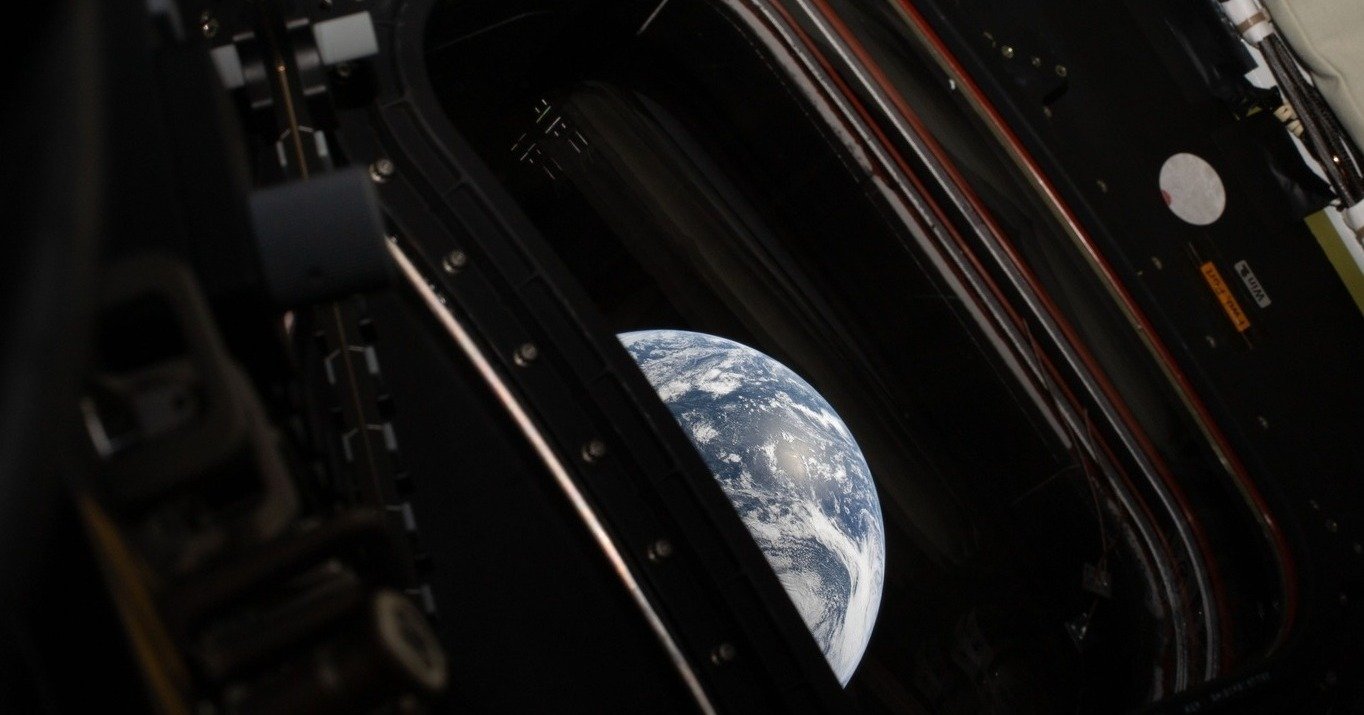



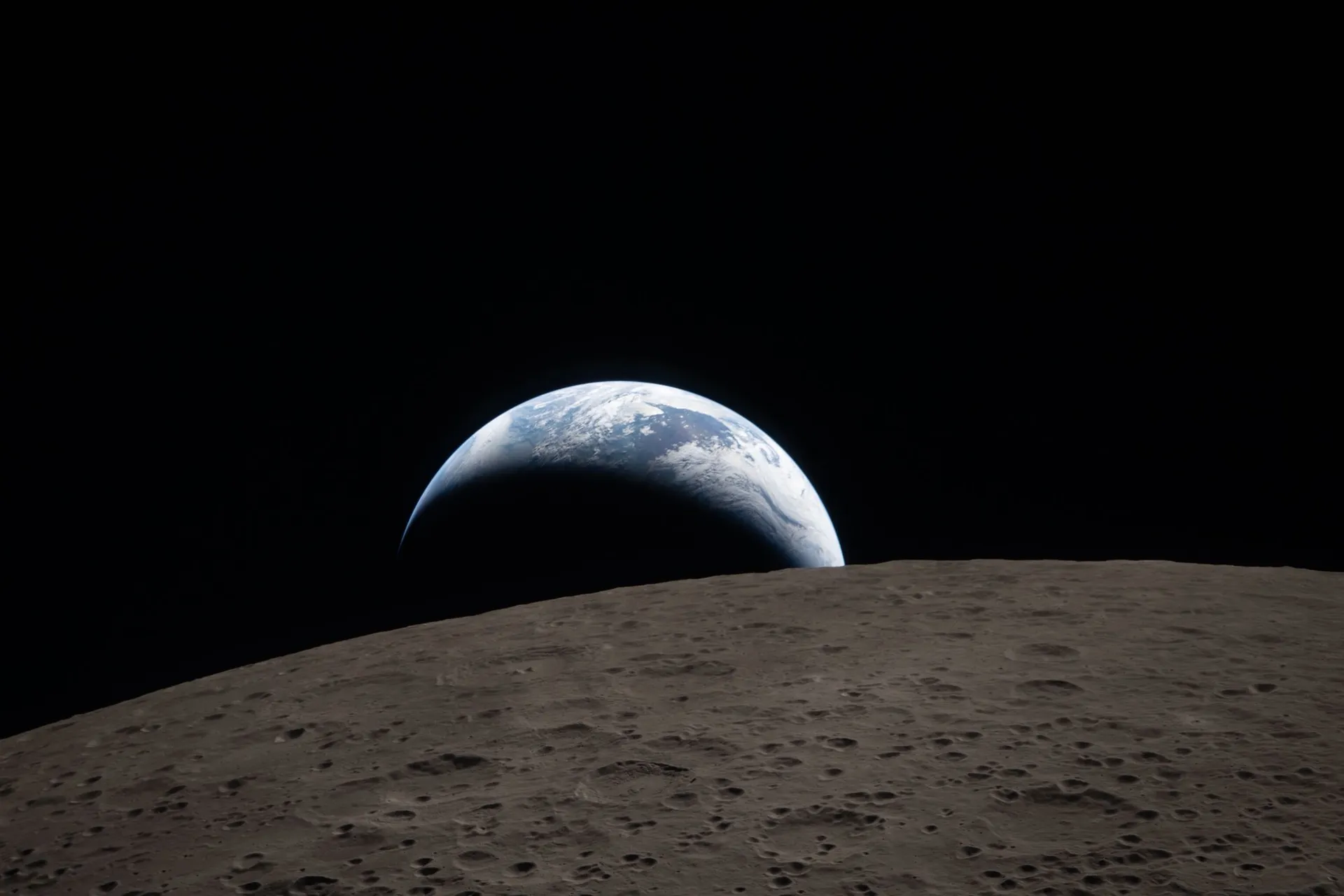
NASA’s Artemis II mission has unveiled a side of the moon unseen from Earth for more than five decades. Astronauts aboard the spacecraft captured images of its mysterious far side, captivating scientists and space enthusiasts worldwide.
According to Daljoog News analysis, the Artemis II moon discovery highlights how much remains unknown about Earth’s nearest celestial neighbor, emphasizing that even familiar worlds can hold vast hidden terrains.
This milestone comes 52 years after humans last glimpsed the moon’s hidden hemisphere. The discovery sheds light on lunar geography, deepening understanding of its formation, surface features, and geological history.
What Happened?
During the Artemis II mission, four astronauts observed and documented the moon’s far side, commonly referred to as the “far side of the moon.” Unlike the familiar near side, this hemisphere is dominated by massive craters, rough highlands, and rugged mountains.
NASA released detailed images of the Orientale Basin, one of the moon’s largest and most striking craters. The basin’s complex terrain has fascinated researchers because it remains largely hidden from Earth-based telescopes.
The crew’s observations provide new insights into lunar geology and are part of NASA’s broader effort to study the moon’s surface for future exploration and potential human settlement.
Why This Matters
The Artemis II moon discovery is significant for both science and space exploration strategy. Understanding the far side’s terrain can improve landing site selection, inform future missions, and enhance models of lunar evolution.
The far side also offers opportunities to study the moon’s crust and impact history, which could reveal patterns about the early solar system. Scientific data from these missions may inform broader space exploration, including Mars and beyond.
Additionally, the Artemis II moon discovery renews public interest in space, inspiring education, technological innovation, and international collaboration in lunar research.
What Analysts or Officials Are Saying
Space experts describe the Artemis II moon discovery as a historic achievement, noting that decades of unmanned observation have provided limited detail. Astronaut-collected images offer unprecedented clarity and context.
NASA officials emphasize that the far side is not perpetually dark. It experiences sunlight just like the near side; it only appears hidden because it always faces away from Earth. Researchers are excited about the potential for discoveries in previously unobserved regions.
Analysts also point to the mission’s role in advancing human presence in space. By mapping unknown terrain, Artemis II lays the groundwork for sustainable exploration, resource studies, and potential lunar bases.
Daljoog News Analysis
The Artemis II moon discovery reminds the world that even familiar celestial bodies can hide mysteries. While the near side of the moon has been extensively studied, the far side offers clues about formation, surface evolution, and impact events unseen for generations.
Daljoog News notes that the mission strengthens NASA’s leadership in lunar exploration, combining scientific research with public engagement. This Artemis II moon discovery is likely to accelerate international interest in the moon and spur competition in space science and technology.
The far side’s rugged landscape, massive craters, and untouched terrain underscore the challenge and excitement of future missions. Each image returned is a new chapter in humanity’s understanding of Earth’s cosmic companion.
What Happens Next
NASA plans to continue analyzing the data collected from Artemis II, with follow-up missions expected to explore the far side in greater detail. Researchers aim to identify safe landing zones and study surface composition for potential lunar bases.
The Artemis II moon discovery may also guide global space agencies in designing collaborative missions, scientific experiments, and robotic surveys. As humanity revisits the lunar surface, the far side promises more revelations, keeping both scientists and the public captivated.