



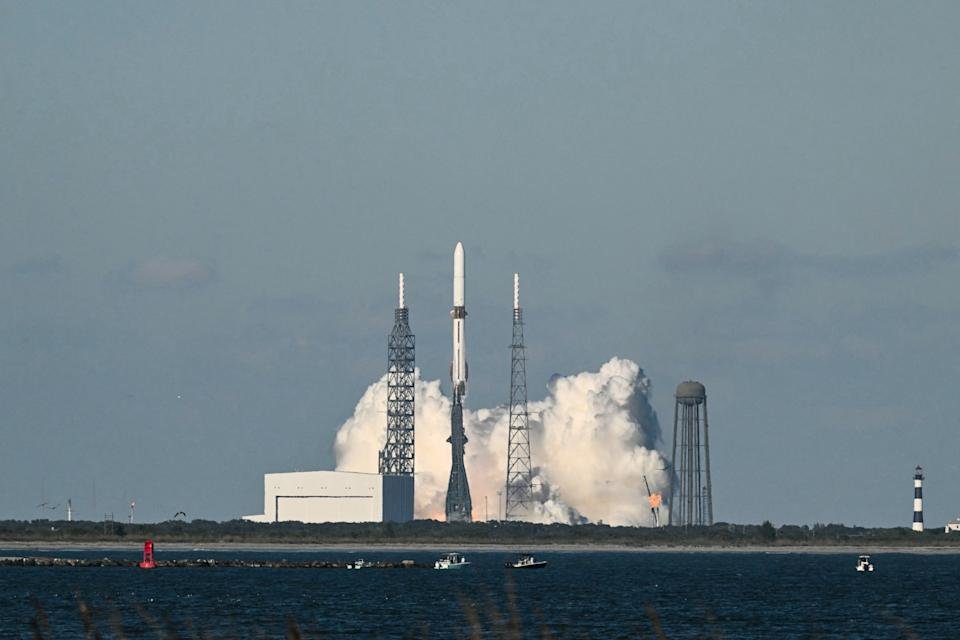
Elon Musk and Jeff Bezos are racing to create orbital AI data centers, a bold plan to address the massive energy and cooling demands of the artificial intelligence boom. The idea involves satellites equipped with advanced computing chips powered by space-based solar energy, which could operate uninterrupted far above Earth’s surface. SpaceX and Blue Origin are leading the efforts, with Blue Origin exploring the technology for over a year and SpaceX proposing an $800 billion share sale to fund upgraded Starlink satellites for this purpose.
Launching and maintaining thousands of satellites presents significant challenges. Contrary to popular belief, heat does not dissipate easily in the vacuum of space. Computer equipment generates heat that cannot transfer effectively without a medium, similar to how double-walled vacuum tumblers retain warmth. As a result, cooling these orbital data centers could prove more difficult than on Earth. Despite these obstacles, experts are cautiously optimistic. Will Marshall, CEO of Planet Labs, said, “It’s been an idea for years, but it has required launch and satellite costs to come down. We are nearing that point.”
Orbital data centers could offer major benefits. Terrestrial data centers consume enormous amounts of energy, often relying on fossil fuels that contribute to carbon emissions and pollution. By contrast, solar power in space is abundant and continuous, enabling high-energy operations without straining Earth’s energy grids. This approach could revolutionize AI computing while supporting cleaner energy solutions.
Skeptics caution that the track record of high-profile tech ventures shows big ideas do not always succeed. Elon Musk and Jeff Bezos are pursuing an ambitious and costly solution that may face delays or technical setbacks. Alternative approaches on Earth, such as expanding clean energy production, nuclear fission, or even exploring nuclear fusion, could also address data center energy challenges without venturing into space.
Several other tech companies, including Google, OpenAI, and IBM, are exploring space-based or high-efficiency computing solutions. Startups are also entering the race, investigating ways to overcome the technical hurdles of orbital operations. Reducing launch costs remains critical, as more frequent and efficient rocket deliveries would enable larger-scale deployment. Other engineering challenges include radiation protection, cooling without convection or conduction, and managing communication lag for real-time data processing.
Jonny Dyer, CEO of Muon Space, who has consulted with Google on the concept, expressed confidence that these issues can be solved. “I think those engineering challenges are all solvable,” he said. “It ultimately comes back to launch.” SpaceX and Blue Origin’s push into orbital AI reflects a growing trend of high-stakes experimentation in advanced computing, with the potential to reshape both technology and energy use on Earth.
As the race progresses, Musk and Bezos are likely to draw attention, investment, and scrutiny, making the coming years pivotal for space-based AI. While success could transform AI infrastructure and energy efficiency, the venture carries significant technical and financial risk. For now, the project remains a daring, high-concept experiment that could either redefine data centers or serve as a cautionary tale for ambitious aerospace computing projects.