



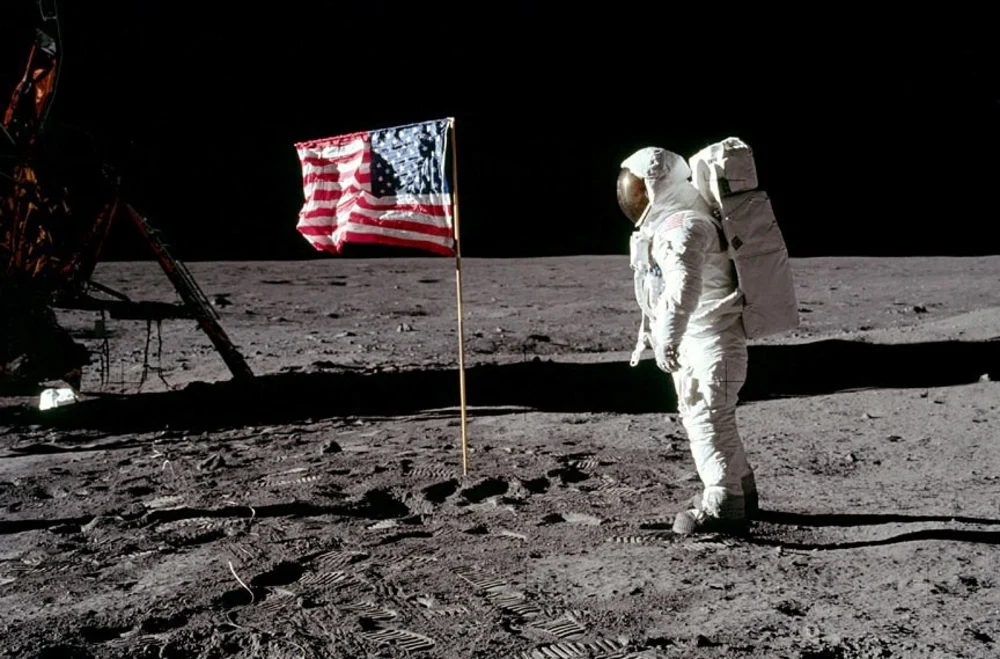
After more than five decades, NASA is preparing to send astronauts back toward the Moon under its Artemis II mission, marking the first crewed lunar voyage since the Apollo era.
According to Daljoog News analysis, the mission signals a strategic return to deep space exploration, with long-term goals that extend beyond orbiting the Moon to establishing a sustained human presence.
NASA announced the mission as part of its broader Artemis program, following years of technical testing, rehearsal launches, and safety reviews designed to avoid the risks that defined earlier space race pressures.
What Happened?
The U.S. space agency, NASA, confirmed it is entering the final preparation phase for Artemis II, a 10-day crewed mission that will send four astronauts around the Moon.
The mission follows Artemis I, an uncrewed test flight conducted in 2022 that successfully orbited the Moon and returned to Earth.
Over the past three years, NASA has conducted multiple integrated system tests, including rocket launches and “wet dress rehearsal” simulations. These rehearsals replicate launch-day conditions, including full propellant loading.
Engineers previously identified technical issues such as hydrogen leaks during fueling tests. NASA says those problems have since been addressed through design adjustments and procedural changes.
Last Thursday, the agency completed a 50-hour launch rehearsal, a key milestone in determining operational readiness.
Officials have tentatively identified March 6 as a potential launch date. However, they stressed that final approval depends on flight readiness certification reviews still underway.
NASA leadership indicated that the coming week will involve additional analysis of recent test data. If any irregularities emerge, the launch window may shift.
Why This Matters
The last time humans traveled toward the Moon was during the Apollo program in the early 1970s. Artemis II represents the first crewed lunar mission in 54 years.
Unlike the earlier race-driven missions, Artemis is structured as a phased exploration strategy. Artemis II will not land astronauts on the lunar surface. Instead, it will orbit the Moon and travel farther from Earth than any previous crewed spacecraft.
The mission aims to validate life-support systems, navigation technology, and deep-space communication protocols under real flight conditions.
Success would pave the way for future surface landings and potential lunar infrastructure projects.
The mission also carries geopolitical weight. Renewed lunar exploration has become a focal point of international competition and cooperation in space.
What Analysts or Officials Are Saying
NASA officials have emphasized that safety remains the overriding priority. Flight readiness certification will determine whether the March target date holds.
Program managers describe Artemis II as a proving ground for both hardware and human systems. Deep-space missions expose crews to radiation, isolation, and extended travel durations not experienced in low Earth orbit.
Space policy analysts note that Artemis is also designed to build long-term capabilities, not just symbolic milestones. The program envisions future lunar landings and eventual preparation for missions to Mars.
International partners are closely watching. Artemis includes collaboration frameworks that could shape global space governance over the next decade.
Daljoog News Analysis
Artemis II is more than a return to the Moon. It is a recalibration of ambition.
The Apollo missions were fueled by Cold War urgency. Artemis reflects long-term strategy. NASA is deliberately moving in stages, prioritizing system validation over speed.
That slower approach may frustrate those eager for immediate lunar landings. However, it reduces the risk of catastrophic failure in deep space.
The technical challenges remain significant. Hydrogen leaks during rehearsals highlighted how even small engineering flaws can delay major missions.
Yet the steady progress since Artemis I suggests NASA is building a sustainable architecture rather than chasing headlines.
If Artemis II succeeds, it will demonstrate that crewed deep-space missions are again operationally viable.
It will also strengthen the United States’ position in an increasingly competitive space environment.
What Happens Next
NASA will complete its final readiness assessments in the coming days.
Engineers will review fueling system performance, crew safety protocols, and spacecraft integrity reports before issuing final clearance.
If the March launch window remains intact, Artemis II will send four astronauts on a 10-day journey around the Moon, setting distance records for human spaceflight.
If additional adjustments are needed, NASA has indicated it will delay rather than compromise safety standards.
The broader Artemis roadmap envisions a future mission that will place astronauts on the lunar surface.
For now, Artemis II stands as a crucial bridge between historic achievement and a new era of exploration.
More than half a century after Apollo, humanity is once again preparing to venture deeper into space — this time with long-term plans in mind.