



Thailand and Cambodia agreed to an immediate ceasefire on Saturday, ending weeks of deadly clashes along their shared border. The two nations pledged to halt fighting that has killed dozens and displaced over a million people.
The European Union urged both sides to implement the truce in good faith, while the United Nations human rights chief, Volker Turk, expressed hope that it could lead to lasting peace.
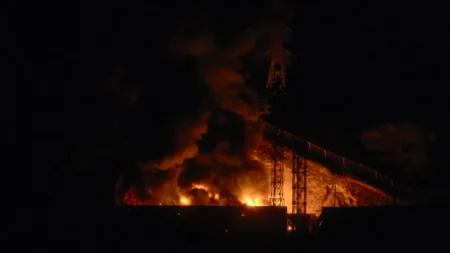
The border conflict, which has raged for three weeks, involved heavy artillery, tanks, drones, and jets. Official reports say at least 47 people have been killed. Nearly every border province on both sides was affected, breaking a previous truce signed months ago.
The ceasefire was signed by the defence ministers of Thailand and Cambodia at a border checkpoint on the Thai side and went into effect at 12 pm local time (0500 GMT). The agreement covers all weapons, including attacks on civilians, infrastructure, and military targets.
Both countries agreed to freeze troop movements and allow civilians in border areas to return home safely. The deal also includes cooperation on demining and combating cybercrime. Thailand will return 18 captured Cambodian soldiers within 72 hours.
Thai Defence Minister Nattaphon Narkphanit described the initial three-day window as an “observation period to confirm that the ceasefire is real” and called it “a door to a peaceful resolution.”
Displaced Cambodian resident Oeum Raksmey said she was happy people could return home if the fighting stops. “But I dare not return home yet. I am still scared,” said the 22-year-old, who has been sheltering in Siem Reap province with her family.
Across the border, Thai village head Khampong Lueklarp expressed caution. “I personally think the ceasefire won’t really happen,” said the 55-year-old from Sisaket province, while adding he hoped for “real peace.”
The truce followed three days of border talks prompted by a crisis meeting of ASEAN foreign ministers. EU officials thanked ASEAN for its positive role and pledged support if needed. U.S. and Chinese officials also pushed for an end to the fighting.
Cambodia and Thailand plan to meet in China on January 28-29 for trilateral talks with top Chinese diplomat Wang Yi to discuss the border dispute further.
The conflict originates from a long-standing territorial dispute over the colonial-era demarcation of the 800-kilometre Thai-Cambodia border. Both nations claim several ancient temples located in the area. Previous clashes in July killed dozens before a truce was brokered by the United States, China, and Malaysia.
An expanded truce signed in October, witnessed by former U.S. President Donald Trump, broke down within months. Both sides blamed each other for triggering the latest fighting and accused one another of targeting civilians.
At least 25 Thai soldiers and one civilian were killed during the most recent clashes. Cambodia reported 21 civilian deaths, while official statements denied military casualties, despite social media posts showing funerals for soldiers.
The border talks continued even as fighting persisted, with both sides accusing each other of attacks. Resolving the precise border demarcation remains a challenge. The contested temples are claimed due to vague mapping by French colonial administrators in 1907.
UN human rights chief Turk said he hoped the ceasefire would help build confidence and pave the way for peace. He also emphasized that affected civilians must receive all necessary support to return home safely.