



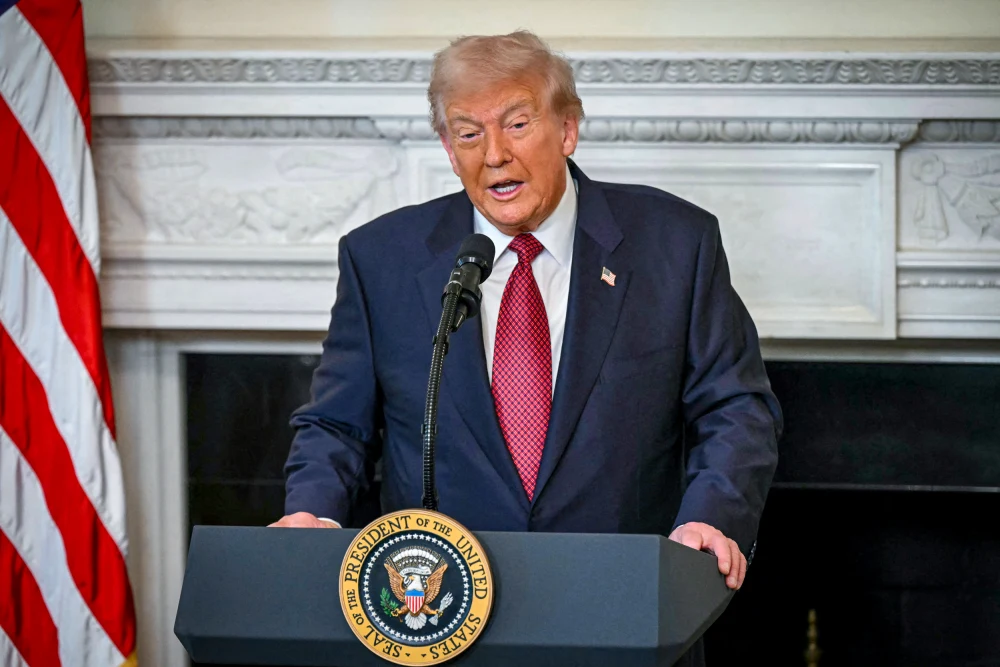
The US Supreme Court is hearing arguments on President Donald Trump’s sweeping tariffs, a major test of his power to reshape global trade. The case questions whether Trump can use emergency powers under the 1977 International Emergency Economic Powers Act (IEEPA) to impose tariffs on nearly all US trading partners.
Trump invoked IEEPA earlier this year to levy high duties on imports, arguing that the law allows him to regulate trade during a national emergency. However, critics say tariffs are a form of taxation—something only Congress can approve under the Constitution.
Lower courts have ruled against Trump’s use of IEEPA for tariffs, but the administration appealed. The Supreme Court, which includes several Trump-appointed justices, is expected to decide by July 2026.
If the court rules against him, Trump may need new legal grounds to continue his trade strategy. If he wins, it would expand presidential power over economic policy and strengthen his “America First” agenda.
Trump called the case “one of the most important in the History of the Country,” warning that losing could make the US “defenseless.” Treasury Secretary Scott Bessent said the administration has “other authorities” to maintain tariffs even if the ruling goes against them.
The non-partisan Tax Foundation estimates the tariffs will raise average household costs by $1,200 in 2025 and $1,600 in 2026. Twelve states and several small businesses have sued to block them, arguing that no president should unilaterally impose taxes.
The US Chamber of Commerce joined the opposition, urging Congress to reclaim its role in setting trade duties. The Senate recently voted 51–47 to nullify Trump’s tariffs, but the House is unlikely to act due to Republican rules blocking a vote.
The Supreme Court’s decision will set a lasting precedent on whether the president can use emergency powers to control US trade policy.