


Tensions between the United States and Canada have risen after President Donald Trump threatened massive tariffs on Canadian goods. The warning comes in response to a recent trade agreement between Canada and China.
Canada has been seeking to expand its global trade relationships beyond the United States, its largest trading partner. Last week, Ottawa signed a strategic partnership with Beijing, aiming to strengthen economic ties and reduce tariffs.
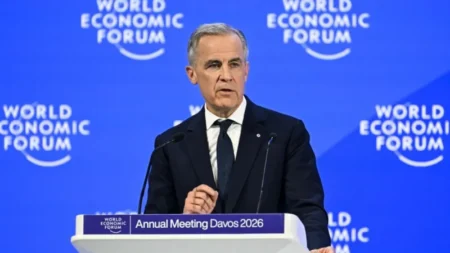
Under the agreement, China will lower tariffs on Canadian crude oil from 85% to 15% by March. In return, Canada will reduce tariffs on Chinese electrical doors from 100% to 6.1%. Canadian Prime Minister Mark Carney described China as a “trusted global partner” at the World Economic Forum, encouraging European leaders to increase investment.
Carney also criticized the use of economic aggression by major powers, claiming that U.S.-led global systems have weakened. He urged medium-sized countries to unite through economic cooperation.
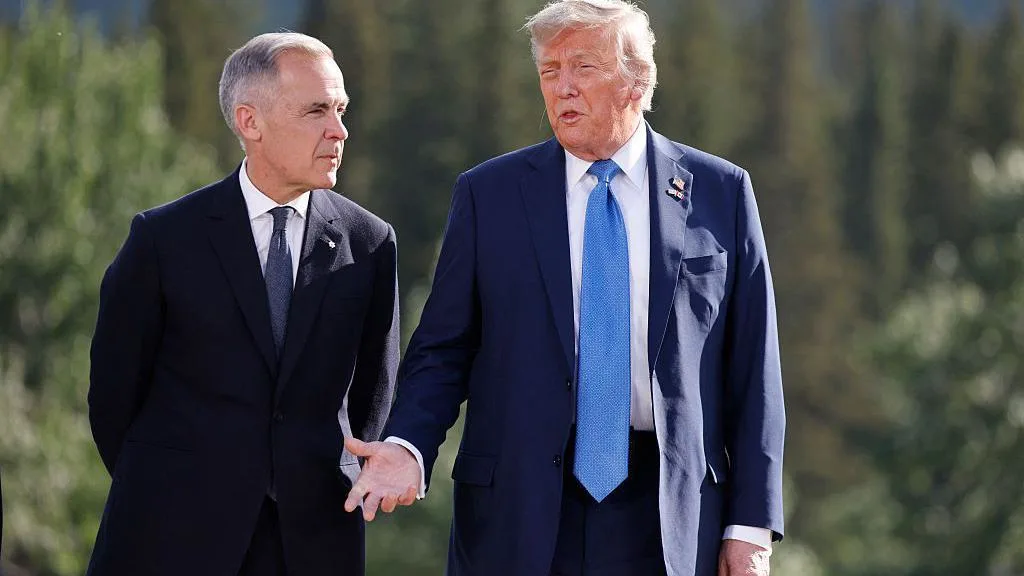
Trump reacted strongly to Canada’s deal with China. On social media, he warned that any Canadian attempt to bypass the U.S. for exports to China would be a “serious mistake.” He claimed such moves could lead to the destruction of Canadian trade, business, and social structures.
This is not the first time Trump has publicly criticized Canada. Before taking office, he suggested making Canada the 51st U.S. state and has consistently raised tensions over tariffs and trade issues.
The trade warning from Trump underscores the growing friction between Ottawa and Washington. Canada continues to push for broader international partnerships with China, the European Union, and Qatar, aiming to diversify its trade and reduce dependency on the United States.
Analysts say Trump’s threat of a 100% tariff on Canadian goods could have serious economic consequences, particularly if implemented. Experts also note that Canada’s moves to secure trade deals with other global powers may shift the balance of influence in North American and international markets.
Prime Minister Carney, however, remains committed to expanding Canada’s global partnerships, emphasizing that cooperation with China is part of a long-term economic strategy. The standoff highlights the challenges faced by middle powers in navigating relations with dominant global economies.