



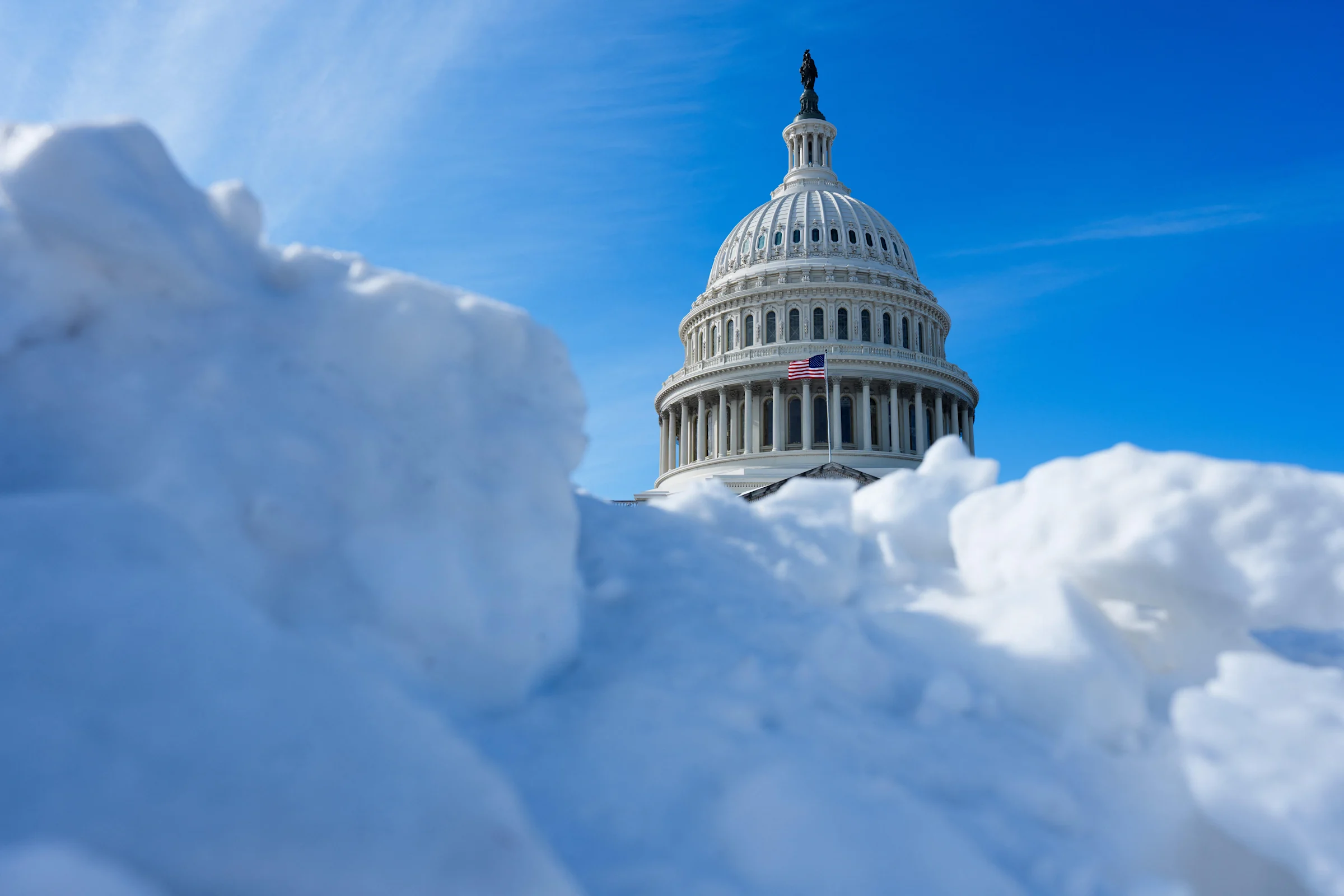
The federal government remains partially shut down as House Republicans struggle to pass a funding bill approved by the Senate last week. Conservatives in the House are threatening to block the legislation unless their policy priorities, including stricter voting restrictions, are added.
According to Daljoog News analysis, the standoff illustrates the fragility of congressional majorities and the influence of hardline factions on critical government operations. Even short-term shutdowns can disrupt key services and test leadership within both parties.
This battle comes just days after President Trump brokered a deal with Senate Democrats to fund most federal agencies through September, leaving only the Department of Homeland Security (DHS) unresolved. Timing is critical: procedural delays in the House could turn a brief shutdown into a more prolonged crisis.
What Happened?
Last Friday, the Senate passed a bipartisan bill to reopen nearly all federal agencies, with the exception of DHS, which remains a sticking point due to Democrats’ demands for reforms. The legislation, negotiated by President Trump and Senate Democrats, was designed to prevent an extended shutdown and provide a reprieve for most government departments.
House Republicans, however, face internal resistance. Far-right conservatives, led by Rep. Anna Paulina Luna of Florida, have conditioned their support on attaching new voting restrictions to the funding bill. Failure to meet these demands could block the House from passing the measure, leaving key agencies shuttered.
Speaker Mike Johnson initially hoped to fast-track the bill using a special procedural vote but was forced to abandon that approach after Democratic leaders signaled they would not cooperate. With a slim GOP majority, even a few defections could prevent passage. Democrats have also indicated they may withhold support until procedural obstacles are addressed.
Why This Matters
While the current shutdown is partial, it still affects crucial federal functions. Air traffic controllers and TSA staff may be forced to work without pay, and thousands of federal employees could face furloughs. Delays in tax filings, Medicaid and Medicare services, and federal loan and grant processing are also possible.
Daljoog News analysis suggests that even brief shutdowns carry outsized political and economic risks. Lawmakers not only disrupt government operations but also expose divisions within their parties. GOP leadership, in particular, must navigate between appeasing hardline members and fulfilling basic governance responsibilities.
The situation also highlights the ongoing debate over DHS and immigration enforcement. Funding delays risk further shutdowns in February unless Congress reaches a compromise on agency operations, oversight, and reforms demanded by Democrats.
What Analysts or Officials Are Saying
Republicans have pushed back on some Democratic reform demands. Speaker Johnson called certain proposals, such as requiring ICE and CBP agents to obtain judicial warrants for home raids, “non-starters” for his caucus. Other Democrats insist that funding DHS must include leadership changes and stricter oversight.
Senator John Thune warned that even with an agreement, completing negotiations before DHS funding lapses again will be “really, really hard.” Meanwhile, President Trump emphasized on Truth Social that the government funding deal must pass “with NO CHANGES” and be signed immediately, signaling urgency from the White House.
Democratic voices, including Senator Amy Klobuchar, have argued that reforms to DHS and immigration enforcement remain insufficient. Some have also called for the removal of key figures associated with Trump’s immigration policies before approving funding.
Daljoog News Analysis
This standoff reflects a growing pattern in Congress: major legislation is increasingly vulnerable to small factions, even within the majority party. Hardline conservatives are leveraging shutdowns to push policy priorities, testing the authority of House leadership.
Daljoog News notes that the strategy of splitting funding into separate bills, rather than tackling the government’s entire budget at once, has mitigated some risk but has not eliminated it. The DHS issue underscores how targeted, high-stakes disputes can stall otherwise routine government funding.
The episode also underscores Trump’s continued influence over Republican priorities. His insistence on passing the funding deal without alterations shows a pragmatic approach aimed at avoiding political fallout from a prolonged shutdown, even while conservative factions push their own agenda.
What Happens Next
The House will face critical votes this week to advance the Senate-approved funding bill. Success depends on holding the GOP caucus together while navigating procedural hurdles and potential Democratic obstruction.
Even if the immediate funding bill passes, DHS will require a separate deal within two weeks. Without compromise, the department risks running out of money again, potentially triggering another shutdown affecting agencies like TSA, federal disaster relief programs, and other critical operations.
The situation demonstrates the delicate balancing act facing Congress: funding the government while managing factional politics, urgent policy disputes, and looming deadlines that could impact millions of Americans.