
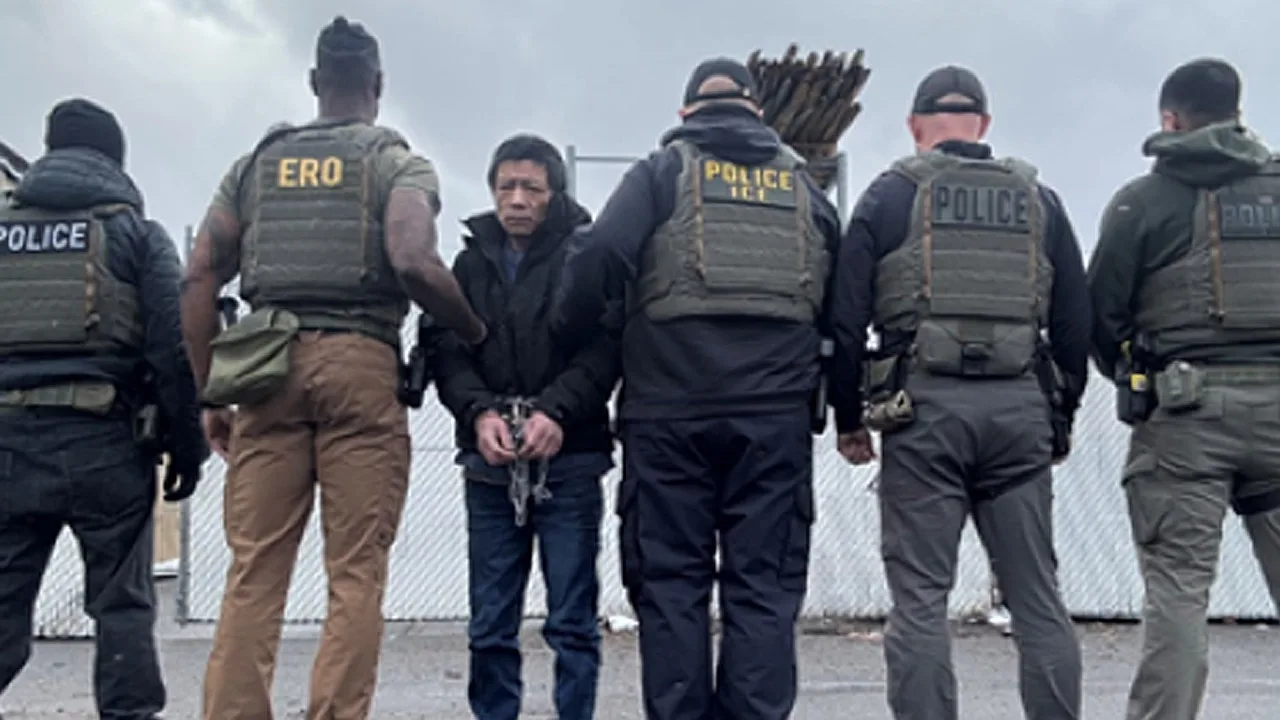
Federal Immigration and Customs Enforcement (ICE) officers arrested over 650 illegal immigrants across West Virginia during a coordinated two-week operation, officials confirmed Sunday. The effort involved close collaboration with state and local law enforcement and reportedly faced no public protests.
According to Daljoog News analysis, the operation underscores a broader federal push to reinforce local immigration enforcement partnerships, particularly in states historically considered less central to national immigration debates. ICE emphasized that the arrests targeted both individuals who entered the country illegally and those deemed a risk to public safety or national security.
The operation took place between January 5 and January 19 and covered multiple cities, including Charleston, Martinsburg, Beckley, Moorefield, Morgantown, and Huntington. The timing coincides with nationwide ICE efforts to increase enforcement activity during the first quarter of 2026.
What Happened?
ICE’s initiative, dubbed “Operation ICE Wall,” mobilized teams from 14 federal, state, and local law enforcement agencies. The sweep resulted in the arrest of more than 650 individuals, ranging from recent border crossers to previously deported noncitizens.
Several high-profile arrests drew attention. On January 8, ICE officers detained Sagar Singh, an Indian national previously ordered removed from the U.S., after he failed a mandatory commercial vehicle brake inspection. Singh faced multiple vehicle violations and was one of over 25 individuals arrested in connection with commercial vehicle operations during the operation.
Another significant case involved Ling Yan, also known as Yang Ning, a Chinese national convicted in Ohio for endangering children. ICE officials noted that Ling Yan had a final order of removal before being apprehended. The operation also netted other offenders with criminal convictions, including drug offenses and prior child abuse cases.
Jefferson County Sheriff Tom Hansen praised the collaboration, saying ICE agents worked professionally with both citizens and local law enforcement, reinforcing the value of joint operations.
Why This Matters
This large-scale enforcement push carries implications for public safety, immigration policy, and local-federal collaboration. ICE officials stressed that targeting individuals with criminal backgrounds reduces potential threats to communities while maintaining the integrity of U.S. immigration laws.
Daljoog News analysis suggests that operations of this scale in West Virginia signal a shift in enforcement strategy, expanding beyond traditional border states. By actively partnering with local authorities, ICE can act more efficiently, gaining both manpower and local knowledge critical for successful apprehensions.
The operation also illustrates the federal government’s intent to visibly demonstrate law enforcement results, particularly as immigration remains a politically charged issue in 2026.
What Analysts or Officials Are Saying
Michael Rose, acting director of ICE Enforcement and Removal Operations in Philadelphia, highlighted the operation’s broader benefits. He said it strengthened partnerships, expanded local enforcement capacity, and ensured arrests were conducted professionally and lawfully.
Sheriff Hansen of Jefferson County described the ICE agents as “high-caliber professionals” whose presence justified the county’s support. Other local officials noted that such operations can serve as deterrents, signaling that federal and local agencies are actively addressing illegal immigration.
Experts in immigration policy point out that while operations like this are impactful, they often spark debate over civil liberties, local resources, and the long-term effectiveness of mass arrests in reducing illegal crossings.
Daljoog News Analysis
The West Virginia sweep reflects a strategic pivot for ICE, blending traditional immigration enforcement with public relations. By highlighting arrests of individuals with criminal convictions, ICE not only enforces the law but also shapes public perception of safety and government action.
Daljoog News sees this operation as part of a growing trend: federal authorities increasingly rely on local law enforcement networks to scale enforcement nationwide. For communities in states like West Virginia, the collaboration may provide short-term security benefits, but it raises questions about consistency in enforcement standards and the long-term human and social impact of mass deportations.
What Happens Next
Federal officials suggest that similar joint operations could continue across other states in the coming months. ICE has indicated ongoing training and resource sharing with local law enforcement to ensure operational efficiency.
For West Virginia communities, the immediate focus may be on monitoring the effects of these arrests on public safety and local economies. Meanwhile, immigration advocates may watch closely for policy adjustments or potential legal challenges.
Residents and local officials alike will likely see follow-up operations targeting commercial vehicle compliance, criminal offenders, and previously deported noncitizens. How these enforcement efforts balance public safety with civil and immigrant rights will remain a key discussion point throughout 2026.