

The U.S. Justice Department filed a lawsuit Tuesday against the University of California, Los Angeles, alleging the university failed to protect Jewish employees from antisemitic harassment during a series of campus protests in 2023 and 2024.
According to Daljoog News analysis, the suit signals a continuing federal effort to hold public institutions accountable for workplace discrimination and campus hostility, extending beyond prior settlements that addressed harm to students.
The case highlights tensions between free expression on campus and the responsibility of universities to maintain a safe, non-hostile work environment. UCLA now faces scrutiny over its handling of protests, disciplinary actions, and enforcement of its anti-discrimination policies.
What Happened?
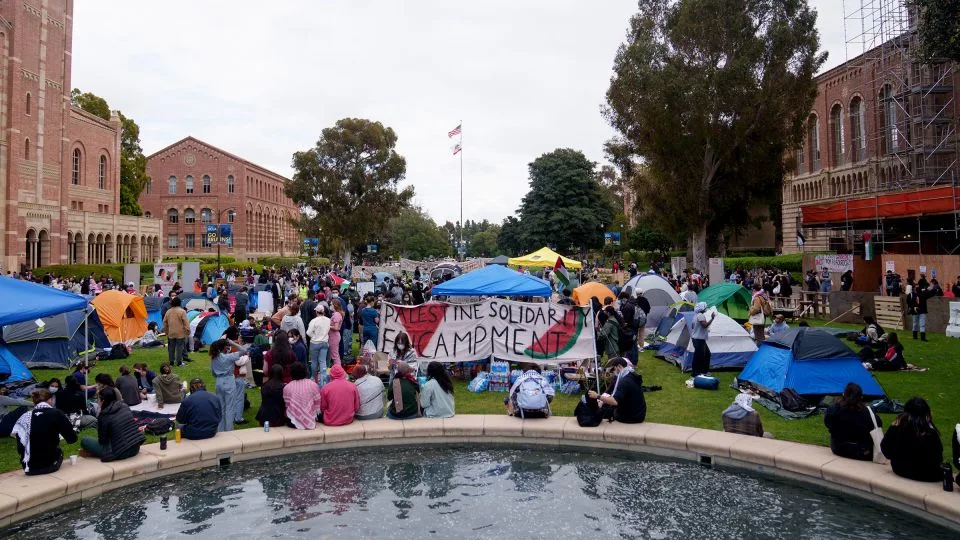
The lawsuit centers on pro-Palestinian demonstrations at UCLA, including a 2024 encampment that federal officials say blocked Jewish employees and students from campus areas and featured antisemitic signs and chants. Conflicts escalated when counterprotesters confronted the encampment, resulting in injuries to more than a dozen people and the arrest of over 200 individuals.
The Justice Department alleges UCLA ignored complaints from Jewish and Israeli employees and failed to discipline students, faculty, or staff involved in antisemitic behavior. The 81-page complaint states the university “turned a blind eye to — and at times facilitated — grossly antisemitic acts,” creating a hostile workplace.
While UCLA reached a $6 million settlement last year with Jewish students and a professor over similar claims, the lawsuit asserts that harm to Jewish and Israeli employees “goes much deeper” than that agreement addressed.
Why This Matters
The case is notable because UCLA is one of the few public universities targeted under the Trump administration’s campaign addressing perceived campus antisemitism, which has mostly focused on elite private institutions. The lawsuit carries potential financial, reputational, and operational consequences for UCLA, including enforcement of its anti-discrimination policies and possible damages to affected employees.
A federal judge previously restored hundreds of millions of dollars in funding after the administration attempted to withhold money as leverage. Last summer, federal officials sought $1 billion from UCLA as part of a settlement to end scrutiny. The current lawsuit underscores that legal action continues despite prior settlements and restored funding.
What Analysts or Officials Are Saying
Experts on campus law and civil rights note that the case reflects broader tensions over free speech, workplace protections, and institutional accountability. Federal oversight has increasingly focused on whether universities provide safe environments for employees amid politically charged protests.
Legal analysts suggest the Justice Department is emphasizing enforcement for employees, not just students, signaling that workplace harassment claims can attract federal intervention even at public institutions. Officials say the suit could set a precedent for how public universities handle complaints of antisemitism among staff.
Daljoog News Analysis
The lawsuit illustrates the complex balance between campus activism and workplace safety. UCLA is accused of failing to navigate this balance, allowing harassment to persist while trying to accommodate large-scale demonstrations.
Daljoog News interprets the case as part of a broader federal strategy to hold universities accountable for ensuring that staff—not only students—are protected from discrimination and hostile environments. While UCLA may argue First Amendment considerations, the Justice Department frames the case around federal anti-discrimination law and workplace protections.
This case could influence policies at other public universities, highlighting the importance of consistent enforcement of internal codes of conduct and the potential consequences of ignoring employee complaints.
What Happens Next
The lawsuit requests that a judge compel UCLA to enforce its anti-discrimination policies and award unspecified damages to affected Jewish employees. Legal proceedings will likely include discovery into administrative responses, campus protest management, and prior settlements.
Observers expect the case to draw national attention, particularly given the political context of prior Trump administration actions against higher education institutions accused of tolerating antisemitism. As the lawsuit progresses, it may influence how public universities across the U.S. address staff harassment amid campus protests.