

Police have cordoned off a Manhattan block near Gracie Mansion amid a probe into a suspected improvised explosive device (IED) thrown during dueling protests. The incident unfolded Saturday morning on East End Avenue near the mayor’s residence.
According to Daljoog News analysis, the attack represents a rare escalation in street-level violence linked to ideological clashes, highlighting how public demonstrations can rapidly escalate into potentially lethal incidents.
The confirmed device was capable of causing serious injury or death, and the investigation has drawn federal attention. Multiple arrests have been made as authorities work to secure the area and assess additional threats.
What Happened?
The NYPD restricted access to East End Avenue between 81st and 82nd Streets as officers investigated a potential terror plot. Satellite reports from federal sources indicate at least three explosive devices were recovered in connection with protests outside Gracie Mansion, though only one has been confirmed as a functioning IED.
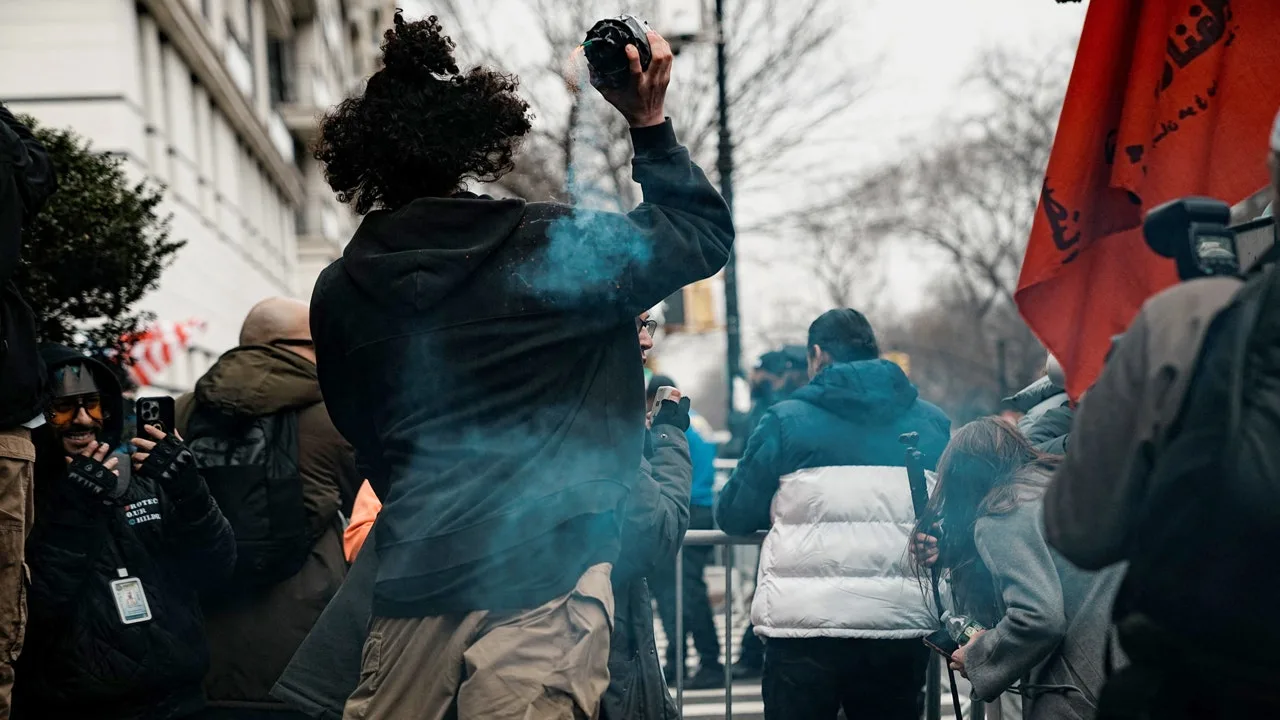
Authorities said one suspect allegedly shouted “Allahu Akbar” before igniting and throwing an explosive into a crowd of protesters. Two individuals, Emir Balat and Ibrahim Kayumi, were arrested at the scene.
The clash followed dueling demonstrations. One rally, organized by right-wing activist Jake Lang, opposed public Muslim prayer, while counter-protesters gathered nearby. Police initially separated the groups, but tensions escalated after pepper spray was deployed.
Approximately thirty minutes later, an 18-year-old counter-protester allegedly ignited and threw a device at the protest area. The same individual reportedly retrieved a second device from a 19-year-old before attempting to flee. Both were taken into custody.
Experts have identified the devices as containing TATP (triacetone triperoxide), a highly unstable and powerful explosive often used by terrorist organizations. The NYPD Bomb Squad rendered two of the devices safe and transported them to Quantico for further analysis.
A vehicle linked to a relative of one of the suspects was also located on the Upper East Side during the investigation.
Why This Matters
The use of a highly unstable explosive in a densely populated urban area underscores the danger of politically charged street protests escalating into life-threatening incidents. Even improvised devices like these can cause mass casualties and widespread panic.
The attack near the official residence of New York City’s mayor signals potential threats to key civic sites and public officials. Authorities must now weigh increased security measures for high-profile locations alongside monitoring public demonstrations.
The presence of multiple devices and the sophistication of the explosive material suggest this was not a simple street-level altercation but a serious criminal and potential terror incident.
What Analysts or Officials Are Saying
Security experts highlight that TATP is notoriously difficult to detect and extremely unstable. Retired NYPD inspector Paul Mauro described the devices as far more dangerous than simple firecrackers, noting that such explosives are typically used by organized terrorist networks.
Federal sources confirmed that the devices were recovered near areas with concentrated crowds, which could have caused significant casualties had they detonated. Analysts also emphasize that arrests at the scene and swift bomb squad action prevented a larger-scale tragedy.
Mayor Zohran Mamdani condemned the rally organizer, Jake Lang, labeling him a “White supremacist,” while Lang claimed the explosives were thrown at his supporters by pro-Islam protesters. This underscores the highly charged political environment surrounding the incident.
Daljoog News Analysis
The incident highlights how ideological confrontations in public spaces can escalate quickly into serious security threats. The use of improvised explosives elevates the risk level from conventional protest-related altercations to incidents resembling domestic terror attacks.
Authorities face the challenge of balancing civil liberties with security measures in densely populated areas. This incident also illustrates how single events can attract federal involvement, particularly when explosives are involved near prominent political figures.
The sophistication of the devices indicates that preventive intelligence and rapid police response are critical in mitigating urban security threats. Continuous monitoring of protests and timely intervention likely prevented a larger disaster.
What Happens Next
Investigations are ongoing to determine the origin, intent, and potential network behind the devices. Federal and local authorities will continue forensic analysis at Quantico to understand how the explosives were manufactured.
Police and city officials are expected to increase security around Gracie Mansion and other sensitive areas during upcoming protests. Authorities may also implement stricter permitting and monitoring measures to prevent similar incidents.
Public safety messaging will likely be reinforced, advising residents and visitors to avoid the immediate area while law enforcement completes its investigation.
The outcome of this investigation may shape protocols for managing protests, detecting explosives, and preventing domestic terrorism in urban centers for years to come.