



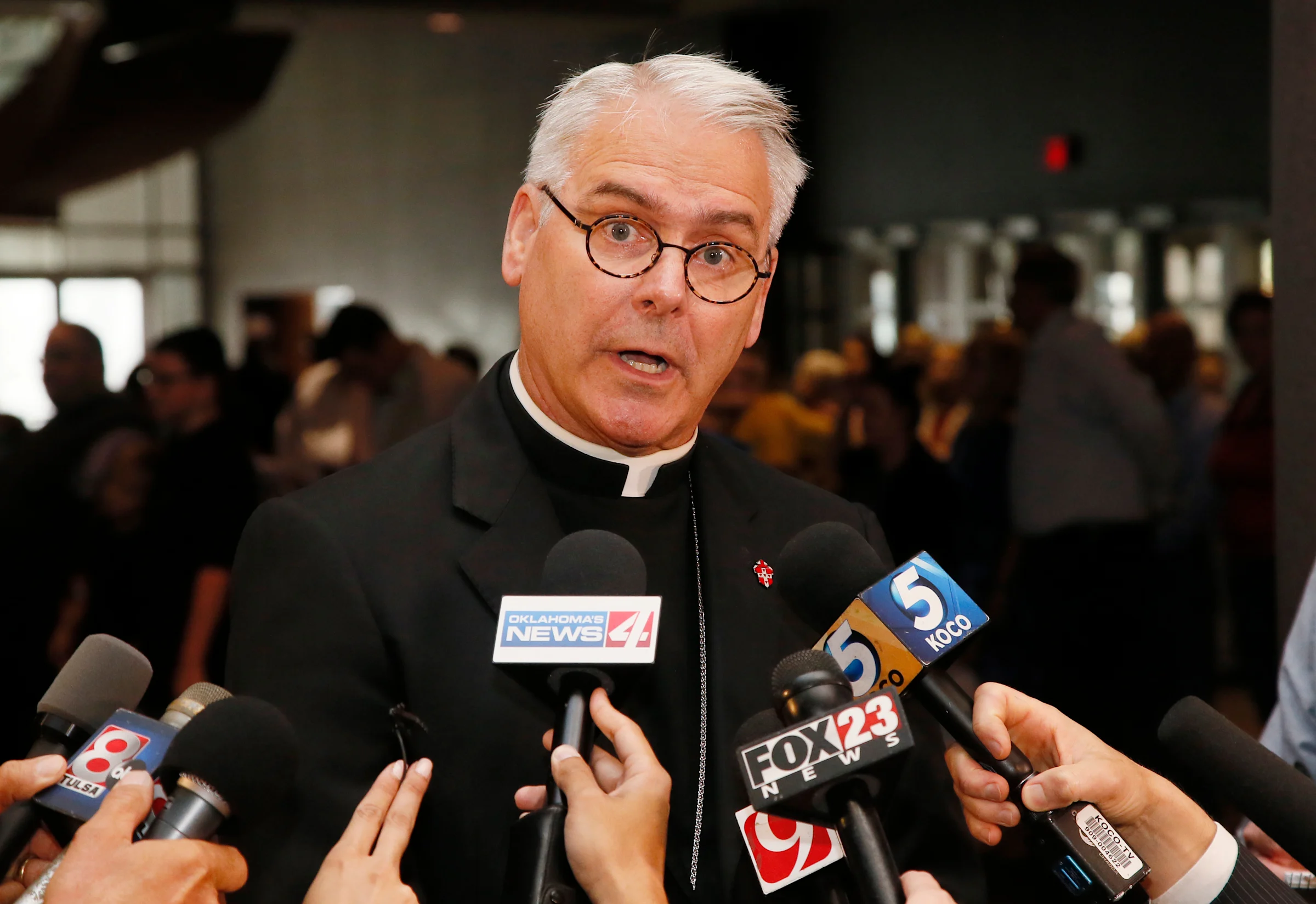
The head of the U.S. Catholic bishops has warned that aggressive deportation efforts are creating fear and uncertainty across the country. Archbishop Paul Coakley said many immigrant communities are living in anxiety as deportations increase under the Trump administration.
Coakley, who serves as president of the U.S. Conference of Catholic Bishops, spoke on Sunday about the emotional impact of current immigration enforcement. He said fear is spreading widely, especially in areas with large migrant populations. According to Coakley, families are worried about sudden removals, harsh language, and unclear policies.
The archbishop stressed that the church recognizes the importance of national borders. He said every country has a duty to protect its borders and enforce laws. At the same time, he urged leaders to show compassion and generosity toward immigrants, especially those fleeing danger or hardship in their home countries.
Coakley explained that Catholic teaching supports both border security and human dignity. He said people have a right to remain in their homeland when conditions are safe. However, they should also be allowed to migrate when violence, poverty, or instability threaten their lives. He said this balance is a core principle of the church’s approach to immigration.
The comments come as deportations and enforcement actions have expanded in recent months. Coakley said the tone used by officials matters as much as the policies themselves. He noted that harsh rhetoric can deepen fear and confusion, even among immigrants who have lived peacefully in the United States for many years.
Coakley was elected last month to a three-year term as leader of the bishops’ conference. While he is often linked to the church’s conservative wing, he has been a consistent critic of strict immigration crackdowns. Shortly after Trump returned to office in January, Coakley released a statement saying most undocumented immigrants in Oklahoma are law-abiding members of their communities and churches, not violent criminals.
Church leaders say their goal is to calm fears and remind people they are not alone. Coakley said the bishops issued a message earlier this year to reassure families who feel targeted or unsafe. He said many immigrants are afraid to attend church, go to work, or send children to school.
The church’s position has drawn criticism from some political leaders. Vice President JD Vance accused church officials of caring more about financial interests than humanitarian concerns after bishops criticized deportation policies. Coakley responded by saying the church’s stance is rooted in moral teaching, not money or politics.
Coakley said he has not yet met with Trump or Vance but hopes to engage with them in the future. He said dialogue is important when discussing issues that affect millions of lives. He added that respectful conversation can help find solutions that honor both law and compassion.
The debate comes during a period of leadership change within the Catholic Church in the United States. Recent appointments have highlighted voices that support stronger protections for migrants and refugees. Church leaders have repeatedly said that enforcement actions must not ignore basic human dignity.
Coakley said that dignity does not disappear because of immigration status. He stressed that people deserve respect whether they are documented or undocumented, legal or illegal. He said the church believes the end does not justify the means, and that policies should never rely on fear to achieve results.
He warned that lasting immigration solutions require balance. Coakley said strong borders can exist alongside humane treatment. He urged leaders to focus on policies that protect families, respect life, and reflect shared values.
As deportations continue, church leaders say they will keep speaking out. Coakley said the goal is not to weaken laws but to ensure they are enforced in a way that respects human dignity. He said fear and uncertainty harm communities and weaken trust, and called for an approach rooted in justice, mercy, and responsibility.