



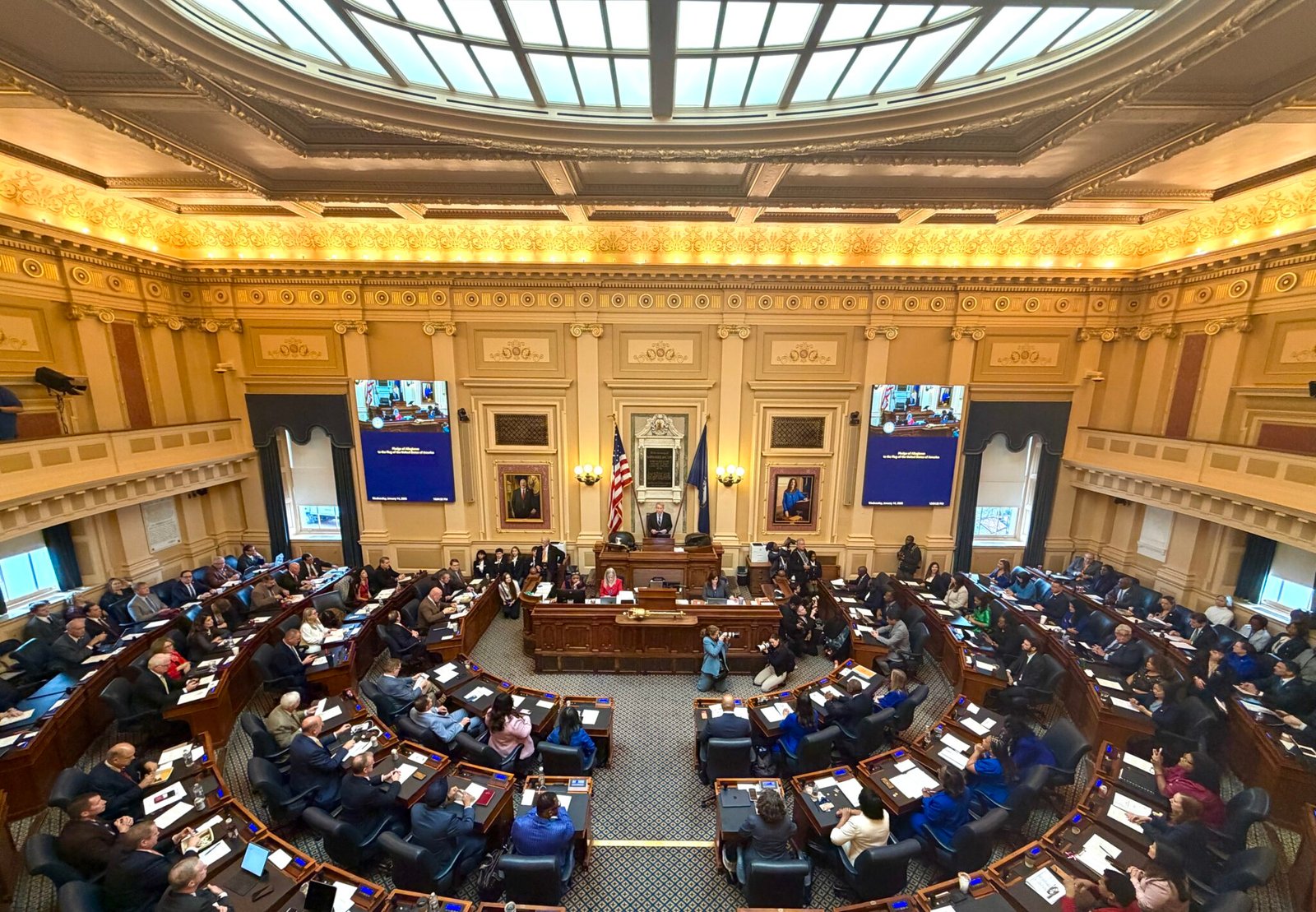
Virginia House Democrats began the 2026 General Assembly session by moving quickly to advance four constitutional amendments. The measures, approved Wednesday after clearing the House Privileges and Elections Committee, aim to reshape key political and civil rights issues in the state.
The proposed amendments cover abortion rights, voting rights for people with felony convictions, the removal of a defunct ban on same-sex marriage, and a controversial redistricting measure allowing the General Assembly to adjust congressional maps mid-decade under limited conditions.
All four amendments now move to the Senate, where Democrats also hold the majority. Party leaders described the swift action as a response to national court rulings, partisan redistricting efforts in other states, and the urgent need to let voters decide on fundamental rights.
The redistricting amendment, House Joint Resolution 4, has drawn the most attention. It would allow the General Assembly to redraw congressional districts outside the standard ten-year cycle if another state makes mid-decade changes unrelated to court orders. The authority would only apply to congressional districts and would expire in 2030.
Democrats argue the measure counters aggressive Republican gerrymanders in other states. Critics, however, call it a power grab that undermines the independent redistricting commission created by Virginia voters in 2020. Delegate Rodney Willett, D-Henrico, emphasized that the amendment does not change existing lines but merely creates a process to consider adjustments.
If approved by the Senate, the redistricting amendment could appear on a special statewide ballot in April, rather than waiting until November. Democratic leaders say the accelerated timeline reflects the urgency of ongoing redistricting battles nationwide. They have discussed the potential for a map that could increase Democratic-leaning districts, though Republicans argue the state remains competitive.
Court challenges from Republicans have so far failed. A judge in Tazewell County rejected an emergency request to block the amendment, citing the separation of powers and legislative immunity for clerks performing official duties. The ruling cleared the way for the House to advance the proposal at the start of the session.
Debate over the amendment has been sharp. Republicans argue it reverses voter-approved reforms and risks returning to gerrymandering practices. Democrats maintain that it preserves flexibility without mandating any changes and ultimately leaves the final decision to voters.
The other three amendments are set for the November ballot. One would remove a 2006 ban on same-sex marriage, which has been unenforceable since the 2015 Supreme Court ruling but remains in the constitution. Supporters see it as protection against potential future challenges to marriage equality.
Another amendment would automatically restore voting rights to people with felony convictions after completing their sentences. Virginia is one of the few states where former felons permanently lose voting rights unless the governor restores them, a process critics call opaque and inconsistent.
The final amendment seeks to enshrine reproductive rights in the state constitution. It became a priority for Democrats after the fall of federal abortion protections and has been a point of intense partisan debate. Republicans in the state oppose the amendment and have historically supported restrictive abortion limits.
House Democratic leaders argue the package reflects the interconnected nature of current political battles. Delegate Cia Price, D-Newport News, highlighted recent actions by Republican-led legislatures and former President Trump’s policies as part of the broader context for these amendments.
“We do not lead single-issue lives, and I feel like that is more true today than ever,” Price said, quoting civil rights activist Audre Lorde. “Voters should have the chance to weigh in on these fundamental rights.”
The 2026 session signals that Virginia’s Democratic majority is prepared to act swiftly on high-profile issues, giving voters the final say on how the state’s constitution will address rights, representation, and equality.