
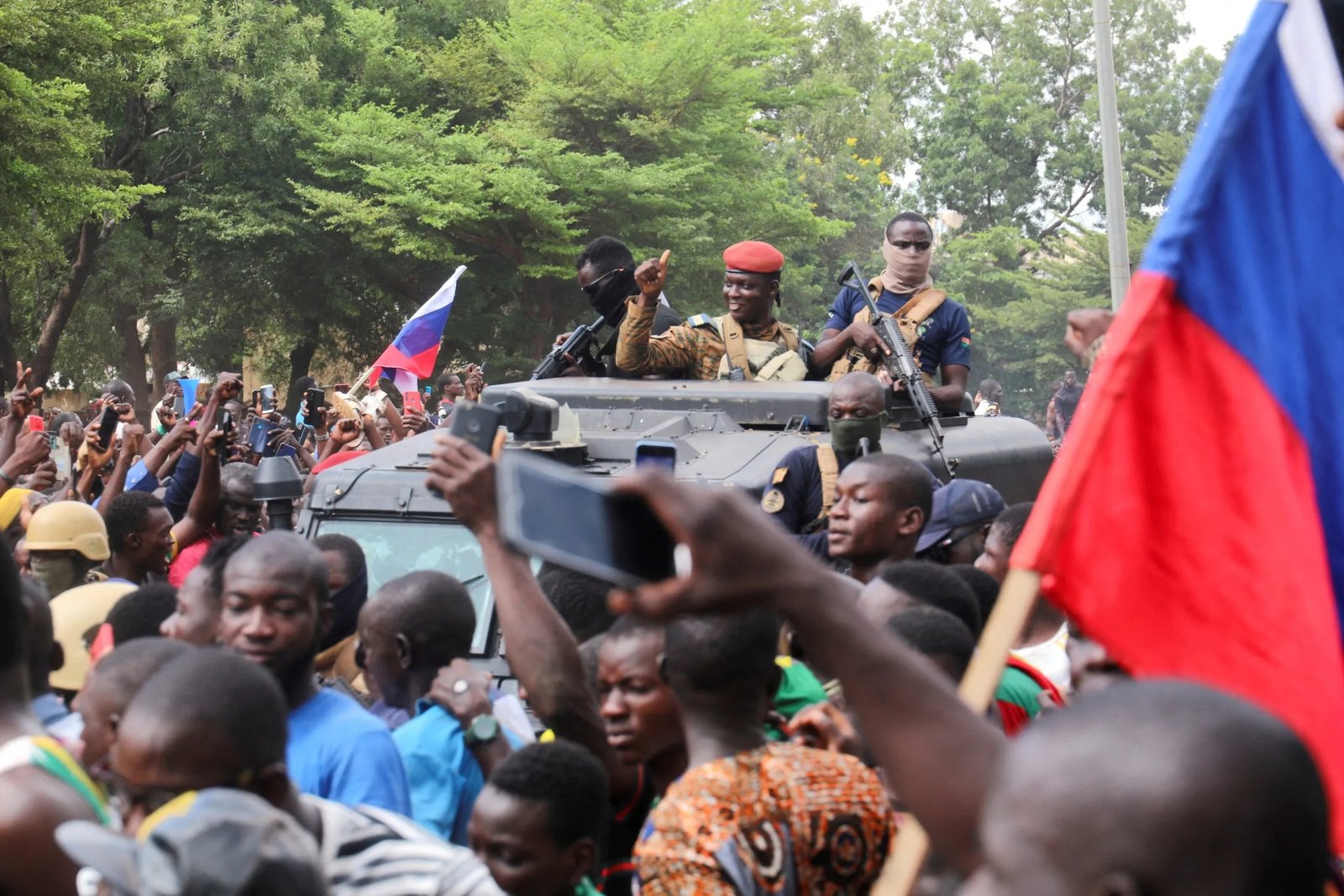
Burkina Faso’s president, Ibrahim Traoré, has sparked international attention by publicly rejecting Western-style democracy. His statements mark a bold challenge to longstanding U.S. influence in West Africa.
According to Daljoog News analysis, Traoré’s remarks signal both a domestic and regional shift, reflecting growing skepticism toward foreign-imposed governance models.
This move comes as Burkina Faso increasingly leans on Russian military and strategic support, raising new geopolitical stakes in the Sahel and troubling U.S. policymakers.
What Happened?
In recent public addresses, President Traoré urged his citizens to “forget” Western-style democracy, claiming that the system has historically failed to protect people and often leads to violence and instability.
Traoré’s comments directly challenge U.S. foreign policy, which has long promoted democratic governance and civilian-led institutions across Africa. Analysts describe this as a striking repudiation of decades of Western advocacy in the region.
The president has also shifted Burkina Faso closer to Russia, reducing reliance on French and American support in favor of Kremlin-backed military and strategic assistance. This realignment has significant implications for regional security and Western influence.
Why This Matters
Traoré’s stance undermines U.S. efforts to maintain democratic norms in West Africa, a region historically seen as pivotal for strategic, security, and economic reasons. Burkina Faso sits in a geopolitically critical location, rich in natural resources and bordering several fragile states.
If Burkina Faso abandons democratic principles entirely, U.S. influence may decline, creating a vacuum that Russia can exploit. This threatens not only security cooperation but also economic and trade relations in the Sahel.
The rejection of Western democracy also risks destabilizing regional governance, as other states may take cues from Burkina Faso’s pivot, further challenging long-standing international norms.
What Analysts or Officials Are Saying
Experts note that Traoré’s rejection of Western democratic models represents both a domestic assertion of sovereignty and a geopolitical maneuver. Analysts warn that his reliance on Russian support may cement Kremlin influence across the Sahel.
U.S. policymakers are reportedly concerned that a stronger Russian footprint could weaken Western-led security initiatives, disrupt counterterrorism operations, and shift economic leverage away from traditional partners.
Observers also highlight the symbolic weight of Traoré’s statements, emphasizing that dismissing democracy can reverberate across Africa, affecting regional alliances and international perceptions of governance.
Daljoog News Analysis
Burkina Faso’s shift reflects broader global trends where local leaders are asserting autonomy against traditional Western influence. Traoré’s stance challenges the assumption that U.S. promotion of democracy automatically aligns with local priorities.
While controversial, his approach may resonate domestically by positioning him as a protector of national interests. However, the long-term sustainability of rejecting democratic frameworks remains uncertain, particularly in terms of civil liberties and citizen participation.
For Washington, the move is a wake-up call. Traditional levers of influence are weakening, and the Sahel may increasingly fall under Russian strategic sway. Burkina Faso’s choices could reshape the balance of power and influence across West Africa.
What Happens Next
The international community will closely watch how Traoré’s policies affect both domestic governance and regional alliances. Delays in elections or further rejection of democratic norms could escalate tensions with Western partners.
U.S. officials may reconsider aid, security cooperation, and diplomatic engagement strategies, while Russia’s presence in Burkina Faso is likely to grow.
Ultimately, Burkina Faso’s path will test the resilience of local institutions and the appeal of alternative governance models in Africa. History will judge whether rejecting Western democracy strengthens national sovereignty or risks isolating the country from global partners.