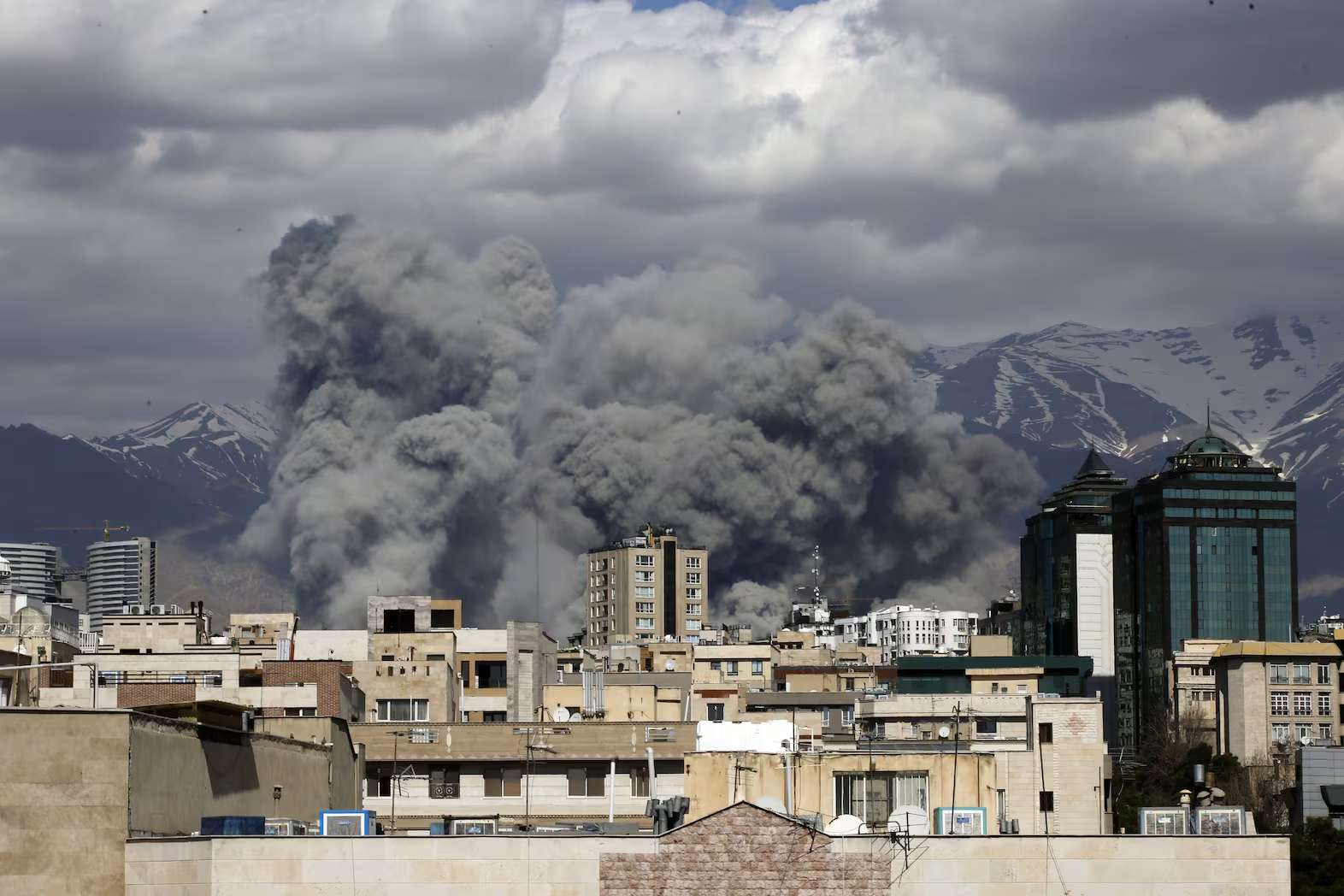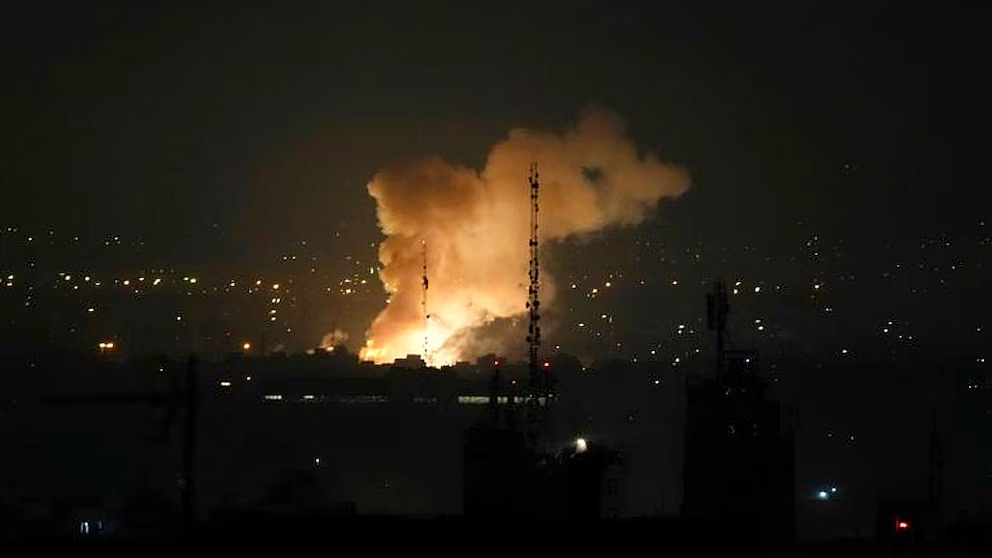



A drone strike targeting fuel storage at Kuwait International Airport triggered a large fire, heightening fears that regional conflict is spreading beyond traditional flashpoints. Authorities confirmed the incident caused significant damage but reported no immediate casualties.
According to Daljoog News analysis, the attack signals a worrying expansion of hostilities into critical infrastructure, suggesting that aviation and energy facilities are becoming direct targets in the evolving conflict.
The timing is particularly sensitive, as tensions across the Middle East have already been rising. The incident in Kuwait now adds a new layer of risk for regional stability and civilian safety.
What Happened?
The attack took place on Wednesday when a drone struck part of the fuel storage area at Kuwait International Airport. The impact triggered a powerful explosion followed by a large fire, sending emergency teams rushing to contain the situation.
Kuwait’s civil aviation authority confirmed that the airport’s fuel reserves were the intended target. Firefighters quickly moved in to control the blaze and prevent it from spreading to nearby facilities.
Initial reports indicate that while infrastructure damage was significant, no deaths or injuries have been confirmed so far. Authorities continue to assess the full extent of the damage.
State media reports suggested that the attack may be linked to Iran or groups aligned with it, though no independent confirmation has been issued. Officials have not yet released detailed forensic findings on the drone’s origin.
This is not the first such incident. Toward the end of March, the same airport faced a similar drone attack that reportedly damaged parts of its radar system, raising concerns about repeated vulnerabilities.
Why This Matters
The strike on a major international airport marks a serious escalation. Civilian infrastructure, especially aviation hubs, is highly sensitive and essential for economic stability and international connectivity.
Targeting fuel storage facilities also introduces additional risks. Fires and explosions in such locations can cause widespread disruption, not only locally but also across regional transport networks.
The attack suggests a shift in tactics, where strategic infrastructure becomes a primary objective. This could increase pressure on governments to strengthen air defense systems and rethink security protocols.
The broader conflict is now showing signs of spillover. Countries not directly involved in frontline fighting may still face indirect threats, complicating regional security dynamics.
What Analysts or Officials Are Saying
Officials in Kuwait have emphasized that emergency response systems worked effectively to contain the damage and prevent casualties. Investigations are ongoing to determine responsibility and assess security gaps.
Security analysts warn that drone warfare is becoming a preferred tool due to its relatively low cost and high impact. These systems can bypass traditional defenses and target critical infrastructure with precision.
Experts also highlight the difficulty of attribution. Without clear evidence, identifying the origin of such attacks remains challenging, which can delay or complicate diplomatic responses.
Regional observers note that repeated incidents may force Gulf states to coordinate more closely on defense strategies.
Daljoog News Analysis
The attack on Kuwait’s main airport underscores a broader transformation in modern conflict. Strategic targets are no longer limited to military bases. Civilian infrastructure is increasingly exposed.
This raises serious concerns about preparedness. While Kuwait managed to avoid casualties, the incident reveals gaps that could be exploited again. Repeated strikes on the same facility suggest that deterrence measures may not yet be sufficient.
The uncertainty over responsibility also adds to the risk. Without clear attribution, responses can become cautious or delayed, allowing similar attacks to continue.
Daljoog News analysis suggests that the region is entering a phase where indirect attacks could become more frequent. These incidents may not trigger immediate large-scale war, but they steadily increase instability.
What Happens Next
Authorities are expected to conduct a full investigation into the attack, including technical analysis of the drone and its flight path. Security measures at airports and other critical facilities are likely to be reviewed and strengthened.
Regional governments may also increase coordination to counter drone threats, including improved detection and interception systems.
At the same time, tensions remain high. If similar incidents continue, pressure will grow for stronger responses, which could further escalate the situation.
Separately, another incident in the United Arab Emirates has added to concerns. A drone intercepted over Fujairah reportedly crashed into a farm, killing a Bangladeshi national. Authorities have not confirmed whether the drone was linked to Israel, Iran, or another actor.
These developments suggest that the conflict’s reach is expanding, with unpredictable consequences for both regional security and civilian populations.