
Iran has launched a sweeping series of retaliatory attacks targeting countries in the Gulf, signaling a new phase in the ongoing Middle East conflict. Saudi Arabia, Qatar, Kuwait, the UAE, and Bahrain have all come under fire as Tehran asserts its message against what it calls betrayal by regional states.
According to Daljoog News analysis, these strikes reflect both Iran’s military capability and its strategic intent to expand the battlefield across multiple fronts. The operation combines drones, ballistic missiles, and cruise missiles to maximize disruption, testing the region’s air defense systems and creating widespread alarm.
The attacks mark a significant escalation in the Gulf, affecting civilian areas, strategic installations, and key infrastructure, with potential implications for regional security, energy transport, and international diplomatic dynamics.
What Happened?
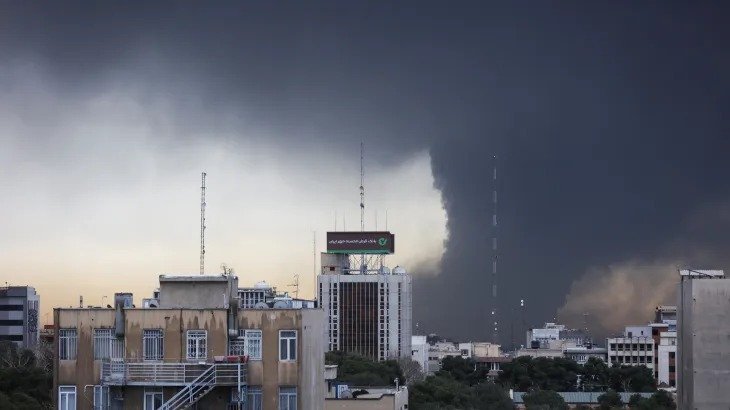
From early Sunday morning, Saudi Arabia witnessed a wave of Iranian drone and missile attacks, primarily targeting the skies over Riyadh. Intense explosions and fiery trails lit the night as multiple drones penetrated the airspace, while Saudi air defenses worked to intercept the incoming threats. Authorities reported that the active defense systems minimized damage, but the situation remains highly volatile.
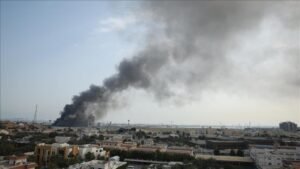
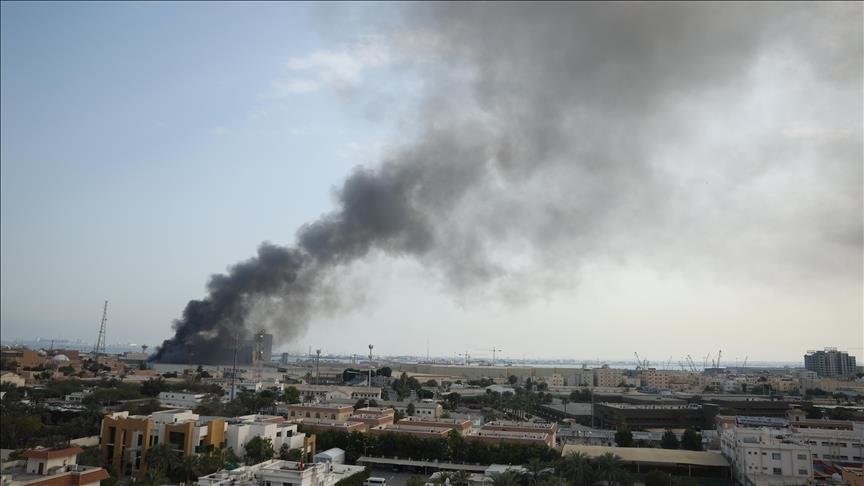
The impact extended beyond Saudi Arabia. Qatar confirmed that 12 missiles, including 10 ballistic and 2 cruise missiles, were launched toward its territory. Most were intercepted, yet the explosions caused panic in Doha and the surrounding areas. Kuwait also faced drone strikes: a public social security building suffered partial damage, and a fuel tank at Kuwait International Airport caught fire following another drone impact.
The United Arab Emirates activated air defenses around midnight to intercept Iranian drones and missiles, while Bahrain reported fires and structural damage in several buildings in its capital, Manama. Even northern Iraq’s Erbil International Airport, near a US military base, reportedly experienced drone activity linked to Tehran’s strikes.
Iranian officials claim the operations are defensive and proportional, targeting US and Israeli military infrastructure in the region. Tehran frames the attacks as a direct response to prior aggression, asserting its right to self-defense while warning regional actors against perceived betrayal.
Why This Matters
The multi-country scope of these strikes demonstrates the conflict’s expansion beyond a bilateral Israel-Iran confrontation. By targeting Gulf nations hosting US or allied military facilities, Iran aims to challenge regional security arrangements and test the readiness of air defense networks.
These operations also heighten the risk of civilian casualties and infrastructure damage. Strategic assets such as airports, energy installations, and governmental buildings have been directly affected, raising concerns over economic and logistical disruptions in one of the world’s most critical regions.
The psychological impact on Gulf populations is significant, as sirens, explosions, and fires have been reported across multiple capitals simultaneously. The attacks illustrate how modern warfare in the region now blends missile technology with drone swarm tactics.
What Analysts or Officials Are Saying
Military experts note that Iran’s coordinated use of drones and missiles across several countries shows both strategic planning and technical capability. Analysts stress that by dispersing attacks, Tehran aims to stretch defense resources while signaling its deterrence capacity.
Regional security officials have praised quick defensive responses, particularly in Saudi Arabia and the UAE, which minimized casualties and critical damage. Still, the scale of the operation raises concerns over escalation into a broader Gulf conflict.
Daljoog News Analysis
Iran’s latest strikes reflect a clear strategic narrative: punishment for perceived betrayal and demonstration of military reach. By hitting multiple Gulf states simultaneously, Tehran signals both operational capability and willingness to expand conflict beyond immediate borders.
The operation also underscores the vulnerability of air defense systems to simultaneous drone and missile attacks, even in highly fortified countries. Analysts warn that the psychological and operational effects may have long-lasting implications for Gulf security coordination and international military planning.
Beyond military considerations, the strikes affect civilian life, energy transport, and diplomatic relations. Countries directly targeted now face both immediate defensive demands and the challenge of mitigating long-term disruption to critical infrastructure.
What Happens Next
The Gulf region remains on high alert. Defensive measures will continue while nations assess vulnerabilities and prepare for potential follow-up attacks. Diplomatic channels may see renewed activity as regional powers and international mediators attempt to prevent further escalation.
Iran is expected to maintain readiness for additional retaliatory strikes, while the US, Israel, and Gulf states monitor potential new threats to military and civilian targets. Analysts warn that without a clear de-escalation path, regional tensions may remain high, with significant implications for global energy and security stability.