


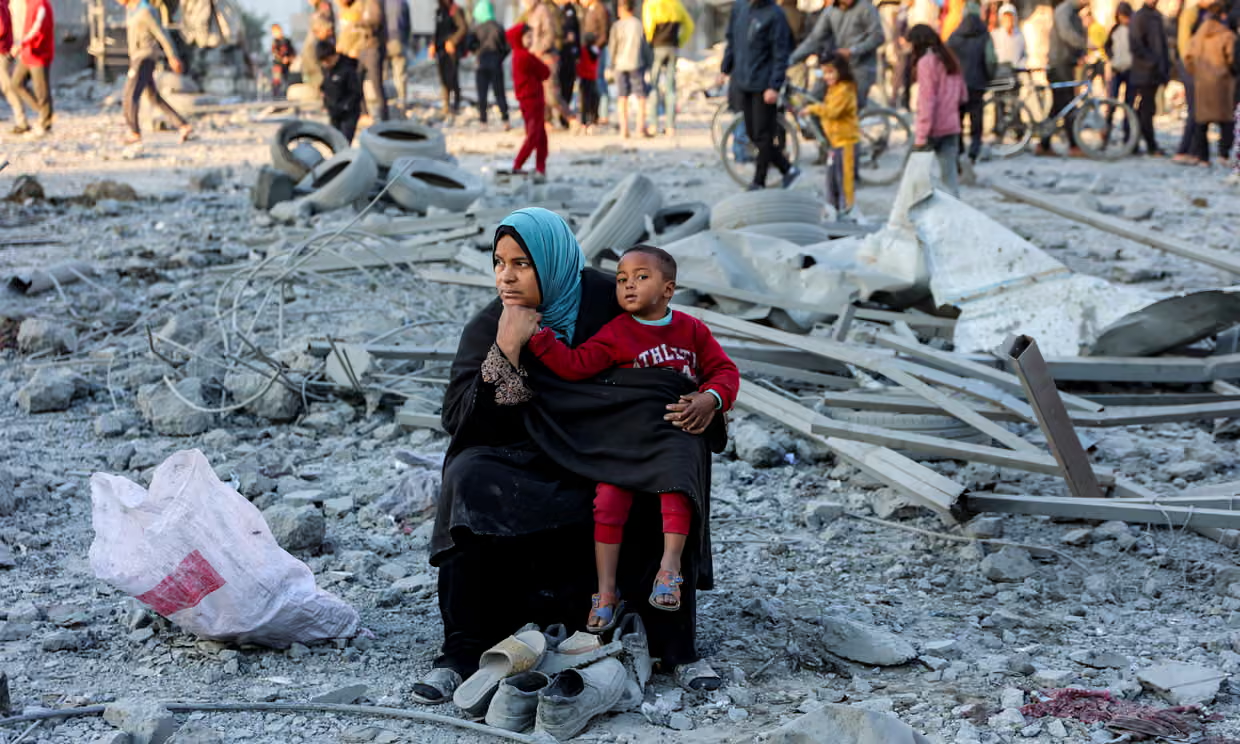
In the shattered neighborhoods of Gaza, where explosions have become routine and entire streets lie buried in rubble, a different sound now echoes through refugee camps — the beat of improvised drums.
According to Daljoog News analysis, the small gatherings around a young musician’s makeshift drum kit reveal how art continues to function as emotional survival in one of the world’s most devastated conflict zones.
Amid displacement, food shortages, and constant uncertainty, the rhythm offers something rare: a brief return to normal life.
What Happened?
In a refugee camp inside Gaza, 24-year-old Hosam Qasem has built a drum set from debris scattered across bombed neighborhoods.
He uses plastic buckets, broken bicycle parts, and even a metal tea tray to create percussion instruments. None of it comes from a music store. All of it comes from ruins.
When he begins to play, children rush toward the sound. Adults pause. Faces hardened by months of war soften, if only for minutes.
The performance space is not a stage but an open patch between damaged shelters. There are no lights, no microphones, and no tickets.
Yet the crowd forms quickly.
Qasem says music helps him release stress and negative energy built up during nearly two years of continuous conflict. For families living in tents or damaged buildings, the rhythm feels like a shared breath.
Children clap and move to the beat. Parents watch with quiet relief.
For a short time, fear steps aside.
Why This Matters
Gaza remains one of the most heavily impacted regions in the ongoing conflict between Israel and Hamas. Large sections of infrastructure have been destroyed. Thousands of families are displaced.
In such environments, psychological strain often runs deeper than visible damage.
Mental health services are limited. Recreational spaces for children are nearly nonexistent. Schools operate intermittently or not at all.
In this vacuum, informal community activities take on heightened importance.
Music, especially in crisis settings, serves more than entertainment. It becomes therapy, protest, memory and resistance combined.
For children who spend their days witnessing destruction, even a few minutes of laughter can counterbalance trauma.
Aid organizations frequently emphasize food, water and shelter. Yet cultural expression also plays a role in community resilience.
Qasem’s drum set, built from wreckage, symbolically transforms destruction into sound — chaos into rhythm.
What Analysts or Officials Are Saying
Humanitarian observers note that creative expression often flourishes in conflict zones as a coping mechanism.
Psychologists working in displacement camps argue that structured play and artistic activity reduce anxiety and help children process stress.
Local community leaders say grassroots initiatives like this provide emotional relief without requiring external funding or infrastructure.
Relief agencies operating in Gaza continue to focus on urgent needs such as water distribution and medical access. However, some have acknowledged the value of informal cultural gatherings in strengthening morale.
International aid workers stress that prolonged conflict amplifies the risk of long-term trauma, especially among young people.
In this context, even small moments of joy carry disproportionate weight.
Daljoog News Analysis
Conflict reporting often centers on casualty figures, military strategy and diplomatic developments.
But war also reshapes daily life in quieter ways.
Hosam Qasem’s drum performances highlight the human dimension often overshadowed by headlines. They reveal how ordinary people attempt to reclaim fragments of agency.
There is symbolism in the materials he uses. Buckets once meant for water collection now become instruments. Broken bicycle parts, once tied to mobility, now anchor rhythm.
The act of playing music in rubble sends a subtle message: identity survives even when buildings fall.
At the same time, these performances cannot mask the scale of suffering. Most of each day remains consumed by survival tasks — queuing for water, searching for food and navigating insecurity.
The drumbeats are temporary.
Yet their emotional impact lingers.
They signal a community’s desire to return to normalcy and rebuild, even as violence continues.
What Happens Next
The future for Gaza’s residents remains uncertain.
Humanitarian agencies continue to negotiate access for aid delivery. Diplomatic efforts to secure ceasefires move in fragile cycles.
For families in refugee camps, daily priorities remain basic: food, water and safety.
Still, Qasem plans to keep playing.
As long as there is scrap metal and a few minutes of quiet between airstrikes, the rhythm will return.
In a city accustomed to the sound of bombs, the beat of improvised drums offers something rare — proof that hope, though fragile, still echoes.