

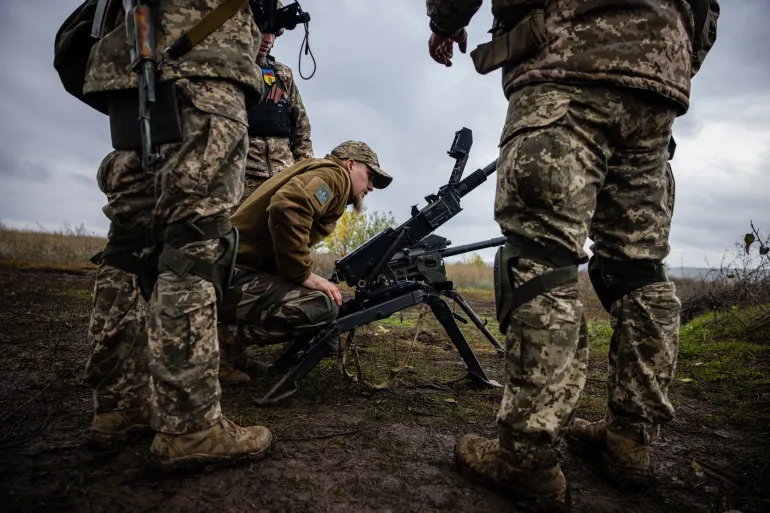
Global security tensions—from the Ukraine war to U.S.-Israel operations and Pacific instability—are driving a rapid expansion of the arms market. Nations are responding with increased procurement and investment in advanced technologies.
According to Daljoog News analysis, the convergence of multiple conflicts has amplified geopolitical uncertainty, prompting governments to accelerate weapons acquisition and military modernization.
The surge reflects broader shifts in defense strategies, as countries seek both to secure borders and project influence through advanced military capabilities, raising concerns about potential escalation and new global conflicts.
What Happened?
Data from Stockholm-based research organizations indicate that arms transfers have grown significantly between 2020 and 2024, both in volume and type. The Ukraine war has been a major catalyst, with Europe increasing arms imports by 155 percent.
Ukraine itself has become the world’s largest arms importer, while India, now second, has focused more on domestic production, reducing reliance on imports.
On the export side, the United States dominates global arms sales, controlling roughly 43 percent of total transfers. France has emerged as the second-largest exporter, while Russia’s share has declined significantly.
Regions such as the Middle East, North Africa, and the Persian Gulf are also increasing purchases amid heightened security concerns, creating a rapidly expanding market for both conventional and advanced weaponry.
Why This Matters
The surge in arms trade highlights a growing link between regional conflicts and global military economics. Increased procurement is not only a response to immediate threats but also a tool for shaping influence and projecting power.
Defense budgets worldwide have also risen sharply. By 2025, global military expenditure reached approximately $2.63 trillion, with the United States, China, and Russia at the top. Europe has increased spending significantly over the past few years.
Investment is particularly concentrated in technology-driven warfare, including artificial intelligence, cyber capabilities, and drones. These developments suggest that modern conflicts may increasingly be shaped by technology rather than conventional forces alone.
What Analysts or Officials Are Saying
Strategic analysts note that the current arms expansion is both reactive and preemptive. Governments aim to bolster national security while deterring potential adversaries.
Experts also emphasize that technology-driven defense systems now serve dual purposes: they act as defensive shields and as instruments of foreign policy influence, allowing states to assert presence without confrontation.
International observers warn that such rapid expansion could exacerbate regional tensions, increasing the likelihood of miscalculations and unintended escalation.
Daljoog News Analysis
The global arms surge reflects a complex interaction of regional instability, strategic competition, and technological innovation. While increased spending may enhance national security, it also elevates the risk of broader conflict.
Countries that can integrate advanced systems, such as AI-driven defense networks or drone swarms, may gain strategic advantages, reshaping global power dynamics. At the same time, smaller states may be pressured to join alliances or increase procurement to keep pace, further intensifying competition.
This environment shows that arms trade is no longer merely about defense—it has become a strategic instrument influencing geopolitics, economic leverage, and regional stability.
What Happens Next
Arms procurement and defense spending are expected to continue rising, particularly in conflict-prone regions. Investment in cyber, AI, and unmanned systems will likely dominate budgets.
Analysts will be closely watching how these trends affect conflict escalation, deterrence strategies, and arms control negotiations. Countries may also seek new partnerships and supply chains to secure access to advanced technologies.