
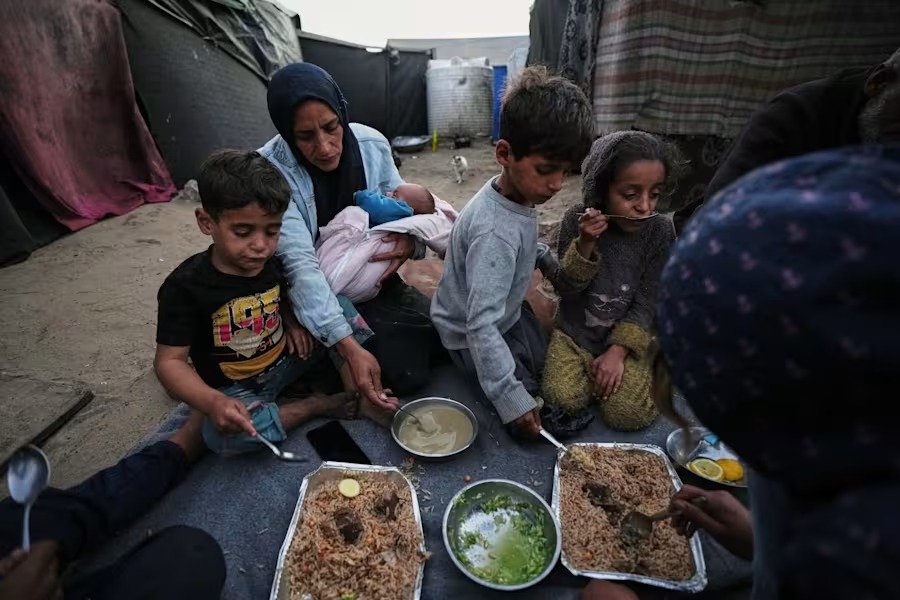
Gaza marked the first iftar of Ramadan amid widespread devastation following renewed conflict. Families gathered in the remains of destroyed homes, sharing meals with neighbors and expressing gratitude during the sacred month.
According to Daljoog News analysis, the scene highlights the resilience of Gaza residents. Even under extreme hardship, the community preserves religious traditions, finding moments of peace and solidarity despite ongoing security threats.
The first day of Ramadan carries profound spiritual significance, but in Gaza, it also reflects the stark consequences of conflict, with families balancing devotion with the urgent realities of survival.
What Happened?
Following a two-year gap since the last peaceful Ramadan, Gaza’s first iftar was observed amid ruins left by Israeli airstrikes. Residents prepared meals in front of homes reduced to rubble, inviting neighbors to join.
Local reports indicate that while infrastructure has been heavily damaged, the community emphasized communal solidarity, ensuring that food and prayer were shared despite limited resources.
The violence since the recent truce has caused devastating loss. According to the Gaza Ministry of Health and multiple independent studies, over 75,000 people have died since the conflict escalated, with women, children, and the elderly comprising more than half of the casualties.
Why This Matters
The first Ramadan iftar in Gaza underscores the intersection of faith, resilience, and humanitarian crisis. Traditional practices of prayer and shared meals serve as a form of psychological and social support for communities under duress.
Beyond spiritual observance, the day highlights pressing humanitarian needs. Widespread destruction of housing, medical facilities, and food supply chains complicates relief efforts, leaving communities dependent on limited local and international aid.
The high casualty figures reflect both the intensity of past military operations and the ongoing vulnerability of civilians in the region, intensifying global attention on the humanitarian situation.
What Analysts or Officials Are Saying
Health experts and humanitarian researchers emphasize the difficulty of collecting accurate data due to damaged infrastructure. Michael Pagert, an economics professor at Royal Holloway University in London and lead author of a recent study, notes that official statistics are likely conservative.
While Israel has contested some casualty reports, Israeli military sources have acknowledged over 70,000 deaths in Gaza, supporting independent estimates from humanitarian agencies.
Officials stress that the continuation of cultural and religious traditions, such as Ramadan iftar, serves as a crucial coping mechanism for communities traumatized by conflict.
Daljoog News Analysis
The first iftar in Gaza reflects the dual reality of the region: deep human suffering alongside enduring social and religious resilience. Even as homes and infrastructure lie in ruins, the act of communal breaking of fast preserves a sense of dignity and normalcy.
Daljoog News observes that this resilience is vital not only for immediate psychological well-being but also for sustaining community cohesion, which is essential for long-term recovery.
The contrast between ritual observance and the ongoing humanitarian crisis highlights the need for sustained international attention and aid. Without rebuilding basic infrastructure, including medical and food distribution systems, these communities face ongoing vulnerability despite their cultural perseverance.
What Happens Next
Gaza’s residents are expected to continue observing Ramadan under challenging conditions, with nightly prayers and communal meals adapted to the circumstances.
Humanitarian agencies stress the urgency of restoring infrastructure to allow safe access to water, food, and healthcare. International advocacy is likely to intensify around protecting civilians during religious observances while pressing for durable solutions to the ongoing conflict.
As Ramadan progresses, each iftar will continue to symbolize both the endurance of faith and the pressing need for relief efforts. The first day’s observance serves as a poignant reminder of resilience in the face of protracted hardship, offering insight into the human dimensions of the region’s crisis.