
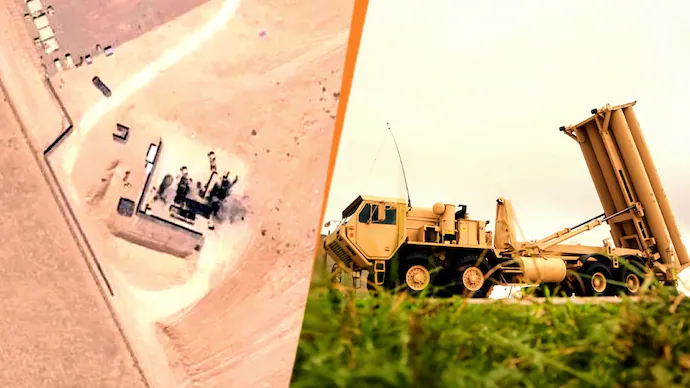
Iranian missile and drone strikes have reportedly destroyed a critical United States missile-defense radar in Jordan, marking one of the most significant blows to American military infrastructure in the region since the conflict began. Satellite images analyzed by security researchers indicate that the advanced radar system at Muwaffaq Salti Air Base was heavily damaged during Iranian attacks.
According to Daljoog News analysis, the strike appears to be part of a deliberate strategy by Tehran to weaken the technological backbone of US and allied air defense networks across the Gulf. By targeting early-warning radar installations, Iran may be attempting to reduce the ability of American forces to detect and intercept incoming ballistic missiles.
The development comes amid a broader regional war involving Iran, Israel, and the United States. Military analysts say the early targeting of high-value radar systems shows how modern conflicts increasingly focus on disabling detection networks rather than simply destroying frontline military units.
What Happened?
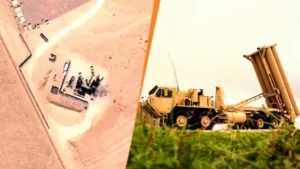
Satellite imagery reviewed by defense analysts shows extensive damage at Jordan’s Muwaffaq Salti Air Base, where the United States had deployed an advanced AN/TPY-2 radar system.
This radar forms a core component of the US Terminal High Altitude Area Defense (THAAD) system, designed to detect and track ballistic missiles at high altitudes before guiding interceptor missiles to destroy them.
According to US officials cited in defense reports, the radar and its supporting equipment were destroyed during Iranian strikes early in the war. The attack likely occurred during one of two Iranian missile operations reported on February 28 and March 3.
Research group Foundation for Defense of Democracies confirmed those two strike incidents in Jordan, noting that while many incoming projectiles were intercepted, the radar installation appears to have taken a direct hit.
Satellite photos show the radar platform and nearby support infrastructure reduced to debris, suggesting the strike successfully disabled the system.
The THAAD system is among the most advanced missile defense platforms in the world. The United States reportedly operates only eight THAAD batteries globally. Each system costs roughly $1 billion, while the radar component alone is estimated to be worth about $300 million.
With the destruction of the radar, the responsibility for missile interception in the area may shift more heavily toward Patriot missile defense systems already deployed across the region.
Why This Matters
Radar systems are the backbone of modern missile defense. Without early-warning detection, even sophisticated interceptor systems can struggle to respond effectively to incoming threats.
The destruction of a THAAD radar therefore, represents more than just the loss of expensive equipment. It could temporarily weaken the surveillance coverage protecting US bases and allied territories in the Gulf region.
Analysts warn that such vulnerabilities become particularly concerning as Iran expands its use of drones and ballistic missiles across multiple fronts.
The conflict has already placed considerable strain on US defense networks, forcing rapid adjustments to deployment strategies and missile interception operations.
Another reported strike damaged an AN/FPS-132 long-range radar in Qatar earlier in the conflict. This radar plays an important role in tracking ballistic missiles across large sections of the Middle East.
If multiple radar systems are degraded simultaneously, regional air defense networks may face temporary blind spots that complicate coordination between allied forces.
What Analysts or Officials Are Saying
Military experts describe the radar strike as a significant tactical success for Iran. Targeting detection infrastructure rather than simply launching mass missile attacks reflects a strategic attempt to weaken defensive capability before future operations.
Defense analysts say that while US forces maintain backup systems and mobile radar units, the loss of fixed installations creates operational pressure.
American defense planners are particularly concerned about missile interceptor supply levels. Patriot and THAAD systems require specialized interceptors that are expensive and take time to manufacture.
Reports indicate Washington has already begun urgent consultations with major defense contractors to accelerate missile production in response to the growing demand.
Security officials also note that Iranian forces have increasingly combined drones and ballistic missiles in coordinated waves, a tactic designed to overwhelm defensive systems and exhaust interceptor inventories.
Daljoog News Analysis
The strike on the THAAD radar highlights a major shift in modern warfare strategy. Instead of focusing solely on destroying military bases, adversaries are increasingly targeting the sensors and command networks that make advanced defense systems possible.
If radar systems are blinded, missile interceptors become far less effective, even when the launchers themselves remain intact.
For Iran, this approach offers a cost-effective way to challenge a technologically superior opponent. A single precision strike on a radar installation can neutralize a system worth hundreds of millions of dollars and disrupt wider defensive coordination.
For the United States, the incident underscores the vulnerability of fixed military infrastructure in regions within range of Iranian missile technology.
While Washington still maintains overwhelming military capability in the region, the destruction of high-value assets early in the conflict may force adjustments in deployment strategy and base protection.
The incident also demonstrates the growing role of precision intelligence and satellite imagery in shaping public understanding of modern conflicts. Damage assessments that once remained classified now often emerge quickly through independent analysis of commercial satellite images.
What Happens Next
US defense officials are expected to prioritize restoring radar coverage in the region. This could involve deploying mobile radar systems, repositioning existing assets, or accelerating repairs to damaged installations.
At the same time, the Pentagon may expand missile interceptor production to replenish stocks used during recent defense operations.
Iran, meanwhile, may continue targeting strategic detection infrastructure as part of its broader effort to pressure US and Israeli forces across the region.
How effectively each side adapts its defensive and offensive strategies in the coming weeks could determine whether the conflict stabilizes or escalates further.