
Close Menu
Daljoog News
    What's Hot
    ICE May Stay at Airports Until TSA Staffing Stabilizes Amid Shutdown

    ICE May Stay at Airports Until TSA Staffing Stabilizes Amid Shutdown

    March 30, 2026
    Malaysia Detains Israeli Travelers Amid Rising Transit Restrictions

    Malaysia Detains Israeli Travelers Amid Rising Transit Restrictions

    March 30, 2026
    Reza Pahlavi Voices Support for Trump at Texas CPAC

    Reza Pahlavi Voices Support for Trump at Texas CPAC

    March 30, 2026
    Facebook X (Twitter) Instagram
    Monday, March 30
    Daljoog News
    Facebook X (Twitter) YouTube Instagram
    • Home
    • General
    • World
    • Business
    • Technology
    • Politics
    • Finance
    • Health
    • Lifestyle
    • Sports
    • Travel
    Daljoog News
    Home»World»Iran Demands Toll on Hormuz, Escalating US-Israel Tensions
    World

    Iran Demands Toll on Hormuz, Escalating US-Israel Tensions

    Andrew RogersBy Andrew RogersMarch 30, 2026No Comments4 Mins Read
    Facebook Twitter Pinterest LinkedIn Tumblr Email
    Follow Us
    Google News
    Iran Demands Toll on Hormuz, Escalating US-Israel Tensions
    Iran Demands Toll on Hormuz, Escalating US-Israel Tensions
    Share
    Facebook Twitter LinkedIn Pinterest Email

    Iran has introduced a provocative demand in the ongoing conflict with the United States and Israel, claiming full sovereignty over the Strait of Hormuz and announcing plans to impose tolls on all passing vessels. The move comes as the military confrontation enters its fourth week, marked by repeated missile exchanges and retaliatory strikes.

    According to Daljoog News analysis, Tehran’s strategy goes beyond conventional warfare. By asserting economic and strategic control over one of the world’s busiest oil routes, Iran is seeking leverage that extends far beyond the battlefield, affecting global trade and energy markets.

    The announcement arrives at a time when global oil prices and shipping stability are already sensitive. With nearly 20 percent of international crude oil and liquefied natural gas passing through the strait, Iran’s proposal has immediate economic and geopolitical consequences.

    What Happened?

    Tehran has declared that it expects full recognition of its sovereignty over the Strait of Hormuz, a key international shipping corridor connecting the Persian Gulf to open waters. Beyond asserting control, Iran plans to collect a regular fee or toll from every vessel navigating the passage.

    Until now, Iran had threatened to close the strait only during heightened military tensions, but the new approach aims to establish a permanent source of revenue. Reports suggest that if each major tanker were charged around $2 million per passage, the country could generate over $800 million per month, potentially surpassing the revenue collected from the Suez Canal in Egypt.

    The announcement follows statements from Iran’s new top leader, Mostafa Khamenei, who emphasized that the nation will not miss this strategic opportunity. Analysts see this as Tehran demonstrating its ability to exert significant influence over global energy supply and shipping routes.

    Why This Matters

    The Strait of Hormuz is one of the world’s most critical chokepoints for energy transport. Any attempt to assert unilateral control or impose fees has the potential to disrupt global oil and gas markets. Even the perception of restricted access can push energy prices higher and unsettle financial markets.

    For the United States and its allies, Iran’s move challenges existing international norms governing navigation through strategic waterways. The strait has traditionally operated under principles of free passage, and a unilateral toll would constitute a direct affront to these conventions.

    The plan also reflects a broader economic strategy for Iran, which faces mounting domestic pressures and international sanctions. By turning the strait into a revenue stream, Tehran seeks both financial gain and leverage in ongoing diplomatic disputes.

    What Analysts or Officials Are Saying

    Security and economic experts describe Iran’s proposal as both bold and risky. It combines economic coercion with strategic influence, signaling that the country is willing to use its geographic advantage as leverage against global powers.

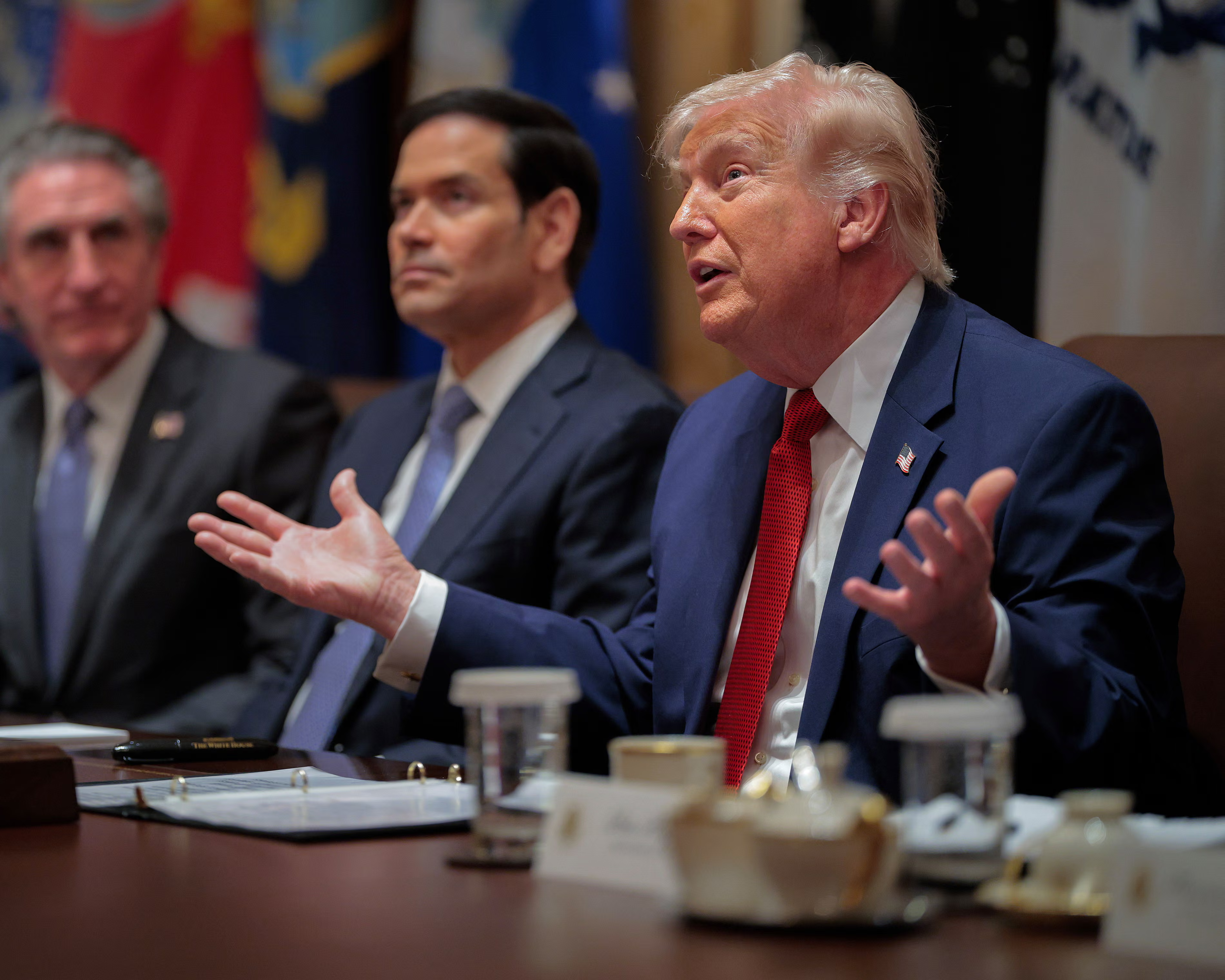
    The United States has labeled the plan illegal and dangerous. Secretary of State Marco Rubio warned that unilateral control over an international waterway will not be tolerated, emphasizing that freedom of navigation is a core principle of global maritime law.

    Analysts note that if implemented, the toll system could provoke economic retaliation, increased military presence in the region, or even naval confrontation. The move highlights Tehran’s desire to test how far it can assert influence while maintaining plausible deniability in international law.

    Daljoog News Analysis

    Iran’s new strategy illustrates the evolving nature of regional conflict. The focus is shifting from conventional military engagements to economic and psychological leverage. By targeting a critical chokepoint, Tehran demonstrates the potential to pressure global markets without direct battlefield action.

    The announcement is likely intended as a dual message: one for domestic audiences, showcasing strength and self-reliance, and one for global powers, signaling that Iran can impact the international economy if pushed. It underlines how infrastructure control can become as strategic as conventional weapons in modern geopolitical disputes.

    What Happens Next

    Global attention now turns to the response from the United States, Israel, and other international stakeholders. Naval patrols may increase in the strait, and diplomatic negotiations could intensify to prevent escalation.

    Energy markets are likely to remain sensitive, with potential price spikes if shipping through Hormuz is perceived as uncertain. Meanwhile, Iran may continue using the proposal as leverage in broader geopolitical negotiations.

    The coming weeks will test whether Tehran’s claim can be enforced, resisted, or mitigated through international cooperation. The outcome will have far-reaching implications for Middle East stability and global energy security.
    Share. Facebook Twitter Pinterest LinkedIn Tumblr Email
    Andrew Rogers
    Andrew Rogers
    • Website
    • Facebook

    Andrew Rogers is a seasoned journalist and news analyst specializing in global affairs, politics, and finance. With a passion for investigative reporting, he delivers accurate, insightful stories that inform and engage readers worldwide.

    Related Posts

    Malaysia Detains Israeli Travelers Amid Rising Transit Restrictions

    Malaysia Detains Israeli Travelers Amid Rising Transit Restrictions

    March 30, 2026
    North Korea Tests Powerful Rocket Engine, Boosting ICBM

    North Korea Tests Powerful Rocket Engine, Boosting ICBM

    March 30, 2026
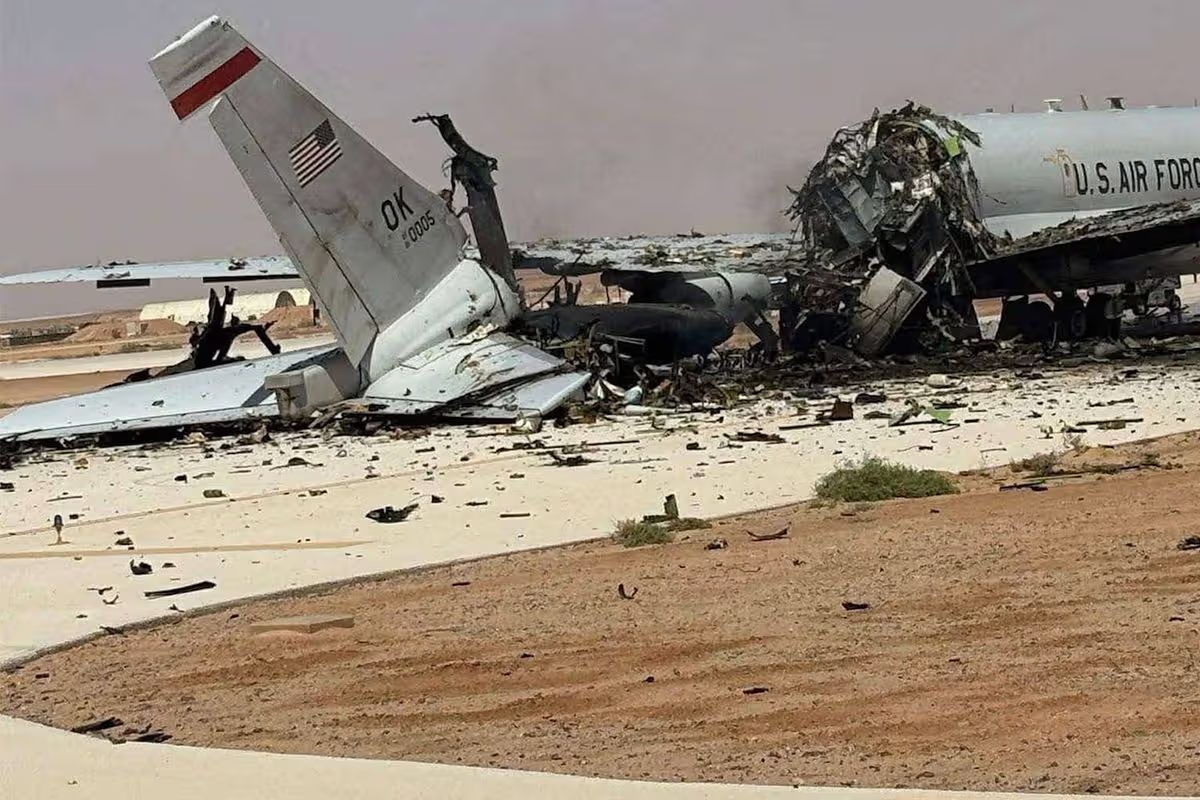
    Iran Strike Destroys US Radar Aircraft in Saudi Base

    Iran Strike Destroys US Radar Aircraft in Saudi Base

    March 30, 2026

    Comments are closed.

    Our Picks
    Malaysia Detains Israeli Travelers Amid Rising Transit Restrictions

    Malaysia Detains Israeli Travelers Amid Rising Transit Restrictions

    March 30, 2026
    North Korea Tests Powerful Rocket Engine, Boosting ICBM

    North Korea Tests Powerful Rocket Engine, Boosting ICBM

    March 30, 2026
    Iran Strike Destroys US Radar Aircraft in Saudi Base

    Iran Strike Destroys US Radar Aircraft in Saudi Base

    March 30, 2026
    Drone Attacks in Odesa Escalate Ukraine’s Security Concerns

    Drone Attacks in Odesa Escalate Ukraine’s Security Concerns

    March 29, 2026
    Stay In Touch
    • Facebook
    • Twitter
    • Instagram
    • YouTube
    Don't Miss
    WV Health Workers Join Mountaineer Mile for Fitness

    WV Health Workers Join Mountaineer Mile for Fitness

    Health June 5, 2025

    Employees at The Health Plan offices in West Virginia walked a “Mountaineer Mile” on Wednesday…

    Japan-China Tensions Rise Over Taiwan

    Japan-China Tensions Rise Over Taiwan

    November 11, 2025
    Azerbaijan OKs Visa-Free Travel Deal with China

    Azerbaijan OKs Visa-Free Travel Deal with China

    May 31, 2025
    Butler County

    Butler County’s Role in U.S. Immigration Enforcement

    June 21, 2025
    About Us

    Daljoog News is a trusted news platform that brings you the latest global and local updates with accuracy and fairness. We are committed to clear and unbiased reporting, covering topics like politics, business, technology, science, and culture and more. Using the latest technology and expert journalism, we provide reliable coverage of important stories. Stay informed, inspired, and empowered with Daljoog News—your source for breaking news, the latest updates, and videos that matter.

    Email Us: info@daljoognews.com

    Our Picks
    California Threatens Paramount’s $110B Warner Deal

    California Threatens Paramount’s $110B Warner Deal

    February 28, 2026
    US Judge Dismisses Buffalo Wild Wings Lawsuit

    US Judge Dismisses Buffalo Wild Wings Lawsuit

    February 18, 2026
    Casey Wasserman to Sell Agency Amid Epstein File Fallout

    Casey Wasserman to Sell Agency Amid Epstein File Fallout

    February 15, 2026
    Latest News
    ICE May Stay at Airports Until TSA Staffing Stabilizes Amid Shutdown

    ICE May Stay at Airports Until TSA Staffing Stabilizes Amid Shutdown

    March 30, 2026
    Malaysia Detains Israeli Travelers Amid Rising Transit Restrictions

    Malaysia Detains Israeli Travelers Amid Rising Transit Restrictions

    March 30, 2026
    Reza Pahlavi Voices Support for Trump at Texas CPAC

    Reza Pahlavi Voices Support for Trump at Texas CPAC

    March 30, 2026
    Facebook X (Twitter) RSS YouTube Instagram
    • Home
    • About Us
    • Contact Us
    • Our Authors
    • Privacy Policy
    • Terms & Conditions
    • Sitemap
    © 2026 DaljoogNews.com

    Type above and press Enter to search. Press Esc to cancel.