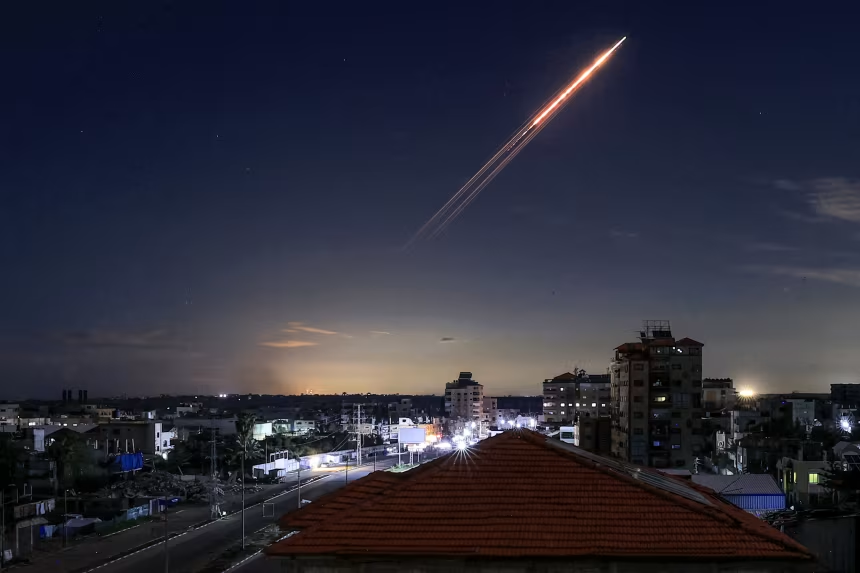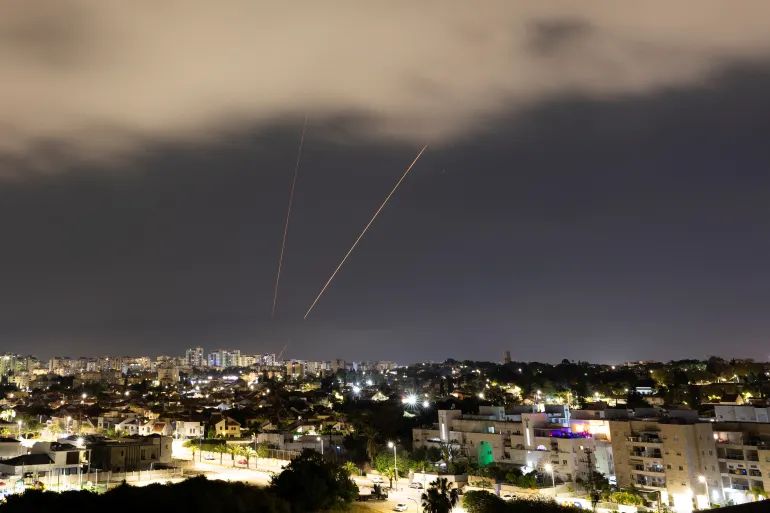


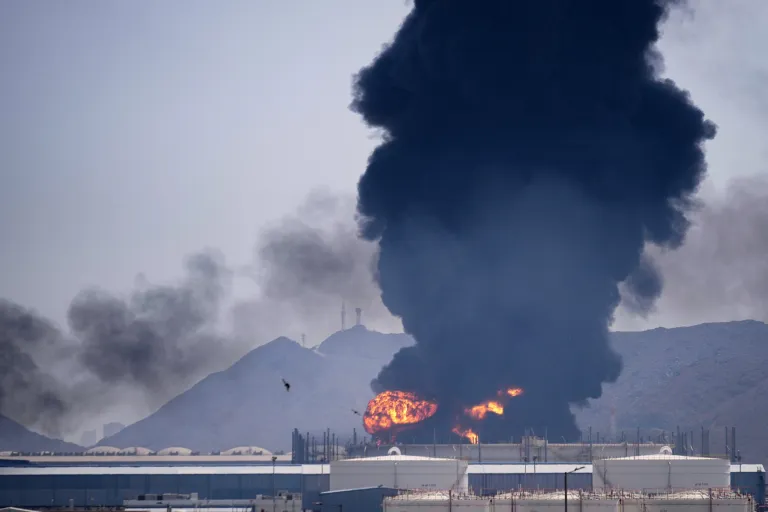
Iran’s Revolutionary Guard has launched successive missile strikes targeting Israel and U.S. military bases across the Middle East, causing widespread alarm and operational disruption. Each night, missile barrages and drone attacks continue to challenge Israeli air defenses and American forces stationed in the region.
According to Daljoog News analysis, the coordinated assaults mark a strategic escalation, demonstrating Iran’s ability to project power beyond its borders while testing Israel’s aerospace defenses and the resilience of U.S. military infrastructure in allied countries.
The strikes have intensified regional instability, raising concerns over civilian safety and highlighting the stakes of an ongoing Middle East confrontation with global implications.
What Happened?
Over the past several days, Iran has intensified its missile campaign, targeting U.S. bases in the United Arab Emirates, Kuwait, and Bahrain. In parallel, 30 heavy ballistic missiles—each reportedly weighing over one ton—were fired toward Israel, striking critical aerospace installations and severely damaging air defense infrastructure.
Reports indicate that Israel’s aerospace systems have been compromised, leaving civilian populations vulnerable. Sirens and emergency alerts have become routine, forcing residents into shelters nightly. Meanwhile, American forces in the region face substantial disruptions to radar, aircraft, and fuel storage facilities.
Iranian media cite statements from Admiral Ali Reza Tangsiri, head of the Revolutionary Guard Navy, confirming multiple coordinated strikes on U.S. installations. The attacks aim to demonstrate Iran’s capability to inflict strategic damage and maintain operational pressure on both Israel and the United States.
Why This Matters
The attacks reflect a deliberate escalation by Iran, signaling that even heavily fortified U.S. bases in allied Middle Eastern countries are within reach. For Israel, the strikes have disrupted key air defense systems and highlighted vulnerabilities in long-range missile interception.
The broader implication is a heightened risk of further escalation. With American troops now reinforced by an additional 2,500 ground soldiers, Iran has issued stern warnings that any military response will carry a high cost for the United States and Israel.
What Analysts or Officials Are Saying
Security analysts note that Iran’s strategy blends conventional missile warfare with psychological pressure, keeping both military personnel and civilians under constant stress. Observers highlight that the coordinated strikes on multiple fronts indicate advanced operational planning and strategic intent to weaken enemy defenses before a potential broader confrontation.
U.S. officials continue to monitor the situation, focusing on replenishing missile defense capabilities and ensuring that personnel remain protected. Analysts caution that as missile exchanges intensify, the risk to regional stability and civilian populations grows substantially.
Daljoog News Analysis
Daljoog News assesses that Iran’s persistent missile campaign is both a tactical and symbolic demonstration of power. By striking U.S. bases and Israeli defenses simultaneously, Tehran seeks to undermine adversaries’ confidence while asserting deterrence.
The strikes also reveal the strategic limitations of conventional defense systems, emphasizing the importance of rapid resupply, technological upgrades, and robust contingency planning. The situation underscores the multidimensional nature of modern conflict, where missile capability, civilian safety, and psychological impact are all intertwined.
What Happens Next
Israel and U.S. forces are expected to reinforce air defense systems and continue monitoring Iranian missile activity. Additional military assets may be deployed to the region as a precautionary measure.
Observers warn that unless diplomatic channels are pursued, the cycle of missile attacks and countermeasures could intensify, with broader implications for regional security, energy infrastructure, and international relations.