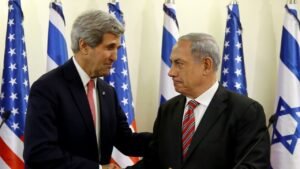


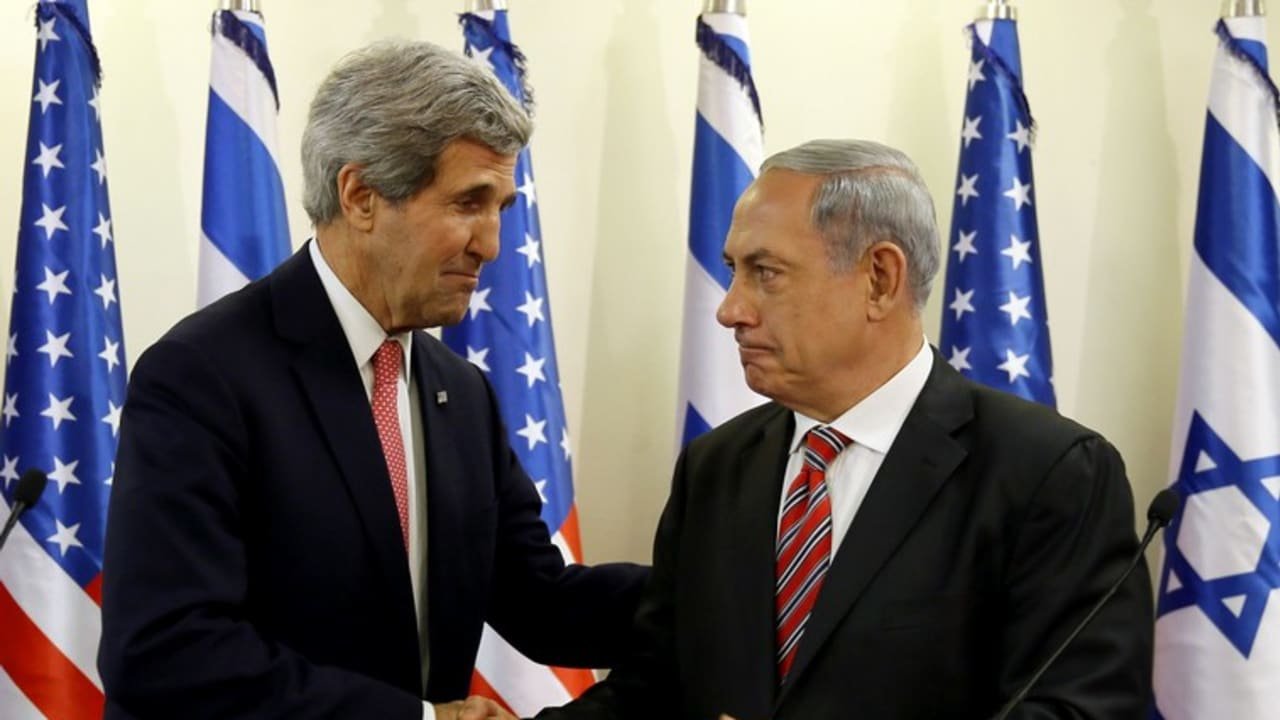
Netanyahu’s Iran war pressure, US Secretary of State John Kerry has reignited debate over Middle East strategy by alleging that Israeli Prime Minister Benjamin Netanyahu repeatedly pushed Washington toward military action against Iran.
According to Daljoog News analysis… the Netanyahu Iran war pressure claims highlight long-standing divisions within US foreign policy circles over whether diplomacy or military force should define America’s approach to Tehran.
The Netanyahu Iran war pressure discussion has resurfaced at a time when US–Iran tensions remain sensitive, with renewed scrutiny over past decisions by multiple American administrations.
What Happened?
The Netanyahu Iran war pressure claims were made by John Kerry during a recent interview, where he reflected on his years in high-level diplomatic meetings involving Israeli leadership and US presidents.
Kerry stated that Netanyahu had repeatedly urged the United States to consider military strikes against Iran, arguing that such action would weaken Iran’s leadership and dismantle its military capabilities. He claimed these proposals were presented in multiple formal and informal discussions over the years.
According to Kerry, similar proposals were also presented to US presidents, including Barack Obama. He further asserted that both George W. Bush and Joe Biden rejected military options in favor of diplomatic engagement with Iran during their respective administrations.
The Netanyahu Iran war pressure narrative also includes Kerry’s claim that detailed strategic frameworks were once outlined by Israeli leadership, suggesting that military strikes could trigger broader political change inside Iran. These proposals reportedly included weakening Iran’s command structure and targeting its military infrastructure.
Kerry also argued that President Donald Trump was the only US leader who showed openness to more aggressive military considerations in relation to Iran, marking a shift in long-standing US policy debate.
Why This Matters
The Netanyahu Iran war pressure debate sheds light on how external political pressure has historically influenced US decision-making in the Middle East.
If accurate, these claims suggest that key strategic disagreements have existed for years between Washington’s diplomatic establishment and Israeli leadership over how to handle Iran’s nuclear and military capabilities.
This issue remains highly relevant today as tensions between Iran, Israel, and the United States continue to shape regional security dynamics and global energy stability.
The renewed discussion also raises questions about how far allied nations should influence each other’s military and diplomatic strategies, especially in high-risk conflict environments.
What Analysts or Officials Are Saying
Foreign policy analysts note that the Netanyahu Iran war pressure allegations reflect a broader and long-standing policy divide within Western leadership circles regarding Iran.
Some experts argue that Israel has consistently prioritized a security-first approach, while multiple US administrations have leaned toward containment and negotiation strategies to avoid large-scale regional war.
Officials familiar with past negotiations suggest that discussions around Iran’s nuclear and military capabilities have frequently involved competing strategic proposals, though not all resulted in formal policy decisions.
There has been no official response from Israeli authorities regarding Kerry’s recent statements, and past US administrations referenced in his remarks have not issued new comments on the allegations.
Daljoog News Analysis
The Netanyahu Iran war pressure claims illustrate how retrospective political accounts can reshape current perceptions of past foreign policy decisions.
While such statements may not introduce new facts, they reignite debate about how close the Middle East has come to large-scale military escalation over Iran-related issues.
The role of individual leaders in shaping or resisting military intervention also becomes central in understanding how US foreign policy has evolved across different administrations.
Ultimately, the renewed discussion reflects a deeper reality: Iran policy has long been one of the most contested and sensitive issues in modern international relations, where diplomacy and military pressure often coexist in tension rather than resolution.
What Happens Next
The Netanyahu Iran war pressure debate is likely to continue circulating in political and media discourse, especially as US–Middle East relations remain unstable.
Further commentary from current officials may add additional context or challenge Kerry’s interpretation of past events.
However, unless new documentation or official confirmations emerge, the discussion will remain primarily within the realm of political interpretation and retrospective analysis.