
More than 80 countries have strongly condemned recent attacks in Lebanon that resulted in the deaths of United Nations peacekeepers, calling the incidents unacceptable and demanding accountability for those responsible. The statement comes amid continued instability despite broader ceasefire efforts in the region.
According to Daljoog News analysis, the joint diplomatic response reflects rising global concern over the safety of peacekeeping missions and the increasing risks faced by international forces operating in conflict zones.
The development adds further pressure on already fragile ceasefire arrangements, with renewed calls for all parties to respect international humanitarian obligations and avoid escalation.
What Happened?
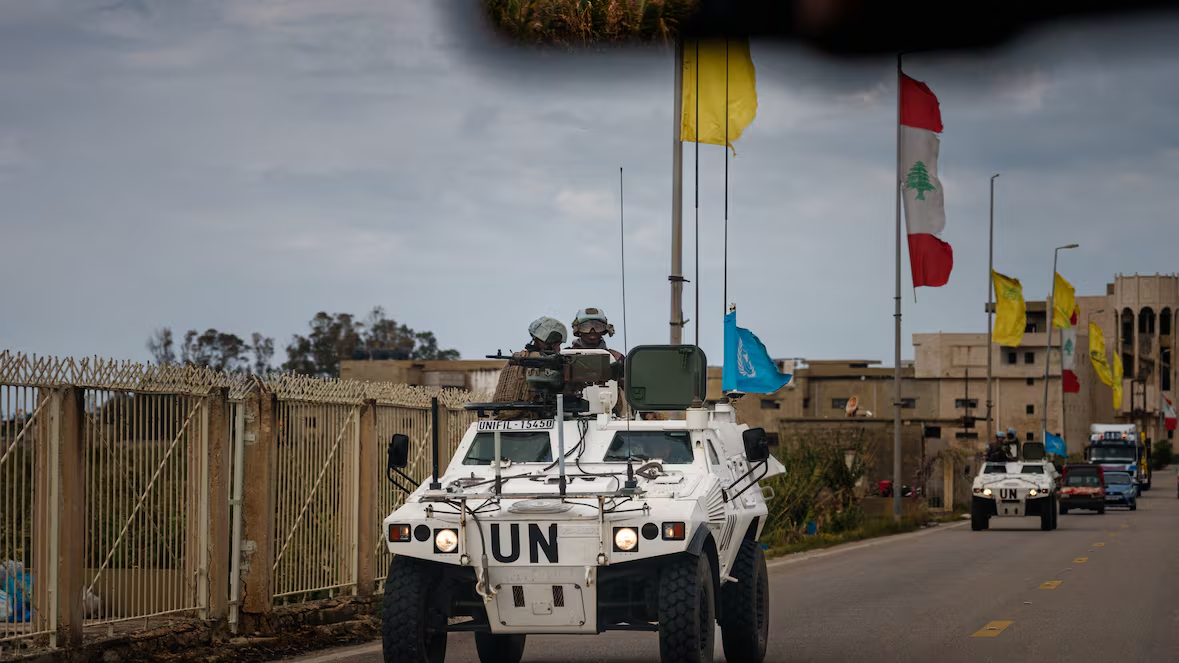
A joint statement backed by over 80 nations condemned a series of attacks targeting United Nations peacekeepers stationed in Lebanon. The statement was delivered at the UN by Indonesia’s ambassador Omar Hadi, whose country recently lost three peacekeepers in southern Lebanon while on duty.
The statement criticized what it described as unacceptable and aggressive behavior toward personnel serving under the United Nations Interim Force in Lebanon (UNIFIL). It called for full accountability for those responsible for the attacks, though it did not formally assign blame to any specific actor.
However, preliminary UN reporting has suggested possible responsibility in separate incidents, pointing to multiple armed actors operating in the region. Despite this, the joint declaration avoided naming any party directly, reflecting the diplomatic sensitivity surrounding the conflict.
Notably, the United States, a key ally of Israel, was not listed among the signatories of the statement. This absence has drawn attention among diplomatic observers monitoring divisions within the international response.
Why This Matters
The attacks on peacekeepers highlight the growing risks faced by international monitoring missions in active conflict zones. UNIFIL’s presence in southern Lebanon has long been seen as a stabilizing force, but recent incidents raise concerns about its operational safety and effectiveness.
The condemnation by over 80 countries signals broad international alarm and reinforces the expectation that peacekeeping forces must be protected under international law. Any targeting of such personnel is widely considered a serious violation of humanitarian norms.
The situation also reflects broader instability in the region, where ceasefire agreements remain fragile and multiple armed groups continue to operate in contested areas. This increases the likelihood of miscalculations and further escalation.
What Analysts or Officials Are Saying
Diplomatic analysts note that the scale of the condemnation reflects rare international unity on the issue of peacekeeper safety, even as political divisions persist over accountability and attribution of responsibility.
Some officials emphasize that while no party was formally named in the joint statement, the underlying UN assessments have pointed to possible involvement by multiple actors in different incidents. This ambiguity complicates diplomatic responses.
Security experts warn that continued attacks on peacekeeping forces could undermine future international missions, making it harder to deploy neutral monitoring troops in conflict zones.
Meanwhile, supporters of UNIFIL stress the importance of maintaining its presence, arguing that withdrawal could leave a dangerous security vacuum in southern Lebanon.
Daljoog News Analysis
The incident underscores a growing challenge in modern conflict zones: the erosion of clear operational boundaries even for internationally mandated peacekeeping forces. When neutrality is no longer guaranteed, the effectiveness of such missions is directly threatened.
The absence of some major powers from the joint statement also highlights underlying geopolitical divisions that often shape responses to regional conflicts. Even when there is broad agreement on humanitarian principles, political alignment can influence diplomatic positioning.
At the same time, the strong collective condemnation from over 80 countries shows that international concern over peacekeeper safety remains high. This shared concern could pressure conflicting parties to exercise greater caution in operational zones.
However, without clear attribution of responsibility, accountability remains uncertain. This gap often weakens enforcement mechanisms and limits the deterrent effect of international condemnation.
What Happens Next
Diplomatic pressure is expected to continue, with further UN discussions likely focusing on strengthening protections for peacekeeping personnel in Lebanon.
Investigations into the incidents will likely remain ongoing, though political disagreements may slow consensus on responsibility and response measures.
On the ground, UNIFIL operations are expected to continue, but under heightened security conditions and increased operational caution.