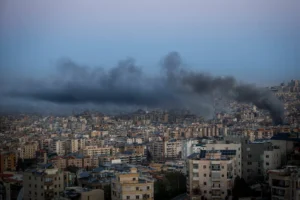


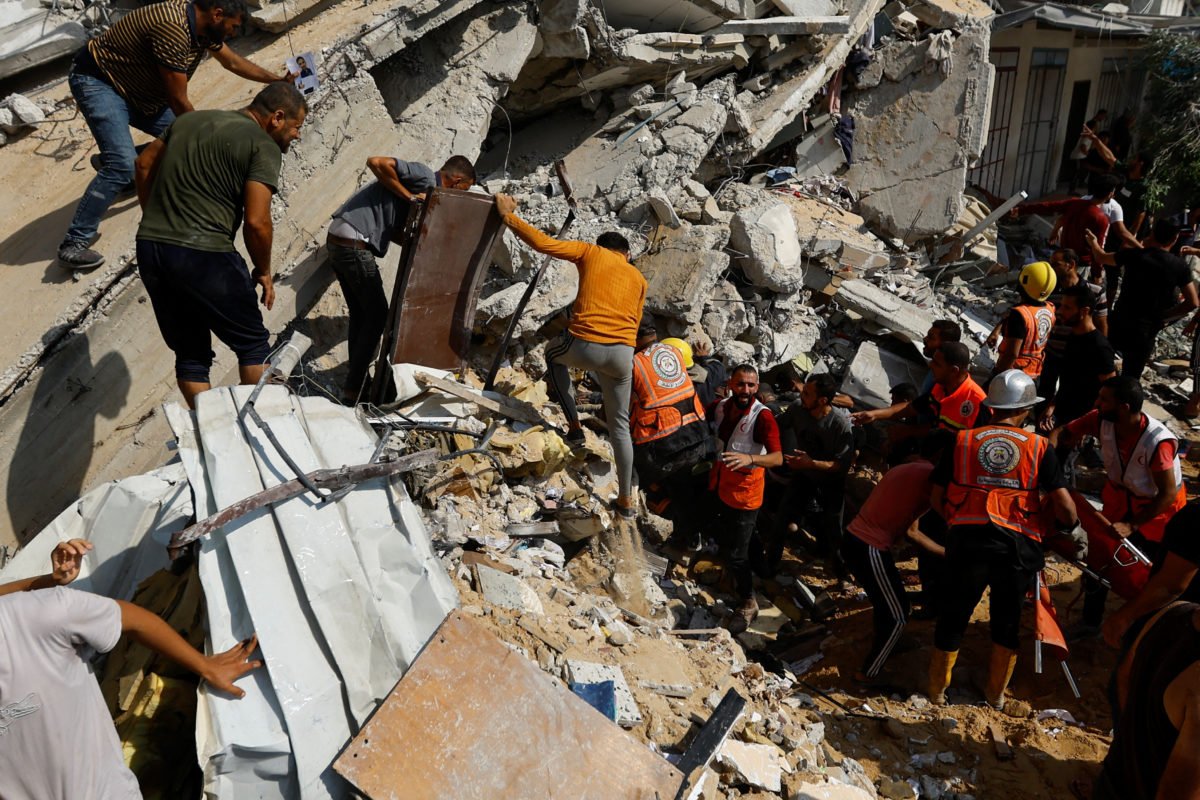
Claims that more than 72,000 Palestinians have been killed in Israeli military operations have intensified scrutiny of the decades-long conflict and its political framework.
According to figures cited by Israeli sources in the latest reporting, over 72,000 Palestinians have died in ongoing operations, including approximately 18,000 children. Independent verification of these numbers remains contested, and casualty figures in the conflict often vary by reporting authority.
According to Daljoog News analysis, the current escalation cannot be separated from the unresolved political structure governing the West Bank since the 1990s.
What Happened?
Under agreements reached in the 1990s—commonly referred to as the Oslo Accords—the West Bank was divided into three administrative areas: A, B, and C.
- Area A (approximately 18% of the West Bank) is under Palestinian civil and security control.
- Area B (around 22%) operates under Palestinian civil authority with joint Israeli-Palestinian security oversight.
- Area C (about 60%) remains under full Israeli civil and security control.
The framework was intended as an interim arrangement, with final status negotiations expected within five years. However, no permanent agreement has been reached, and the division remains in place nearly three decades later.
Tensions have intensified due to ongoing Israeli military operations in the West Bank, often conducted under security justifications. Palestinian officials argue that these operations undermine limited self-governance and weaken the authority of the Palestinian leadership.
Historical Context
In 1967, during the Six-Day War, Israel captured the West Bank and East Jerusalem. While Israel later annexed East Jerusalem, most of the international community has not formally recognized that move.
In 1994, limited Palestinian self-rule was introduced under subsequent agreements. However, Israel retained overarching control over borders, airspace, and significant security matters.
Palestinians seek an independent state comprising the West Bank, Gaza, and East Jerusalem as its capital. Israel, meanwhile, considers parts of the territory strategically and religiously significant.
Israeli settlement expansion in the West Bank has remained a central source of dispute. In 2016, the United Nations Security Council adopted a resolution stating that Israeli settlements established since 1967 in Palestinian territory constitute a violation of international law and pose a major obstacle to peace.
Why This Matters
The reported casualty figures—particularly the number of children—have intensified international concern and renewed calls for ceasefire negotiations.
Human rights organizations continue to raise alarm over civilian impact, while Israeli authorities maintain that operations target militant infrastructure and security threats.
The prolonged interim arrangement established in the 1990s has, according to critics, evolved into a semi-permanent system that complicates governance, accountability, and prospects for a two-state solution.
Regional stability is also at stake, as escalation risks drawing in neighboring actors or triggering wider unrest.
Political Reactions
Some Middle East analysts have argued that shifting US policy has influenced dynamics on the ground. During his presidency, Donald Trump introduced policy changes that were widely viewed as supportive of Israeli positions, including recognition of Jerusalem as Israel’s capital.
Trump has previously indicated support for expanded Israeli claims in parts of the West Bank, though his broader position has varied depending on the diplomatic context.
Daljoog News Analysis
Nearly 30 years after the Oslo framework was intended to transition toward a final settlement, the temporary administrative divisions remain unchanged.
The absence of a comprehensive political resolution has allowed periodic escalations to become cyclical. Casualty figures—regardless of the precise count—underscore the humanitarian cost of a conflict that remains structurally unresolved.
With settlement expansion, security operations, and political fragmentation on both sides, the gap between interim governance and a permanent agreement appears wider than at any point since the 1990s.
What Happens Next
International diplomatic efforts continue intermittently, but no sustained negotiation process is currently underway.
Future developments will depend on prospects for a ceasefire, international mediation efforts, and internal political dynamics within both Israeli and Palestinian leadership structures.